
A dependable battery tester can help home mechanics distinguish a weak battery from a charging-system or starting problem before replacing parts. The right tool makes routine voltage, cranking, load, and alternator checks faster and easier.
Our 2026 roundup covers 10 automotive testers ranging from simple 6V/12V load testers to advanced 12V/24V digital analyzers. Use the guide below to match features, testing range, and display style to your garage needs.
Best 10 Car Battery Testers for Home Mechanics Picks for 2026
Advanced 12V Diagnostics

- Measures SOH, SOC, CCA, voltage, and current
- Tests cranking and charging systems
- Supports common 12V battery types over 30Ah
Best For: Detailed 12V testing in a home garage
Classic Load Testing

- Tests battery, charging, and starter systems
- Works with 6V and 12V batteries
- Uses a visible analog meter and rocker switch
Best For: Traditional load testing across mixed vehicles
Simple Digital Readings
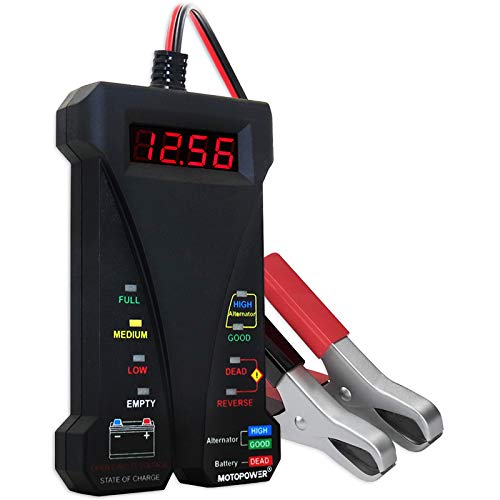
- Displays voltage to 0.01 volts
- Checks battery and alternator status
- Compact design with LCD and LED indicators
Best For: Quick 12V checks and emergency vehicle testing
Rugged Multi-Voltage Load Tester

- Tests 6V and 12V batteries up to 1,000 CCA
- Includes alternator testing
- Steel case and heavy-duty copper-plated clamps
Best For: Durable mixed-vehicle garage testing
Professional 12V/24V Pick

- Tests 12V and 24V batteries from 100-2000 CCA
- Checks battery, cranking, and charging systems
- Color display and rugged clamps suit home garages
Best For: DIYers with cars, trucks, RVs, boats, or mixed 12V/24V equipment
Best Value 12V Analyzer

- Tests 12V batteries from 100-2000 CCA
- Includes battery, starter, alternator, and charging tests
- Compact design with upgraded alloy clips
Best For: Budget-minded home mechanics maintaining 12V vehicles
Compact 12V Garage Pick

- Tests 12V batteries from 100-2000 CCA
- Provides battery, cranking, and charging tests
- Lightweight design fits a glove box or console
Best For: DIYers wanting simple, portable 12V diagnostics
Best Overall Coverage
FOXWELL BT705 12V/24V Battery Tester
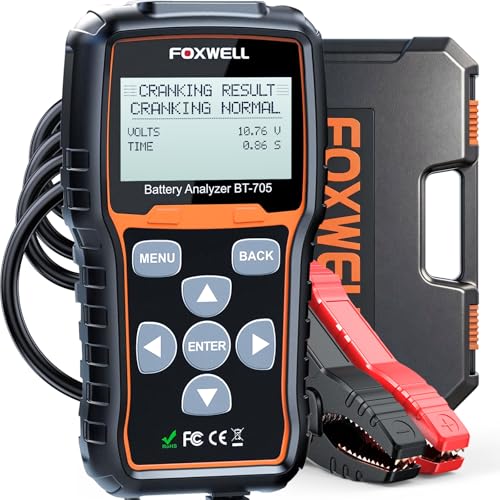
- Tests battery, cranking, and charging systems
- Supports 12V/24V vehicles and 100–2000 CCA
- Includes long cable and protective carrying case
Best For: Home garages and multi-vehicle households
Simple 12V Pick
MOTOPOWER MP0515A Battery Tester

- Covers 12V batteries from 100–2000 CCA
- Battery-powered compact handheld design
- Includes storage bag and two-year warranty
Best For: DIY owners testing standard 12V car batteries
Best for Tracking Results

- Offers four battery and vehicle-system tests
- Supports 12V/24V systems and 30–2000 CCA
- Stores results for comparing battery aging
Best For: Multi-vehicle users tracking recurring battery issues
Advanced 12V Diagnostics – ANCEL BA101
For home mechanics comparing car battery testers for home mechanics, the ANCEL BA101 is a feature-rich 12V option. It reports voltage, CCA, State of Health, and State of Charge, while also checking cranking and charging systems.
Best For: Home garages needing detailed 12V battery and alternator diagnostics across cars, trucks, boats, RVs, and other vehicles.
Pros:
- Tests SOH, SOC, voltage, current, CCA, cranking, and charging systems.
- Supports Flooded, AGM, GEL, and EFB 12V batteries over 30Ah.
- Includes reverse-polarity, short-circuit, overcurrent, and overvoltage protection.
- Uses a backlit, adjustable-contrast display and requires no internal batteries.
Cons:
- It is not compatible with lithium, 6V, 8V, or 24V batteries.
- Motorcycles below 30Ah are outside its stated compatibility.
- Accurate results depend on entering the battery’s correct type and rating.
The BA101 suits users who want more than a simple voltage reading. Its broad 12V compatibility and clear diagnostic data make it a strong choice for preventative testing, provided your batteries fit its limitations.
Classic Load Testing – Schumacher BT-100
The Schumacher BT-100 is a straightforward choice among car battery testers for home mechanics. Its analog meter and rocker switch let you test battery health, charging performance, and starter-motor draw on both 6V and 12V systems.
Best For: Home mechanics who want a traditional load tester for cars, motorcycles, ATVs, boats, RVs, and light trucks.
Pros:
- Runs battery, charging-system, and starter-motor-draw tests.
- Handles 6V and 12V batteries up to 1,000 CA.
- Simple top-mounted switch and highly visible analog meter.
- Works with gas and diesel vehicles plus several recreational vehicles.
Cons:
- It uses an analog display rather than a digital readout.
- The stated 6V and 12V load capacities differ, so users must select the proper setting.
- At 2 pounds, it is heavier than compact digital testers.
The BT-100 favors hands-on simplicity over extensive digital data. It is a practical garage tool if you need basic load, charging, and starter testing across both 6V and 12V vehicles.
Simple Digital Readings – MOTOPOWER MP0514A
For quick checks, the MOTOPOWER MP0514A keeps car battery testers for home mechanics simple. Connect it to a 12V battery to read voltage, then start the vehicle to check alternator status through its LCD and LED indicators.
Best For: Drivers and home mechanics who want fast battery-voltage and charging-system checks in a compact tester.
Pros:
- Plug-and-test operation requires no complex setup.
- Four-digit LCD provides readings to 0.01 volts.
- Eight colored LEDs help interpret battery and alternator status.
- Compact 150-gram design includes a 50cm cable and 30A clamps.
Cons:
- It is designed for 12V vehicle batteries rather than 6V or 24V systems.
- Its primary measurements are voltage and charging status, not CCA or battery health.
- It requires the vehicle battery as its power source.
The MP0514A is a good fit when you want an easy visual indication rather than a full battery analyzer. Its small size makes it convenient to keep in a vehicle or toolbox for routine checks.
Rugged Multi-Voltage Load Tester – QWORK 24338
The QWORK 24338 combines load testing, voltage measurement, and alternator checking for home mechanics comparing car battery testers for home mechanics. It supports both 6V and 12V batteries and is rated for batteries up to 1,000 CCA.
Best For: Garage users who need a sturdy tester for cars, trucks, RVs, golf carts, and other 6V or 12V vehicles.
Pros:
- Tests both 6V and 12V batteries.
- Supports battery testing up to 1,000 CCA.
- Includes an alternator-testing function.
- Shock-resistant steel case, copper-plated clamps, and carrying handle support regular garage use.
Cons:
- The notes do not specify a warranty.
- It is a basic load and voltage tester rather than a detailed digital analyzer.
- The supplied information does not identify a display type or measurement resolution.
The QWORK is appealing if durability and voltage flexibility matter more than advanced reporting. Its 6V/12V coverage and 1,000-CCA capacity make it versatile for mixed vehicle maintenance.
Professional 12V/24V Pick – TOPDON BT200
For home mechanics who need car battery testers for home mechanics that cover more than standard passenger vehicles, the TOPDON BT200 is a versatile choice. It tests 12V and 24V batteries from 100-2000 CCA and provides battery, cranking, and charging-system diagnostics.
Best For: DIYers testing cars, trucks, RVs, boats, motorcycles, lawn equipment, and other 12V or 24V systems.
Pros:
- Supports 12V and 24V batteries, including flooded, AGM, GEL, and deep-cycle types.
- Performs battery health, cranking, and charging-system tests.
- Offers a sunlight-readable color display, memory function, and rugged copper clamps.
- Operates across a wide temperature range from -4°F to 140°F.
Cons:
- Its broader 12V/24V capability may be more than needed for owners testing only one 12V car.
- It is larger and heavier than the compact BT100.
The BT200 stands out when a home garage needs one tester for multiple vehicle and battery types. Its wider compatibility and readable display make it a practical upgrade for frequent diagnostics.
Best Value 12V Analyzer – KONNWEI KW208
The KONNWEI KW208 is a compact, budget-conscious option among car battery testers for home mechanics. It tests 12V batteries from 100-2000 CCA and reports voltage, internal resistance, CCA, AH capacity, battery health, and charge status.
Best For: Home mechanics who want an affordable tester for routine 12V battery, starter, alternator, and charging checks.
Pros:
- Supports flooded, AGM flat-plate, AGM spiral, and gel 12V batteries.
- Performs battery, cranking, charging, starter, and alternator tests.
- Compact design fits a glove box or garage storage area.
- Galvanized alloy clips provide a durable, fully wrapped connection.
Cons:
- It is limited to 12V systems rather than supporting 24V batteries.
- The feature set and menu options may be more detailed than needed for a quick voltage check.
With broad diagnostic coverage and a compact format, the KW208 offers strong everyday utility for 12V vehicles. It is especially appealing when price and storage convenience matter.
Compact 12V Garage Pick – TOPDON BT100
The TOPDON BT100 keeps battery diagnostics simple for home mechanics. This compact 12V tester evaluates 100-2000 CCA batteries and provides state-of-health, state-of-charge, voltage, current, and rating information without requiring a separate rechargeable power source.
Best For: DIY users who want a small tester for common cars, trucks, motorcycles, boats, ATVs, and lawn equipment.
Pros:
- Works with flooded, AGM, EFB, and GEL 12V batteries.
- Includes battery health, cranking, and charging-system tests.
- Compact 9-ounce design stores easily in a glove box or center console.
- Color-coded LEDs, polarity protection, and spark-proof copper clamps simplify testing.
Cons:
- It supports 12V batteries only.
- The display and indicators are more basic than the BT200’s color LCD.
The BT100 is a sensible everyday choice when portability and straightforward operation matter most. Its passive, vehicle-powered design makes it convenient for occasional roadside or garage checks.
Best Overall Coverage – FOXWELL BT705 12V/24V Battery Tester
For home mechanics who want more than a simple voltage reading, the FOXWELL BT705 is a versatile choice among car battery testers for home mechanics. It tests 12V and 24V systems, measures battery condition and cranking performance, and checks alternator output across a broad 100–2000 CCA range.
Best For: Home garages, multi-vehicle households, and users who want guided battery, starting, and charging-system checks.
Pros:
- Tests battery health, cranking performance, and charging output.
- Supports 12V and 24V vehicles and flooded, AGM, GEL, and EFB lead-acid batteries.
- Long 5.9-foot cable, 2.8-inch screen, and included hard carrying case support one-person testing and organized storage.
Cons:
- Its broader professional feature set may be more than needed for occasional voltage checks.
- It is a corded tester rather than a standalone battery-powered handheld unit.
The BT705 stands out when you need repeatable results across cars, trucks, RVs, boats, or other 12V/24V applications. Its guided GOOD, RECHARGE, or REPLACE summaries also make the readings easier to interpret.
Simple 12V Pick – MOTOPOWER MP0515A Battery Tester
The MOTOPOWER MP0515A is a straightforward option for car owners seeking car battery testers for home mechanics. This battery-powered 12V tester covers 100–2000 CCA and is designed for automotive battery, cranking, and charging-system checks.
Best For: DIY users who primarily work on standard 12V car batteries and want a compact tester with a storage bag.
Pros:
- Designed for 12V automotive battery testing across a 100–2000 CCA range.
- Battery-powered handheld design is convenient for garage or vehicle use.
- Includes a storage bag and carries a two-year manufacturer warranty.
Cons:
- It is limited to 12V systems.
- The supplied notes do not list support for trucks, RVs, boats, or multiple battery chemistries.
The MP0515A keeps the scope focused and portable. Choose it when your maintenance needs center on ordinary 12V car batteries rather than broader 24V or multi-vehicle coverage.
Best for Tracking Results – AUTOOL BT460 Battery Tester
The AUTOOL BT460 adds useful diagnostic depth for home mechanics comparing car battery testers for home mechanics. Its 4-in-1 design checks battery health, cranking, charging, and load performance, while onboard storage lets you review previous results and monitor battery changes over time.
Best For: DIY enthusiasts and mechanics who test several vehicles or want to track battery aging and recurring problems.
Pros:
- Provides battery health, cranking, charging, and load tests with SOH, SOC, resistance, and voltage readings.
- Supports 12V/24V applications and 30–2000 CCA across flooded, AGM, EFB, and gel lead-acid batteries.
- Stores test records and includes reverse-polarity protection, a color screen, and a three-year limited warranty.
Cons:
- Its expanded diagnostic and record-keeping features may be unnecessary for a single-car owner.
- The supplied notes do not mention an included carrying case or extended test cable.
BT460 is a strong fit when a tester needs to serve cars, trucks, motorcycles, RVs, boats, and ATVs while preserving earlier measurements. Its wide voltage and CCA coverage makes it more adaptable than a basic 12V tool.
How We Picked the Best Car Battery Testers for Home Mechanics
We focused on practical diagnostic capability, compatibility, ease of use, and value for DIY garages. The selection includes digital battery analyzers, traditional load testers, and models that also check cranking and charging systems. We paid particular attention to voltage support, CCA ranges, readable displays, clear test results, portability, and whether a tester suits occasional maintenance or frequent vehicle troubleshooting.
Because these tools work differently, a higher feature count does not automatically mean a better choice. A basic load tester may be ideal for quick checks, while a digital analyzer can provide more information with less manual interpretation.
Quick Comparison
| Tester type | Best for | What to look for |
|---|---|---|
| Digital 12V analyzer | Most modern cars and routine diagnosis | CCA range, charging and cranking tests, readable LCD |
| Traditional load tester | Simple, hands-on battery checks | Correct voltage rating, durable leads, clear load indication |
| 12V/24V tester | Mixed vehicle collections | Automatic or clearly marked voltage selection and broad CCA coverage |
Key Buying Factors for Car Battery Testers for Home Mechanics
Voltage and Battery Compatibility
Most passenger vehicles use 12V batteries, but 6V equipment and 24V commercial or specialty systems require a compatible tester. Confirm the tester’s supported voltage before connecting it, especially if you work on trucks, RVs, golf carts, or older equipment.
Testing Range and Functions
Check the stated CCA range against the batteries you service. Useful functions can include battery condition, cranking performance, alternator output, charging voltage, and starter-system checks. More functions are valuable only when the screen and instructions make results easy to understand.
Digital Display Versus Load Gauge
Digital models typically offer quick readings and simpler result interpretation. Traditional load testers are often straightforward and rugged but may require you to read a gauge while applying a test load. Choose the format that fits your comfort level and available workspace.
Safety and Convenience
Look for insulated clamps, sturdy cables, reverse-polarity protection, clear operating instructions, and a case or compact design that suits storage. Always follow the manufacturer’s procedure, keep sparks away from batteries, and avoid testing damaged, leaking, or visibly swollen batteries.
Who Should Buy Which Car Battery Testers for Home Mechanics?
For Everyday DIY Maintenance
Choose a 12V digital analyzer with battery, cranking, and charging tests. It is the most versatile option for diagnosing common no-start concerns and monitoring an aging battery.
For a Simple Garage Tool
A traditional load tester is a sensible choice if you want a direct pass/fail-style check without menus or app-style features. It is especially useful for occasional testing when you already understand basic battery procedures.
For Multiple Vehicle Types
Choose a 12V/24V model with a broad CCA range if you maintain cars, trucks, RVs, or other equipment. Verify that its supported battery types and testing method match your vehicles.
For Frequent Troubleshooting
Prioritize a durable tester with repeatable readings, protected leads, clear results, and both charging and cranking analysis. These features can reduce guesswork when a battery, alternator, or starter problem produces similar symptoms.