
HQST 400W Solar Panel review buyers usually want one thing: a panel that fits tight spaces without giving up meaningful output.
This model leans hard into that brief with compact dimensions, N-Type cells, and a build aimed at RVs, trailers, marine use, and rooftop installs.
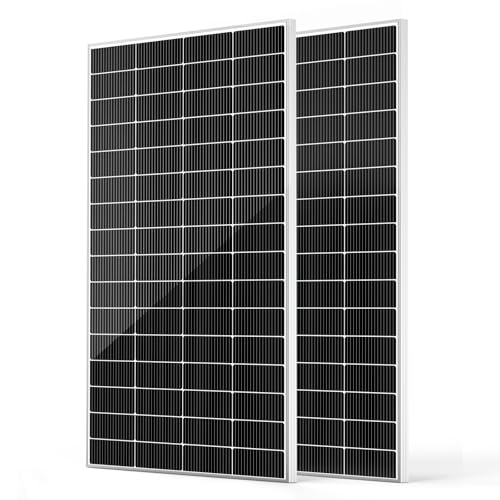
HQST 400W Solar Panel Review Summary
The HQST 400W Solar Panel is a strong fit for buyers who care more about space efficiency and long-term durability than about chasing the cheapest wattage on the market.
It makes the most sense for Class B vans, compact RV roofs, boats, and other builds where panel footprint matters as much as output.
What stands out is the combination of compact size, lighter weight, N-Type cell technology, and low-light performance claims.
If your install has awkward roof geometry, limited mounting room, or you want fewer modules and cable runs, this is the kind of panel package that can simplify the build.
The tradeoff is straightforward: it is more specialized than a generic high-wattage panel, so buyers with plenty of roof space may not need to pay for the compact-form-factor advantage.
Review Scorecard
| Category | Score | Rationale |
|---|---|---|
| Space efficiency | 9/10 | The listing emphasizes a 13% smaller and 14.5% lighter design versus conventional PERC panels. |
| Durability | 9/10 | Aluminum frame, IP65 protection, wind and snow load ratings, and long-service-life claims support rugged use. |
| Low-light performance | 8/10 | N-Type cells are positioned as better for cloudy mornings, late afternoons, and other weaker-light conditions. |
| Installation flexibility | 8/10 | Fewer panels and fewer parallel connections can reduce mounting and wiring complexity. |
| Long-term value | 8/10 | The 30-year service-life claim and 87.4% output retention target suggest a durability-focused design. |
| Efficiency potential | 9/10 | The listing claims up to 25.4% efficiency, which is a standout spec for space-limited systems. |
| Best-fit versatility | 8/10 | Well suited to RV, trailer, marine, rooftop, shed, and off-grid applications, though space-rich setups may not need it. |
Key Features and Specifications of HQST 400W Solar Panel
The product title and features describe a two-panel 400W set made up of 2 x 200W modules.
That is important because it gives buyers modular flexibility while still targeting a combined 400W setup.
The listed dimensions are 30.1 x 46.3 x 1.2 inches per panel, and the weight is 20.17 lb per panel, which helps explain why HQST positions it for compact builds and easier handling.
The most distinctive technical point is the use of N-Type cells with 16BB construction.
HQST says the panel can reach up to 25.4% efficiency and that the N-Type design supports a 30-year service life with 87.4% output.
The listing also says the cells are Grade A+ and EL-tested, which is a useful quality-control claim for buyers who want fewer surprises from hidden defects or microcracks.
Other published features include:
- 13% smaller and 14.5% lighter than conventional PERC panels, according to the listing
- Low-light performance for cloudy days, early mornings, and late afternoons
- Corrosion-resistant aluminum frame
- IP65 waterproof protection
- 2400 Pa wind load rating
- 5400 Pa snow load rating
Those specs point to a panel designed for real-world outdoor use rather than a fragile showroom product.
The target applications listed by HQST include RVs, vans, trailers, boats, farms, rooftops, tiny houses, sheds, and off-grid solar systems.
That is a broad range, but the compact dimensions make the strongest case for mobile and space-constrained installs.
Pros and Cons of HQST 400W Solar Panel
Pros
- Compact footprint makes it easier to fit on small or segmented roofs
- Lighter weight should be friendlier for vans, RVs, and roof load planning
- N-Type cell design is a plus for buyers focused on efficiency and longevity
- 16BB Grade A+ cells suggest better current collection and fewer hotspot issues than simpler busbar layouts
- Low-light claims are attractive for mixed-weather or early/late-day charging
- Durable build claims suit outdoor and marine environments
Cons
- Not the cheapest style of panel in concept, because the compact and efficiency-focused design is doing real work here
- Fewer buyers need this exact size advantage if they have generous roof space
- The strongest benefits are situational; if you only need basic wattage, simpler panels may be enough
- A two-panel setup still requires careful system planning for mounting, wiring, and charge controller compatibility
The pros are strongest when you think like an installer, not just a shopper.
This is a panel made to solve space, weight, and durability constraints together.
If those constraints are not part of your project, the appeal narrows.
Who Should Buy HQST 400W Solar Panel?
Buyers should look at this panel if they need meaningful solar output in a compact footprint.
That includes Class B van owners, RV builders, trailer users, boat owners, and off-grid homeowners who are working with limited roof area or awkward mounting layouts.
It also makes sense if you prefer a more future-proof style of panel.
The listing’s claims about N-Type durability, 30-year service life, and better low-light response are the right kind of features for someone who wants a panel to stay relevant across many seasons of use.
You should probably skip it if:
- You have ample roof space and do not need a compact module
- You are shopping for the absolute lowest-cost wattage
- Your setup is simple and you do not care about space efficiency or lighter weight
- You want a one-panel solution and are not interested in a two-module configuration
In other words, this is for buyers who see solar as a system design problem, not a commodity purchase.
The more constrained your install, the better this panel should look.
Why the HQST 400W Solar Panel Fits Mobile Solar Builds
Space-Constrained Roofs
The compact dimensions are the main reason this panel exists.
A smaller panel can leave room for vents, skylights, antennas, and cable routes, which often matter more than raw wattage on paper.
Weight and Handling
At 20.17 lb per panel, the design is easier to manage than heavier, bulkier options.
That matters during mounting, lifting, and any situation where roof load is part of the planning equation.
Efficiency and Output Retention
The listing’s efficiency and long-service-life claims position the panel as a durable energy source rather than a disposable accessory.
Buyers who want steady output over many years should care about those details more than headline wattage alone.
Harsh-Weather Confidence
The aluminum frame, IP65 rating, and wind and snow load claims suggest a panel built to tolerate exposure.
That is especially relevant for rooftops, marine setups, and off-grid structures where weather resistance is not optional.
Alternatives to HQST 400W Solar Panel
If you want to compare similar options, it makes sense to look at other space-efficient or reputable solar panel lines on Amazon:
Renogy is worth comparing if you want a widely known solar brand with a broad ecosystem.
Newpowa and ECO-WORTHY are useful checks if you are comparing module formats and trying to balance footprint against system cost.
Searching the smaller HQST 200W version can also help if you like the same brand but want to scale output differently.
Is HQST 400W Solar Panel Worth It?
Yes, if your build is constrained by space, weight, or installation complexity. The HQST 400W Solar Panel stands out because it combines compact dimensions, N-Type cell claims, durable construction, and a design that should make more sense on vans, RVs, boats, and tight rooftops than oversized generic panels.
If your priority is simply to buy any affordable solar wattage, this is probably more panel than you need.
But if you want a compact, durability-focused, low-light-friendly module pair for a serious mobile or off-grid setup, it is a credible option worth considering.