
The best pure sine wave car inverters deliver cleaner, more stable AC power than modified sine wave models, making them a smart choice for laptops, medical devices, chargers, and other sensitive electronics.
This roundup compares 10 options ranging from compact 300-watt vehicle adapters to high-output 3,000-watt systems. Pay close attention to continuous wattage, surge capacity, connection method, cooling, and your vehicle’s battery limitations before buying.
Best 10 Pure Sine Wave Car Inverters Picks for 2026
Best Compact Pick
300W BESTEK Pure Sine Car Inverter

- 300W continuous and 700W peak output
- Two AC outlets and dual 4.8A USB charging
- 11–17V input with multiple safety protections
Best For: Everyday vehicle charging and smaller electronics
Best High-Power Display Pick
BELTTT 2000W Pure Sine Inverter

- 2,000W continuous and 4,000W surge output
- LCD monitoring with 23-foot remote
- AC, 20A, USB, and hardwire connections
Best For: RVs, trucks, and off-grid battery systems
Best Flexible Connection Pick
500W BESTEK Pure Sine Inverter
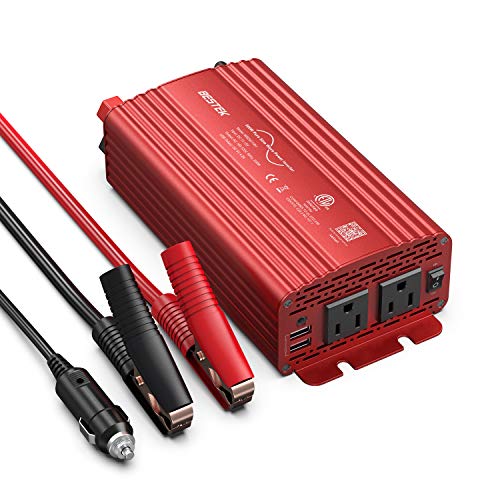
- 500W pure sine output with two AC outlets
- Includes cigarette-lighter and battery-clamp cables
- Dual USB charging and broad protection features
Best For: Users needing both plug-in and direct-battery options
Best Rugged RV Pick
LANDERPOW 2000W Pure Sine Inverter

- 2,000W continuous and 4,000W surge capacity
- Three AC outlets, hardwire terminal, USB, and 30W PD
- 15-foot remote, 2 AWG cables, and metal housing
Best For: RV, truck, job-site, and emergency power systems
Best Mid-Range Power
BELTTT 1500W Pure Sine Wave Inverter

- 1,500W continuous and 3,000W surge output
- LCD, dual AC outlets, and USB charging
- Includes battery cables and installation tools
Best For: RV, truck, camping, and off-grid battery setups
Best High-Capacity Setup
Vansdon 2000W Pure Sine Wave Inverter

- 2,000W continuous and 4,000W surge output
- Three AC outlets plus a high-current terminal
- 30W USB-C, remote LCD, and dual cooling fans
Best For: RV, truck, workshop, and demanding off-grid use
Best with Extra Features
BESTEK 400W Pure Sine Wave Inverter
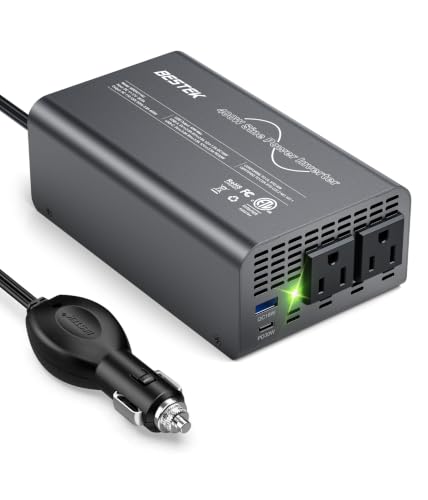
- 400W continuous and 800W peak output
- Two AC outlets plus PD30W and QC18W USB charging
- Multiple protections and a temperature-controlled fan
Best For: Road trips, small electronics, CPAP devices, and Tesla vehicles
Best High-Power Option
EFFORTWAY 3000W Pure Sine Wave Inverter

- 3000W continuous and 6000W peak output
- Four AC outlets, four USB ports, and remote controls
- LCD monitoring and built-in safety protections
Best For: RV, boat, camping, off-grid, and emergency power systems
Best Fast-Charging Pick
BESTEK 300W Pure Sine Wave Inverter

- 300W continuous and 700W peak output
- PD30W USB-C and QC18W USB-A fast charging
- Compact vehicle design with two AC outlets
Best For: Daily vehicle charging of laptops, phones, tablets, and small electronics
Best Compact Pick – 300W BESTEK Pure Sine Car Inverter
The BESTEK 300W is a practical choice when you need pure sine wave car inverters for charging and powering smaller electronics from a vehicle outlet. It provides 300W of continuous power, two AC outlets, and dual USB charging with automatic device detection.
Best For: Road trips, laptops, cameras, game consoles, tablets, speakers, and other modest loads powered through a vehicle socket.
Pros:
- 300W continuous output with 700W peak capacity.
- Two AC outlets plus two USB ports offering up to 4.8A total.
- Compatible with 11–17V systems, including Tesla and other newer-energy vehicles.
- Built-in fuse and protection against overheating, voltage issues, overloads, and short circuits.
Cons:
- Its 300W rating is intended for lighter-duty electronics, not high-draw appliances.
- Designed for vehicle DC sockets rather than direct battery-clamp operation.
This is a convenient, compact option for everyday in-car charging. Its multiple ports and broad protection package make it especially useful when portability matters more than maximum output.
Best High-Power Display Pick – BELTTT 2000W Pure Sine Inverter
The BELTTT 2000W is built for shoppers seeking powerful pure sine wave car inverters for RVs, trucks, off-grid setups, and outdoor use. It delivers 2,000W continuously, supports 4,000W startup surges, and includes a detailed LCD for monitoring system status.
Best For: RVs, trucks, solar-and-battery systems, and larger loads such as home-theater equipment or other sensitive electronics.
Pros:
- 2,000W continuous output and 4,000W peak surge capacity.
- LCD shows input and output voltage, battery status, load status, and operating conditions.
- Includes dual AC sockets, a 20A outlet, USB, hardwire connection, and a 23-foot remote.
- Features over- and undervoltage, overload, overheating, short-circuit, and reverse-connection protection.
Cons:
- At 7.7 pounds and nearly 15 inches long, it is less portable than compact car adapters.
- Its 12V battery connection and hardwire features require more installation than a plug-in inverter.
Choose this model when output capacity and monitoring are priorities. The LCD, remote control, and 93% stated operating efficiency give it a more capable setup for sustained off-grid or vehicle-based power.
Best Flexible Connection Pick – 500W BESTEK Pure Sine Inverter
The BESTEK 500W offers a flexible approach to pure sine wave car inverters, with both a cigarette-lighter cable and battery clamps. Its clean AC output is designed for sensitive electronics, while two AC outlets and dual USB ports support several devices at once.
Best For: Drivers who want a midrange inverter for electronics and the option to connect directly to a 12V battery for higher available loads.
Pros:
- 500W continuous pure sine output with two AC outlets.
- Includes both a 12V plug cable and alligator battery-clamp cables.
- Dual USB ports provide up to 4.2A total and automatically detect connected devices.
- Thermal sensors, fan cooling, replaceable fuses, and multiple voltage and overload protections are included.
Cons:
- The cigarette-lighter connection should be kept below its vehicle-fuse limits; the notes recommend staying under about 150W for many cars.
- Reaching the full 500W rating requires the battery-clamp connection rather than the car outlet.
- The fan may run when the unit becomes hot or is powered on.
This is a versatile choice for buyers who want more than a basic plug-in adapter. Its dual connection options are useful, but users must match the connection method and load to the vehicle’s fuse and wiring limits.
Best Rugged RV Pick – LANDERPOW 2000W Pure Sine Inverter
The LANDERPOW 2000W is a robust option among pure sine wave car inverters for RVs, job sites, emergencies, and other demanding 12V applications. It supplies 2,000W continuously, handles 4,000W surges, and combines multiple outputs with remote monitoring.
Best For: RV and truck users, off-grid setups, and high-demand equipment that benefits from a hardwired connection, thick battery cables, and remote control.
Pros:
- 2,000W continuous and 4,000W peak pure sine output.
- Three AC outlets, a hardwired terminal, USB charging, and a 30W PD port.
- Includes 2 AWG battery cables and a 15-foot wired remote with LED status display.
- Full-metal housing and protection against voltage problems, overload, overheating, short circuits, and reverse connection.
Cons:
- This high-output design is more involved to install than a cigarette-lighter inverter.
- The supplied details do not specify complete dimensions or a total product weight.
- Its 12V, 2,000W capacity requires an appropriately sized battery and wiring system.
For demanding mobile power, the LANDERPOW emphasizes connection flexibility, monitoring, and durability. Its hardwired terminal and included heavy-gauge cables make it better suited to a dedicated battery installation than casual in-car charging.
Best Balanced Car Inverter – BESTEK 1000W Pure Sine Wave Inverter
For drivers seeking dependable pure sine wave car inverters, the BESTEK 1000W model offers a practical balance of capacity, convenience, and monitoring. It provides 1,000 watts of continuous power, two AC outlets, dual USB charging ports, and an LCD that shows operating information.
Best For: Car users who need to run sensitive electronics, small appliances, or medical devices during travel or an outage.
Pros:
- Pure sine wave output is designed for sensitive equipment and reduced electrical noise.
- Two AC outlets and two smart USB ports support several devices.
- LCD displays input and output voltage, power, and protection status.
- Includes cooling, overload, short-circuit, and voltage protections, plus an 18-month warranty.
Cons:
- Its 1,000-watt continuous rating is lower than the higher-capacity options in this roundup.
- At 4.3 pounds and measuring 10.5 by 5.9 by 3.7 inches, it still requires a secure storage spot in a vehicle.
The BESTEK is a well-rounded choice when clean AC power, accessible charging, and straightforward status monitoring matter more than maximum output. Its 1,500-watt peak rating can help with startup loads, but buyers should still check each appliance’s running and surge requirements.
Best Mid-Range Power – BELTTT 1500W Pure Sine Wave Inverter
The BELTTT 1500W is one of the more capable pure sine wave car inverters for RVs, trucks, camping, and off-grid use. Its 1,500-watt continuous output, 3,000-watt surge rating, LCD, and included battery cables make it suited to larger loads than a basic vehicle inverter.
Best For: RV and truck owners who want higher continuous capacity for sensitive electronics and outdoor equipment.
Pros:
- Provides 1,500 watts continuously and up to 3,000 watts of surge power.
- Pure sine wave output is suitable for sensitive loads such as televisions and home theater equipment.
- Includes two AC outlets, a 5V/2.1A USB port, 3-foot battery cables, and installation tools.
- LCD shows input and output voltage, battery status, load status, and operating conditions.
Cons:
- It has fewer AC outlets than the BESTEK and Vansdon models.
- The supplied notes specify a one-year warranty, shorter than BESTEK’s 18-month coverage.
- At 12.22 inches long and 5.3 pounds, it is relatively substantial for a vehicle setup.
With more continuous capacity than the BESTEK and a useful set of included installation accessories, the BELTTT is a strong middle-ground option. Its aluminum and plastic housing and multiple protections add practicality, while the 12V input makes battery compatibility important to verify before purchase.
Best High-Capacity Setup – Vansdon 2000W Pure Sine Wave Inverter
The Vansdon 2000W targets demanding mobile-power needs and stands out among pure sine wave car inverters with 2,000 watts of continuous output and 4,000 watts of surge capacity. It also adds three AC outlets, a hardwired terminal, USB-C PD charging, and a long-range wired remote with an LCD.
Best For: RV, truck, solar, and off-grid users who need to operate multiple devices or heavier appliances from a 12V battery system.
Pros:
- Offers 2,000 watts continuous and 4,000 watts surge power for heavier startup loads.
- Three AC outlets plus a hardwired terminal support tools and high-current appliances.
- Includes a 30W USB-C PD port, USB port, remote LCD, and real-time system information.
- Dual fans, aluminum heat sinks, and seven-layer protection are designed for demanding operation.
Cons:
- Its higher output generally calls for a properly sized 12V battery, wiring, and installation.
- The supplied notes do not provide product dimensions, weight, or warranty duration.
- It is more capability than many drivers need for basic phone or laptop charging.
The Vansdon is the most robust and feature-rich choice here, particularly for mobile workshops, RV kitchens, and off-grid systems. Its high surge rating and hardwired terminal are useful for demanding equipment, but buyers should plan the electrical installation carefully rather than treating it like a simple plug-in accessory.
Best with Extra Features – BESTEK 400W Pure Sine Wave Inverter
For drivers who want compact pure sine wave car inverters for everyday electronics, the BESTEK 400W model combines two AC outlets with fast USB charging. Its 400W continuous output and 800W peak capacity suit smaller devices and selected low-wattage appliances.
Best For: Road trips, Tesla vehicles, CPAP users, and charging laptops, cameras, phones, and other small electronics.
Pros:
- Pure sine wave output is designed to provide cleaner power for sensitive electronics.
- Includes two AC outlets, PD30W USB-C, and QC18W USB-A charging.
- Protection features cover short circuits, overloads, overcurrent, low voltage, overvoltage, and overheating.
- Temperature-controlled fan helps manage heat while reducing unnecessary fan noise.
Cons:
- 400W continuous output is not intended for high-demand appliances.
- Vehicle 12V input limits this model compared with larger battery-connected inverters.
This is a practical, travel-friendly option when portability and device charging matter more than maximum wattage. The Tesla-compatible 11–17V input and 18-month replacement coverage add useful ownership reassurance.
Best High-Power Option – EFFORTWAY 3000W Pure Sine Wave Inverter
The EFFORTWAY 3000W is one of the higher-output pure sine wave car inverters for users who need substantial AC power from a 12V battery system. It delivers 3000W continuously, with 6000W available for startup surges, and includes remote controls for flexible operation.
Best For: RVs, camping, boats, off-grid solar setups, trucks, and emergency backup applications requiring power for larger appliances.
Pros:
- 3000W continuous and 6000W peak output can support demanding loads.
- Four AC outlets and four USB ports expand simultaneous charging options.
- Wired and wireless remote controls plus dual LCD displays make monitoring more convenient.
- Built-in protections address overcurrent, short circuit, low load, overload, overheating, and overvoltage.
Cons:
- Its 12V, high-wattage design requires suitable battery cables and a capable battery system.
- At 7.7 pounds, it is less portable than compact car plug-in models.
- The wireless remote requires batteries, which are not included.
Choose this model when output capacity is the priority. Its aluminum-alloy construction, cooling fan, included battery cables, and remote monitoring make it better suited to installed or semi-permanent setups than casual phone charging.
Best Fast-Charging Pick – BESTEK 300W Pure Sine Wave Inverter
For everyday vehicle use, the BESTEK 300W is a compact choice among pure sine wave car inverters. It provides 300W of continuous output, 700W of peak power, two AC outlets, and fast USB charging through PD30W and QC18W ports.
Best For: Charging laptops, phones, tablets, cameras, speakers, game consoles, and other modest-power electronics from a vehicle.
Pros:
- Pure sine wave output is suitable for devices that benefit from cleaner AC power.
- PD30W USB-C and QC18W USB-A ports support fast charging for compatible devices.
- Compact 7-by-5-by-2-inch design connects through a 24-inch cigarette-lighter cable.
- Includes temperature, under-voltage, over-voltage, short-circuit, and fuse protection.
Cons:
- 300W continuous capacity limits use with larger appliances.
- Vehicle outlet operation is less suitable for high-demand or permanently installed applications.
This model makes sense for drivers who want a small inverter with useful charging flexibility. Its upgraded 11–17V input supports Tesla and other newer vehicles, while the quiet cooling fan and extended replacement warranty improve day-to-day practicality.
How We Picked These Pure Sine Wave Car Inverters
We focused on models that clearly identify pure sine wave output and cover the most useful power ranges for cars, trucks, RVs, emergency backup, and off-grid use. The selection includes compact plug-in units, medium-size inverters with battery cables, and high-output systems with LCD screens or remote controls.
We also considered stated continuous and peak wattage, outlet and USB availability, voltage compatibility, monitoring features, and practical installation needs. Published specifications should still be verified before purchase, particularly for high-draw appliances and sensitive equipment.
Quick Comparison
| Power range | Best suited for | Typical connection |
|---|---|---|
| 300–500W | Phones, laptops, cameras, small electronics | 12V accessory socket or compact leads |
| 1,000–1,500W | Multiple devices and moderate household loads | Direct battery connection recommended |
| 2,000–3,000W | High-demand tools, appliances, and backup power | Heavy-duty battery cables |
Key Buying Factors for Pure Sine Wave Car Inverters
Continuous and Surge Wattage
Continuous wattage determines what the inverter can run for an extended period. Surge capacity handles the brief startup demand of motors, compressors, pumps, and some power tools. Choose an inverter with enough headroom rather than matching your device’s rating exactly.
Vehicle and Battery Compatibility
Most products here use a 12V DC input, but a large inverter can draw substantial current. Compact models may work through a vehicle accessory outlet, while 1,000W or larger units generally require a direct connection to the battery with appropriately sized cables and fuses. Never assume a car socket can safely support the inverter’s maximum output.
Ports, Protection, and Monitoring
Count the AC outlets and check whether USB-A, USB-C, fast charging, an LCD display, or a wired or wireless remote matters for your setup. Useful safety features include over-temperature, overload, short-circuit, low-voltage, and over-voltage protection. Ventilation is also important because high loads generate heat.
Load Type and Runtime
Pure sine wave output is well suited to sensitive electronics, audio equipment, chargers, medical devices, and appliances with motors. Runtime depends on battery capacity, load, wiring, and inverter efficiency; a higher wattage rating does not create additional battery energy.
Who Should Buy Which Pure Sine Wave Car Inverters?
Choose a 300W–500W model for travel essentials such as laptops, phones, cameras, tablets, and small entertainment devices. A 1,000W–1,500W inverter is a better fit for users who need several outlets or occasional moderate loads in an SUV, truck, or RV.
Buy a 2,000W–3,000W model only when you genuinely need high-demand equipment and have a suitable battery, wiring, ventilation, and installation plan. For occasional emergency use, prioritize protection features and simple monitoring. For permanent RV, solar, or off-grid installations, favor direct-battery models with remote controls, clear displays, and enough surge capacity for your appliances.