
Choosing the right portable solar panel for overlanding can make the difference between a smooth off-grid trip and a dead battery at camp.
Below, we focus on panels that balance power output, weather resistance, portability, and compatibility with popular power stations.
Best 10 Portable Solar Panel for Overlanding Picks for 2026
Trail-Ready Efficiency
Renogy 200W Portable Solar Panel

- 25% efficiency with 16BB N-Type cells
- 13.89 lb foldable design for tight storage
- USB-C, USB-A, and MC4 outputs
Best For: Overlanders who prioritize compact size and high efficiency
Curved-Surface Mount
Solarapex 100W Flexible Solar Panel

- 270° flexible design for curved surfaces
- Fiberglass-reinforced ETFE build
- IP68 waterproof and very lightweight
Best For: Semi-permanent overlanding installs on curved roofs
Compact Heavy-Duty Choice
Renogy 220W Portable Solar Panel

- 220W output with 23% efficiency
- Compact foldable suitcase with carry case
- Fiberglass and ETFE for rugged use
Best For: Travelers wanting compact size plus higher solar output
High-Compatibility Foldable
SOKIOVOLA 200W Portable Solar Panel
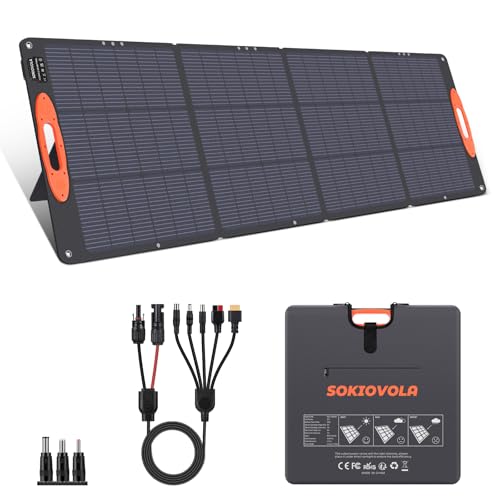
- 25% efficiency with A+ monocrystalline cells
- MC4 to 5-in-1 connectors for wide compatibility
- IP68 ETFE build with magnetic handle
Best For: Users who need a versatile foldable panel for many power stations
Ultra-Light Off-Grid Pick
FlexSolar 100W Foldable Portable Solar Panel Charger

- Weighs 4.1 lbs and folds small for easy packing
- 23%+ efficiency with monocrystalline cells
- IP67 waterproof and dustproof for outdoor use
Best For: Lightweight overlanders charging phones, power banks, and small portable stations
High-Output Premium Choice
ZOUPW 230W Bifacial Portable Solar Panel

- 230W output with 25% efficiency and N-Type 16BB cells
- Bifacial design can add up to 30% more power
- IP68 waterproof and includes a 10ft connector cable
Best For: Mid-sized overlanding and RV setups that need higher solar output
Compact Budget-Friendly Pick
FlexSolar 60W Foldable Portable Solar Panel Charger

- Only 2.6 lbs and folds to a laptop-like size
- Up to 24% conversion with monocrystalline cells
- USB-C, USB-A, DC outputs plus IP67 rating
Best For: Lightweight overlanders with small power stations and basic charging needs
Ultra-High Output Pick

- 400W output with 23% conversion rate
- Foldable design with adjustable kickstand
- IP65 waterproof and dust-resistant build
Best For: Overlanders who want the strongest charging output for a power station
Most Versatile Travel Pick

- 23.5% efficiency with A+ monocrystalline cells
- True 5-in-1 connectors for wide compatibility
- IP67 waterproof with USB-C and USB-A ports
Best For: Overlanders who need a light, versatile panel for varied gear and weather
Balanced Mid-Size Pick

- 24% efficiency with up to 200W output
- 8-in-1 MC4 adapter setup for wide compatibility
- USB-C 60W and QC3.0 ports for direct charging
Best For: Overlanders who want a well-rounded mix of output, portability, and compatibility
Trail-Ready Efficiency – Renogy 200W Portable Solar Panel
If you want a portable solar panel for overlanding that squeezes more power from limited sun, this Renogy 200W model is built around 25% efficiency and a lightweight foldable format. It’s aimed at travelers who need fast charging for a power station or 12V setup without carrying a bulky rig.
Best For: Overlanders who want a lightweight, high-efficiency foldable panel for fast charging in compact vehicle setups.
Pros:
- 25% efficiency with 16BB N-Type cells for strong output in tight spaces or cloudy conditions
- Lightweight 13.89 lb build with backpack-size folded dimensions
- USB-C PD and dual USB-A ports plus MC4 output for power stations and batteries
- Built-in kickstands, accessory pouch, and IP65 dust/splash resistance
Cons:
- At 200W, it may still be undersized for users wanting larger daily solar harvests
- Some stability accessories are add-ons rather than fully integrated
This is a strong pick if efficiency and portability matter more than raw panel size. For overlanding, the combination of compact storage, multiple output options, and ruggedized protection makes it easy to deploy and pack away on repeat trips.
Curved-Surface Mount – Solarapex 100W Flexible Solar Panel
This portable solar panel for overlanding is less about campsite portability and more about permanent, low-profile power on curved surfaces. The Solarapex 100W flexible panel is designed for RV roofs, vans, boats, and other uneven installs where a rigid panel is harder to fit.
Best For: Overlanders planning a semi-permanent install on curved roofs or other uneven surfaces.
Pros:
- Flexible 270° design conforms to curved and uneven surfaces
- Fiberglass-reinforced construction with ETFE surface for durability
- Very light at about 4.85 lb and only 2.6 mm thick
- IP68 waterproof rating for outdoor exposure
Cons:
- 100W output is modest compared with larger portable suitcase-style panels
- Requires a compatible solar charge controller for use
If your build favors a thin, mounted panel over a carry-and-deploy solar kit, this one makes sense. It’s a practical fit for space-conscious overlanding setups that need weather resistance and a curved-surface installation.
Compact Heavy-Duty Choice – Renogy 220W Portable Solar Panel
For overlanders who want more output without jumping to a huge solar suitcase, this Renogy 220W portable solar panel balances compact storage with rugged materials. It folds down small, sets up quickly, and is designed to keep working through changing weather and partial shade.
Best For: Overlanders who want a compact, higher-output foldable panel with rugged weather protection.
Pros:
- 220W output with 23% efficiency for stronger charging capacity
- Compact folded size and carry case make transport easier
- Fiberglass, ETFE coating, and IP67/IP68-rated components for durability
- Parallel wiring helps reduce the impact of partial shading
Cons:
- At 15.87 lb, it’s still a bit heavier than the lightest portable options
- More expensive, durability-focused build may be more than casual users need
This is a smart middle ground if you want dependable output and tough materials for rough travel. For overlanding, it stands out as a portable panel that still feels ready for long-term use in demanding conditions.
High-Compatibility Foldable – SOKIOVOLA 200W Portable Solar Panel
If your overlanding setup uses multiple brands of portable power stations, this portable solar panel for overlanding is built to make compatibility easy. The SOKIOVOLA 200W foldable panel combines 25% efficiency, IP68 protection, and a wide connector package for flexible off-grid charging.
Best For: Overlanders who need broad power-station compatibility and a foldable 200W panel.
Pros:
- 25% conversion efficiency with A+ grade monocrystalline cells
- Includes MC4 to 5-in-1 connectors for many popular power stations
- IP68 waterproof, dustproof ETFE construction for harsh conditions
- Magnetic handle and compact folded size improve carry convenience
Cons:
- 16.31 lb weight may feel heavy for users prioritizing ultralight carry
- Some portable power stations may still cap input, limiting usable solar intake
This panel is especially appealing if you want one kit that can work with several generator brands. For overlanding, the mix of strong efficiency, rugged protection, and connector flexibility makes it an easy all-around option.
Ultra-Light Off-Grid Pick – FlexSolar 100W Foldable Portable Solar Panel Charger
If you want a portable solar panel for overlanding that stays easy to carry without giving up useful output, this 100W FlexSolar panel is a strong fit. It weighs just 4.1 lbs, folds into a compact bag-friendly size, and offers USB-C, USB-A, and DC outputs for charging phones, power banks, and portable power stations on the road.
Best For: Lightweight overlanders who want a compact 100W panel for charging small electronics and portable power stations.
Pros:
- Very light at 4.1 lbs with a slim folded profile
- 23%+ efficiency with monocrystalline cells for solid charging performance
- IP67 waterproof and dustproof for rain, sand, and rough outdoor use
- Includes USB-C PD 3.0, USB-A, and DC outputs with adapter cable
Cons:
- 100W output is better for smaller power needs than full-size rigs
- Best suited to portable stations and devices rather than high-demand appliances
This is a practical overlanding option when portability and weather resistance matter more than raw wattage. It makes sense for travelers who want a dependable grab-and-go panel for everyday off-grid charging.
High-Output Premium Choice – ZOUPW 230W Bifacial Portable Solar Panel
For overlanders who need more charging power from a portable solar panel for overlanding, this 230W ZOUPW model stands out with a bifacial design and high-efficiency N-Type 16BB cells. It is built to deliver strong output for portable power stations, and the tri-fold format makes it manageable to set up solo when you need a larger field-ready panel.
Best For: Mid-sized RV and overlanding setups that want higher solar output in a portable, foldable form.
Pros:
- High 230W output with 25% conversion efficiency
- Bifacial design can capture up to 30% extra gain from reflected light
- At 12.6 lbs, it is lighter than many glass panels in this class
- IP68 waterproof rating and includes a 10ft 5-in-1 connector cable
Cons:
- Larger and heavier than 60W or 100W alternatives
- Best suited to users with enough space to deploy a tri-fold panel
This is the strongest choice here if your overlanding setup needs more daily charging capacity from one panel instead of multiple smaller ones. Its combination of output, efficiency, and weather resistance makes it well suited to more serious off-grid travel.
Compact Budget-Friendly Pick – FlexSolar 60W Foldable Portable Solar Panel Charger
If you want a smaller portable solar panel for overlanding and everyday backup charging, this 60W FlexSolar panel is built for convenience. Its 2.6 lb weight, foldable design, and integrated USB-C, USB-A, and DC outputs make it a practical match for phones, tablets, battery packs, and small solar generators under 300Wh.
Best For: Overlanders who want a compact, lightweight panel for small power stations and day-to-day device charging.
Pros:
- Very light at 2.6 lbs and folds down to a laptop-like size
- Up to 24% energy conversion with monocrystalline cells
- Offers USB-C, USB-A, DC, and multiple connector options
- IP67 waterproof rating for tougher weather conditions
Cons:
- 60W output is best for small-to-medium devices and compact stations
- No kickstand included
- Junction box is not waterproof
This model makes the most sense if portability is your top priority and your charging demands are modest. It is a straightforward, easy-to-pack solar option for camp use, road trips, and emergency backup power.
Ultra-High Output Pick – 400W Foldable Solar Panel
If you want a portable solar panel for overlanding that can feed a power station quickly, this 400W foldable option is built for high-output charging. It uses monocrystalline silicon with a claimed 23% conversion rate, plus an adjustable kickstand to help you capture more sun when camp conditions change.
Best For: Overlanders who need the highest charging output here for larger power stations and longer off-grid stays.
Pros:
- 400W output with a 23% conversion rate for strong charging potential
- Compatible with Jackery and EcoFlow power stations
- Foldable, lightweight design with adjustable kickstand for easier setup
- IP65-rated waterproof and dust-resistant construction for outdoor use
Cons:
- Higher-watt panels are typically less compact than smaller travel-focused options
- Requires a suitable power station input to realize its full output
For overlanding rigs that prioritize faster replenishment over maximum packability, this model stands out as the most powerful option in the group. Its safety protections and weather-resistant build make it a practical pick for camp charging, emergency backup, and extended trips.
Most Versatile Travel Pick – 100W Foldable Solar Charger
This portable solar panel for overlanding focuses on versatility, portability, and weather readiness in a compact 100W package. It uses A+ monocrystalline cells with 23.5% efficiency, includes a true 5-in-1 connector setup, and folds down for easier transport to camp or trailhead.
Best For: Overlanders who want a lightweight, highly compatible panel for mixed charging needs and unpredictable weather.
Pros:
- 23.5% efficiency with A+ monocrystalline cells for solid charging performance
- True 5-in-1 connectivity helps it work with many popular power stations
- IP67 waterproof panel with ETFE coating for outdoor and marine use
- Built-in controller adds USB-C and USB-A ports for direct device charging
Cons:
- 100W output is better for topping up than running heavy loads
- Controller and cables are stored in a zippered pocket, so setup has a few more parts than a bare panel
For overlanding, this model makes a strong case if you value broad compatibility and easy carry weight over raw wattage. The included direct-charging ports and robust waterproofing also make it useful when you want one panel to handle both your power station and small devices.
Balanced Mid-Size Pick – 200W ETFE Solar Panel
If you want a portable solar panel for overlanding that sits between compact carry and strong output, this 200W foldable panel is a practical middle ground. It uses 24% efficient monocrystalline cells, ETFE lamination, and a multi-adapter setup designed to work with many popular power stations.
Best For: Overlanders who want a well-rounded 200W panel with good compatibility, fast device charging, and easier handling.
Pros:
- 24% conversion efficiency and up to 200W maximum output
- 8-in-1 MC4 converter setup supports many portable power stations
- USB-C PD 60W and QC3.0 ports for direct device charging
- Four adjustable kickstands and a magnetic handle improve setup and carry
Cons:
- At 15.7 lbs, it is heavier than the 100W option
- Not as compact as smaller panels when folded
This is the most balanced option if your overlanding setup needs meaningful solar input without jumping all the way to a larger 400W panel. It combines useful power, broad compatibility, and weather-resistant materials in a size that still makes sense for regular vehicle travel.
How We Picked the Best Portable Solar Panel for Overlanding
For this roundup, we prioritized solar panels that make sense for overlanding: foldability, carry weight, rugged construction, charging efficiency, and practical output for real camp use. We also looked at weather protection ratings, connector options, and whether the panel is likely to work well with common portable power stations.
Quick Comparison
In general, 60W to 100W panels are easier to move and pack, while 200W to 230W models are better for faster recharging at camp. A 400W panel can be useful for higher energy demands, but it is less convenient if you move camp often or have limited vehicle storage.
Key Buying Factors for a Portable Solar Panel for Overlanding
Power Output
Match the panel wattage to your battery size and daily usage. If you only need to keep phones, lights, and a small fridge topped up, a lower-watt option may be enough. If you run a 12V fridge, cameras, laptops, or multiple devices, a higher-watt panel will shorten charging time.
Durability and Weather Resistance
Overlanding exposes gear to dust, bumps, sun, and sudden weather changes. Look for ETFE surfaces, reinforced frames or backing materials, and IP-rated water resistance. These features matter more than marketing claims about peak efficiency alone.
Portability and Setup
Foldable panels are usually the easiest to store in a truck, SUV, or roof box. Flexible panels can be useful for curved surfaces or tighter mounting spaces, but they are not always as easy to reposition for maximum sun exposure.
Compatibility
Make sure the panel’s connectors and voltage range match your power station or battery system. Many buyers prefer MC4 output or bundled adapters because they simplify pairing with popular brands like Jackery, EcoFlow, Bluetti, and Anker.
Who Should Buy Which Portable Solar Panel for Overlanding?
If you want the simplest campsite charging setup, choose a 100W to 200W foldable panel. If you travel with heavier electrical loads or want faster recharge times, step up to a 220W, 230W, or 400W option. If space is tight or you need a more semi-permanent solution, a flexible panel may be the better fit.
For most buyers, the best Portable Solar Panel for Overlanding is the one that fits your storage space, your power station, and your realistic daily energy use—not just the highest wattage on the box.