
Working around trim, corners, narrow panels, or automotive details calls for more than a standard full-size sander. The best orbital sanders for tight spaces balance a compact footprint with controlled movement, reliable dust management, and enough power for the material at hand.
This roundup compares 10 compact electric and pneumatic options, from detail sanders and palm sanders to mini random-orbit tools. Use the guide below to match the sander’s size, power source, orbit, and accessories to your workspace and project.
Best 10 Orbital Sanders for Tight Spaces Picks for 2026
Best Compact Detail Sander
HYCHIKA 14,000 OPM Detail Sander

- Compact soft-rubber head reaches corners and edges
- Includes 12 sheets in three grits
- Six-hole dust collection with dust bag
Best For: Detail sanding and paint removal in tight interior spaces
Best Pneumatic Mini Sander
SI FANG Mini Air Random Orbital Sander

- Air-powered tool with 15,000 RPM speed
- Includes 1-, 2-, and 3-inch backing plates
- Low-vibration dual-action design
Best For: Spot sanding and polishing with an air compressor
Best Versatile Detail Sander
SKIL 4-in-1 Multi-Function Sander
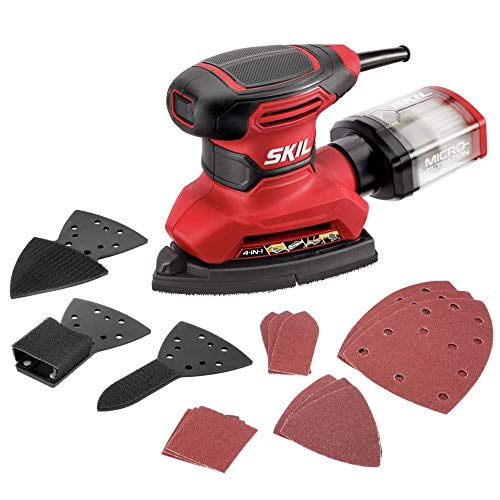
- Three tool-free detail attachments
- Micro-filter and vacuum-port dust options
- Soft grip and counterweight reduce vibration
Best For: Mixed sanding shapes across home projects
Best Variable-Speed Palm Sander
BOSCH ROS20VSC 5-Inch Random Orbital Sander

- Variable speed from 7,500 to 12,000 OPM
- Dampening system helps reduce swirl marks
- Micro-filter dust collection with vacuum adapter
Best For: Controlled finishing on flat and contoured surfaces
Heavy-Duty Right-Angle Pick
Rockwood 2-Inch Air Orbital Sander

- Right-angle design reaches confined areas
- 15,000 RPM four-vane air motor
- Variable speed with 2-inch hook-and-loop pad
Best For: Professional pneumatic sanding, grinding, and polishing in tight areas
Control-Focused Mini Pick
Dynabrade X31 3-Inch Mini Sander

- Lightweight body weighs just over 1 pound
- Adjustable speed and 3/16-inch orbit
- 3-inch pad focuses effort on small parts
Best For: Detailed sanding and repair work on small components
Flexible Pad-Size Pick
PROSHI 2- and 3-Inch Angle Sander
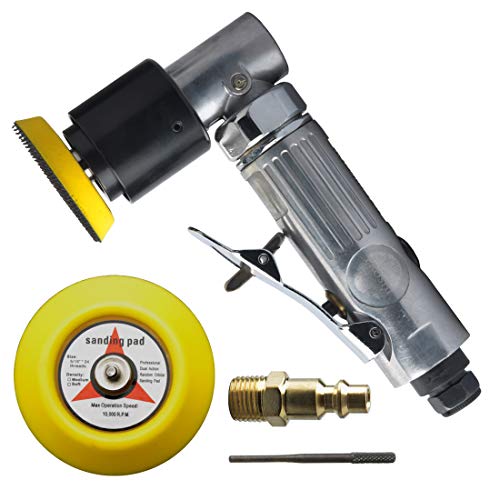
- Angled head targets tight work areas
- Includes 2-inch and 3-inch hook-and-loop pads
- Built-in regulator adjusts working speed
Best For: Versatile pneumatic sanding, polishing, and waxing in confined spaces
Best Compact Corded Pick
SKIL 5-Inch Random Orbital Sander

- 2.8-amp motor with up to 13,000 OPM
- Variable-speed control for different materials
- Cyclonic dust box and low-vibration grip
Best For: DIY sanding in compact work areas
Best Mini Air Detail Kit
ZFE 1/2/3-Inch Pneumatic Sander
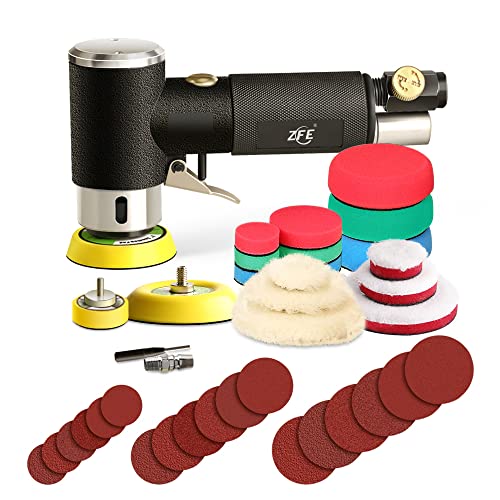
- 1-, 2-, and 3-inch pad options
- 15,000-RPM air-powered operation
- Includes polishing pads and sandpapers
Best For: Auto-body and small-area detail work
Best Versatile Detail Kit

- 1-, 2-, and 3-inch hook-and-loop pads
- Supports sanding, polishing, and buffing
- Includes 49-piece accessory assortment
Best For: Automotive and multipurpose detail work
Best Compact Detail Sander – HYCHIKA 14,000 OPM Detail Sander
For orbital sanders for tight spaces, the HYCHIKA Detail Sander is a compact corded option designed for corners, edges, and detailed interior work. Its 1.6-amp motor reaches up to 14,000 OPM, while the irregular-shaped pad and soft rubber head help it reach areas a larger sander may miss.
Best For: Detail sanding, paint removal, rust removal, and polishing in small corners and hard-to-reach areas.
Pros:
- Compact design with a soft rubber head for edges and tight spaces.
- Includes 12 hook-and-loop sheets in P80, P120, and P240 grits.
- Six-hole dust collection system and included dust bag help limit debris.
- High 14,000 OPM speed suits detail work and polishing.
Cons:
- Corded design limits portability.
- Not recommended for drywall or cement plaster.
The HYCHIKA is a practical pick when access and maneuverability matter more than broad surface coverage. Its included abrasives and dust bag make it ready for small woodworking and home-decoration projects.
Best Pneumatic Mini Sander – SI FANG Mini Air Random Orbital Sander
The SI FANG Mini Air Sander is one of the more specialized orbital sanders for tight spaces, using compressed air rather than a battery or electrical cord. Its small form, 4-mm orbit, and included 1-, 2-, and 3-inch backing plates make it suited to focused sanding and polishing tasks.
Best For: Spot sanding, automotive detailing, metalwork, deburring, and small polishing projects when an air compressor is available.
Pros:
- Compact and lightweight at about 0.68 kg.
- Includes three backing plates and 45 sanding or polishing pads.
- Dual-action motion is designed for a smooth, even finish.
- Adjustable speed and low vibration support extended use.
Cons:
- Requires a compressed-air setup, with 6 CFM air consumption at 6.3 bar working pressure.
- Supplied sanding-disc grits are random.
This mini pneumatic sander is a strong fit for users already equipped with an air compressor. The interchangeable pad sizes broaden its usefulness from precise sanding to automotive polishing and waxing.
Best Versatile Detail Sander – SKIL 4-in-1 Multi-Function Sander
The SKIL SR232301 is a versatile choice among orbital sanders for tight spaces, combining a 1.2-amp motor with three interchangeable detail attachments. The attachments are designed for large surfaces, corners and edges, and contoured areas, making the tool adaptable across different sanding profiles.
Best For: Home projects requiring one detail sander for flat surfaces, corners, edges, and contours.
Pros:
- Four-in-one design covers multiple sanding shapes.
- Tool-free attachment changes simplify switching tasks.
- Micro-filtration and a 1-1/4-inch vacuum port offer dust-control options.
- Soft grip and counterweight balance help reduce vibration fatigue.
Cons:
- Corded 120-volt operation requires access to an outlet.
- Its 1.2-amp motor is less powerful than the larger Bosch model in this roundup.
The SKIL stands out for flexibility rather than a single specialized shape. Its attachment system is useful when a project moves between edges, corners, contours, and more open surfaces.
Best Variable-Speed Palm Sander – BOSCH ROS20VSC 5-Inch Random Orbital Sander
The BOSCH ROS20VSC is a larger palm-style random orbital sander for users who need controlled finishing as well as some maneuverability. Its variable 7,500-to-12,000 OPM range, pad-dampening system, and 5-inch hook-and-loop disc make it suitable for smooth work on flat and contoured surfaces, though it is less compact than a dedicated detail sander.
Best For: Controlled finishing on flat or contoured surfaces where variable speed and dust filtration are priorities.
Pros:
- Variable-speed control matches sanding speed to the workpiece.
- Pad-dampening system is designed to reduce swirl marks.
- Micro-filter traps particles as small as one-half micron.
- Includes a dust canister, vacuum adapter, sanding disc, and carrying bag.
Cons:
- Its 5-inch pad and 3.5-pound weight are less suited to very tight corners.
- Uses corded 120-volt power.
The Bosch is best viewed as a finish-oriented palm sander rather than a true corner-detail tool. Choose it when smooth, controlled results and flexible dust collection matter more than the smallest possible footprint.
Heavy-Duty Right-Angle Pick – Rockwood 2-Inch Air Orbital Sander
The Rockwood 2-inch right-angle sander is a practical choice when orbital sanders for tight spaces need a compact, angled form. Its air-powered motor reaches 15,000 RPM, while variable speed control and a 2-inch hook-and-loop pad support sanding, grinding, and polishing tasks.
Best For: Professional users working on small, confined areas that benefit from a right-angle tool and high-speed pneumatic performance.
Pros:
- Compact 2-inch right-angle design for access in tighter work areas
- High-torque four-vane air motor with a 15,000 RPM free speed
- Variable speed control and low 7 CFM air consumption
- Lightweight 1.4-pound build with a hook-and-loop backing pad
Cons:
- Requires an air compressor and compatible pneumatic connections
- Its 2-inch pad covers less area than larger sanders
Choose this model when right-angle access, professional-grade construction, and fast pneumatic operation matter more than cordless convenience or broad surface coverage.
Control-Focused Mini Pick – Dynabrade X31 3-Inch Mini Sander
The Dynabrade X31 is a compact option among orbital sanders for tight spaces, using a 3-inch pad to concentrate sanding effort on small parts. Its integrated speed control, 12,000 RPM operation, and lightweight design are suited to detailed repair and finishing work.
Best For: Detail sanding on cabinets, shelves, signs, guitars, vehicle trim, spoilers, and other small workpieces.
Pros:
- Lightweight design weighs just over 1 pound to help reduce fatigue
- 3-inch pad provides focused control on small parts
- Integrated speed control supports sensitive surfaces and finishing work
- Ambidextrous compact body accommodates left- or right-handed use
Cons:
- Non-vacuum configuration does not provide integrated dust collection
- Requires a pneumatic air supply through its 1/4-inch NPT inlet
- Its smaller pad is less efficient for large surfaces
The X31 stands out for controlled, fatigue-conscious detail work. Its 3/16-inch orbit and adjustable speed make it a strong fit when precision is more important than maximum coverage.
Flexible Pad-Size Pick – PROSHI 2- and 3-Inch Angle Sander
The PROSHI angle orbital sander is designed for tight work areas, combining an angled head with interchangeable 2-inch and 3-inch hook-and-loop pads. This pneumatic model reaches 15,000 RPM and includes a built-in regulator for adjusting speed during sanding, polishing, and waxing.
Best For: Users who want one compact air sander with two pad sizes for work across wood, metal, plastic, stone, rubber, and other materials.
Pros:
- Angled head helps reach confined work areas
- Includes both 2-inch and 3-inch sanding pads
- Built-in regulator allows speed adjustment for different tasks
- Supports sanding, grinding, polishing, and waxing applications
Cons:
- Requires an air compressor and pneumatic setup
- Supplied notes do not specify air consumption or noise level
- Small pads prioritize access and control over broad coverage
This is a versatile choice for buyers comparing orbital sanders for tight spaces who value pad-size flexibility. The included accessories and adjustable regulator make it adaptable for both surface smoothing and finer polishing tasks.
Best Compact Corded Pick – SKIL 5-Inch Random Orbital Sander
SKIL 5” Random Orbital Sander with Cyclonic Dust Box & 3pc Sanding Sheet - SR211601, Multicolor
Check Price On AmazonFor shoppers comparing orbital sanders for tight spaces, the SKIL SR211601 combines a compact design with a 2.8-amp motor and variable-speed control. Its 5-inch sanding format and ergonomic grip are suited to controlled work on a range of materials.
Best For: DIYers who want a corded sander with useful speed control, low-vibration handling, and an integrated dust box.
Pros:
- Compact design helps with sanding in tight spaces.
- 2.8-amp motor delivers up to 13,000 orbits per minute.
- Variable-speed control supports different materials and applications.
- Cyclonic dust box is transparent and easy to empty.
Cons:
- Corded operation requires access to a 120-volt outlet.
- Includes only three sanding sheets.
The SKIL is a practical all-around option when you want compact handling without giving up motor power. Its corded format and 5-inch size make it better suited to workshop or home-project use than highly portable detail work.
Best Mini Air Detail Kit – ZFE 1/2/3-Inch Pneumatic Sander
This mini pneumatic model is a strong candidate among orbital sanders for tight spaces, especially for spot repairs and auto-body detailing. Its interchangeable 1-, 2-, and 3-inch backing plates let you match the tool to small sanding or polishing areas.
Best For: Auto-body, metal, furniture, and woodwork tasks that benefit from a compact air-powered tool and multiple accessories.
Pros:
- Three pad sizes support focused sanding and polishing work.
- Air-powered design reaches speeds up to 15,000 RPM.
- Low-vibration random-orbit action is intended for a smoother finish.
- Includes 15 polishing pads and 18 sandpapers.
Cons:
- Requires an air compressor and hose.
- Smaller pads are designed for spot work rather than broad surfaces.
With its small pad options and included accessories, this sander is geared toward detail work rather than general large-area sanding. It makes the most sense in a garage or shop already equipped for pneumatic tools.
Best Versatile Detail Kit – Mini 1/2/3-Inch Air Sander
For orbital sanders for tight spaces that also handle polishing, this mini air-powered kit offers 1-, 2-, and 3-inch hook-and-loop discs and pads. The compact setup is designed for spot areas, edges, trim, and other locations where a full-size sander is cumbersome.
Best For: Users working on automotive trim, bumpers, wheels, door jambs, furniture, cabinets, metal, wood, or plastic.
Pros:
- Multiple disc sizes make it suitable for detailed sanding and polishing.
- Random-orbit action is intended to reduce visible swirls.
- Hook-and-loop pads allow quick changes between sanding and polishing.
- Kit includes discs, sandpaper, sponge and wool pads, and screwdrivers.
Cons:
- Requires a standard air compressor and hose.
- Its 12,000-RPM speed is lower than the other listed pneumatic model.
This is the most accessory-rich choice of the three for users who need one compact air tool for sanding, buffing, and surface preparation. Its usefulness depends on having compatible shop air available.
How We Picked the Best Orbital Sanders for Tight Spaces
We focused on tools that can reach confined areas without sacrificing control. The selection includes compact detail sanders, palm-style random-orbit sanders, and small pneumatic models suited to automotive and workshop use. We considered overall tool size, sanding-pad dimensions, variable-speed control, dust collection, included abrasives, ergonomics, and the practical demands of corded versus air-powered operation.
Because “tight spaces” can mean anything from furniture edges to vehicle panels, the list includes both electric tools for general DIY work and pneumatic sanders for users who already have a suitable compressor.
Quick Comparison
| Type | Best suited to | Main advantage | Potential trade-off |
|---|---|---|---|
| Detail sander | Edges, corners, trim, and small surfaces | Compact pointed or narrow sanding profile | Usually slower on broad panels |
| Palm random-orbit sander | General finishing and small-to-medium surfaces | Good balance of coverage and control | May be too large for very narrow recesses |
| Mini pneumatic sander | Auto body work and frequent shop use | Lightweight, compact, and durable | Requires an air compressor and proper fittings |
| Right-angle or elbow sander | Restricted access and angled work | Improved reach around obstructions | Can require more technique to keep flat |
Key Buying Factors for Orbital Sanders for Tight Spaces
Pad Size and Shape
Smaller two- or three-inch pads can fit between rails, around curves, and into narrow automotive sections. Detail sanders with triangular pads are useful for corners, while five-inch random-orbit models cover more area but need greater clearance.
Power Source and Control
Corded electric models provide consistent power without compressor noise or maintenance. Pneumatic sanders are often lighter and well suited to professional shop environments, but check the required air pressure, airflow, hose size, and compressor capacity before buying. Variable-speed control helps prevent gouging on delicate finishes and improves control on plastics or painted surfaces.
Dust Collection and Ergonomics
A dust box, micro-filter, or vacuum connection can reduce airborne debris and keep the work surface visible. Look for a comfortable palm grip, low vibration, accessible controls, and a trigger or switch that is easy to operate while maintaining even pressure.
Abrasives and Intended Material
Included sanding sheets are convenient, but replacement availability matters more over time. Confirm the attachment system and grit sizes, and choose a tool rated for the materials you plan to sand, such as wood, paint, filler, metal, or plastic.
Who Should Buy Which Orbital Sanders for Tight Spaces?
Choose a detail sander if your priority is trim, corners, furniture restoration, or small repairs. Choose a compact palm random-orbit sander if you need one versatile electric tool for controlled finishing across larger surfaces. Choose a mini pneumatic model if you have a capable compressor and want a lightweight tool for repeated automotive or workshop use. Choose a right-angle design when access around brackets, edges, or obstructions matters more than maximum surface coverage.
For occasional home projects, prioritize manageable size, simple electric operation, dust control, and readily available replacement discs or sheets. For production work, verify air requirements, duty cycle, vibration, pad compatibility, and service support before choosing among the Orbital Sanders for Tight Spaces.