
The best orbital sanders for home mechanics make paint removal, surface smoothing, and bodywork preparation faster and more consistent. The right model depends on your power setup, dust-control needs, sanding speed, and the size of the repair.
We selected 10 practical options ranging from compact corded sanders to cordless and shop-compressor-powered tools, so you can match performance and convenience to your garage workflow.
Best 10 Orbital Sanders for Home Mechanics Picks for 2026
Best Cordless Pick

- Brushless motor with 8,000–12,000 OPM variable speed
- Low-profile design and rubber overmold grip
- Battery, charger, and some vacuum adapters sold separately
Best For: Cordless garage and workshop sanding
Best Dust-Control Option

- 2.5-amp motor with 7,500–12,000 OPM variable speed
- Microfilter canister captures fine dust and shows fill level
- Includes vacuum adapter, disc, and carrying bag
Best For: Controlled, low-mess garage sanding
Best Straightforward Corded Pick
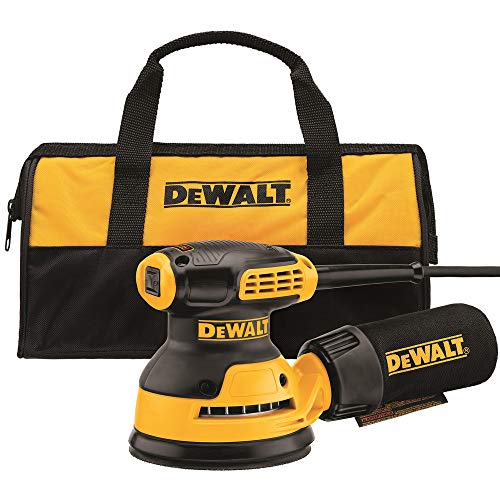
- 3.0-amp motor runs at 12,000 OPM
- Short body and counterweight help with control and vibration
- Includes dust bag and carrying bag
Best For: Consistent corded garage sanding
Best Budget-Friendly Control
SKIL 5-Inch Random Orbital Sander

- 2.8-amp motor reaches 13,000 OPM
- Variable speed and compact design improve control
- Transparent cyclonic dust box is easy to empty
Best For: Compact, adjustable sanding for home garages
Reliable Corded Pick
DEWALT DWE6423 5-Inch Variable-Speed Sander

- 3-amp motor reaches 12,000 OPM
- Counterweight design reduces vibration
- Dust-sealed switch and dust collection
Best For: Dedicated workshops needing steady corded power
Portable System Choice
CRAFTSMAN V20 CMCW220B Cordless Sander

- Cordless 5-inch design for mobility
- Reaches up to 12,000 OPM
- Battery and charger sold separately
Best For: Existing CRAFTSMAN V20 tool owners
Versatile Budget Kit
DEKOPRO 5-Inch Variable-Speed Sander

- Six speed settings for varied applications
- Includes 16 sanding discs
- Detachable dust bag and ergonomic grip
Best For: Occasional users wanting an inclusive corded kit
Heavy-Duty Air Pick

- 12,000 RPM motor with 3/16-inch orbit
- 6-inch pad for faster coverage
- Vacuum-ready and built for durability
Best For: Compressed-air surface preparation and larger automotive projects
Compact Electric Value

- 12,000 OPM corded performance
- Compact 5-inch design for tight spaces
- Includes dust bag and hook-and-loop sanding
Best For: Routine garage sanding without an air compressor
Low-Vibration Air Performer
Professional 6-Inch Palm Sander

- Low-vibration, balanced palm-sander design
- 12,000 RPM with a 6-inch pad
- Lightweight air motor for overhead work
Best For: Vertical, overhead, and extended pneumatic sanding tasks
Best Cordless Pick – DEWALT 20V MAX Orbital Sander
DEWALT 20V MAX Orbital Sander, Tool Only (DCW210B) | Brushless motor, dust collection
Check Price On AmazonFor home mechanics who want freedom from cords, this DEWALT is a practical choice among orbital sanders for home mechanics. Its brushless motor, variable-speed control, and low-profile design help with controlled sanding around automotive and workshop projects.
Best For: Cordless workshop and garage sanding where portability matters.
Pros:
- Brushless motor is designed for runtime and efficiency.
- Variable speed from 8,000 to 12,000 OPM suits different applications.
- Low-profile body, rubber overmold grip, and dust-sealed switch support comfortable use.
- Hook-and-loop pad and included locking dust bag make setup convenient.
Cons:
- Battery and charger are not included.
- Dust collectors and some vacuum connections require separately sold accessories.
- Replacement PSA and hook-and-loop pads are separate purchases.
This is a strong fit if you already use DEWALT 20V MAX batteries and value maneuverability. Budget separately for batteries or dust-extraction adapters if your setup needs them.
Best Dust-Control Option – BOSCH ROS20VSC Palm Sander
The BOSCH ROS20VSC brings useful control and dust-management features to orbital sanders for home mechanics. Its 2.5-amp motor offers variable speeds, while the microfilter can trap particles as small as one-half micron for cleaner sanding sessions.
Best For: Home mechanics who prioritize controlled sanding and integrated fine-dust collection.
Pros:
- Variable speed from 7,500 to 12,000 OPM helps match the task.
- Pad-dampening system is designed to reduce swirl marks on flat and contoured surfaces.
- Microfilter dust canister detaches easily and shows the dust level.
- Includes a vacuum adapter, sanding disc, and carrying bag.
Cons:
- Corded 120-volt operation limits portability.
- Included accessories may not replace a larger shop-vac setup for extended work.
- The warranty is listed as one year.
Choose this model when finish quality and visible dust collection are more important than cordless convenience. The included adapter also gives you flexibility for connecting to a vacuum system.
Best Straightforward Corded Pick – DEWALT 5-Inch Orbital Sander
This corded DEWALT offers a simple, consistent setup for home mechanics who prefer uninterrupted power. The 3.0-amp motor runs at 12,000 OPM, while its shorter height, counterweight, and rubber overmold are designed to improve control and comfort.
Best For: Regular garage sanding when dependable corded power is preferred.
Pros:
- 3.0-amp motor delivers a steady 12,000 OPM.
- Shorter height helps the user get closer to the workpiece.
- Separate counterweight design reduces vibration.
- Dust-sealed switch, dust bag, and compatible dust-collector port support workshop use.
Cons:
- Corded operation requires access to a 120-volt outlet.
- Variable-speed control is not listed.
- Some vacuum connections require the separately sold DWV9000 connector.
This is a sensible option for bench work and other projects where the tool will stay near an outlet. Its fixed 12,000-OPM speed favors a straightforward workflow rather than maximum speed customization.
Best Budget-Friendly Control – SKIL 5-Inch Random Orbital Sander
SKIL 5” Random Orbital Sander with Cyclonic Dust Box & 3pc Sanding Sheet - SR211601, Multicolor
Check Price On AmazonThe SKIL SR211601 is a compact corded option for home mechanics who want adjustable control without a bulky tool. Its 2.8-amp motor reaches 13,000 OPM, and the cyclonic dust box, soft grip, and counterweight address common garage-sanding concerns.
Best For: Compact, variable-speed sanding on varied materials and in tighter spaces.
Pros:
- Variable-speed control helps match power to different materials.
- 13,000 OPM provides strong sanding performance.
- Cyclonic X-flow dust box is transparent and easy to empty.
- Compact body, soft rubber grip, and counterweight help reduce fatigue.
Cons:
- Corded operation limits mobility.
- Only three sanding sheets are included.
- The warranty is listed as one year.
For occasional automotive prep, refinishing, or workshop maintenance, this SKIL combines useful speed adjustment with a compact form. It is especially appealing when tight-space access and simple dust-box cleanup matter.
Reliable Corded Pick – DEWALT DWE6423 5-Inch Variable-Speed Sander
DEWALT Random Orbit Sander, Variable Speed, 5-Inch (DWE6423), Power Source Corded Electric
Check Price On AmazonFor home mechanics who want consistent power for refinishing parts, smoothing wood fixtures, or preparing surfaces, the DEWALT DWE6423 is a dependable option among orbital sanders for home mechanics. Its 3-amp motor offers variable speeds from 8,000 to 12,000 OPM, while the counterweight design helps reduce vibration during longer jobs.
Best For: Workshop users who prefer corded power, variable speed control, and reduced vibration.
Pros:
- 3-amp motor with variable speeds up to 12,000 OPM
- Separate counterweight design helps reduce vibration
- Dust-sealed switch and improved dust collection support durability and cleaner work
- Rubber overmold and shorter height improve handling and access
Cons:
- Corded design requires access to an outlet
- Compatible vacuum connections may require the DWV9000 connector
The DWE6423 is a strong fit for a dedicated garage or workshop where steady power matters more than portability. Its dust-management features and low-vibration design make it particularly practical for repeated sanding sessions.
Portable System Choice – CRAFTSMAN V20 CMCW220B Cordless Sander
The CRAFTSMAN V20 CMCW220B is a convenient choice for home mechanics who need to move around a garage or work away from an outlet. This cordless 5-inch random orbit sander reaches up to 12,000 OPM and combines a low-profile body with onboard dust collection for controlled, portable sanding.
Best For: V20 system owners who value cordless mobility and a lightweight, low-profile tool.
Pros:
- Cordless design supports portable workshop use
- Maximum speed of 12,000 OPM enables fast material removal
- Low-profile, 2.6-pound design helps with control
- Includes dust bag and 60-, 80-, and 120-grit sample papers
Cons:
- Battery and charger are sold separately
- Bare-tool purchase may cost more if you do not already own V20 batteries
This model makes the most sense when you already use CRAFTSMAN V20 batteries. It offers useful speed and dust-collection features in a compact package, but first-time buyers should factor in the separate battery and charger.
Versatile Budget Kit – DEKOPRO 5-Inch Variable-Speed Sander
For shoppers building a basic garage setup, the DEKOPRO 5-inch random orbital sander offers adjustable control and a useful assortment of included abrasives. Its 2.5-amp motor provides six speed settings, while the supplied 16 sanding discs cover coarse, medium, and fine work for wood and metal.
Best For: Home mechanics seeking an inclusive corded kit for varied sanding and polishing tasks.
Pros:
- Six variable speeds provide adaptable control
- Includes 16 sanding discs from 60 to 1000 grit
- Detachable dust bag helps reduce cleanup
- Rubber grip and counterweight design support comfort and control
Cons:
- Corded design limits portability
- Supplied notes list a maximum speed of 13,000 RPM, while the product description states up to 14,000 RPM
The DEKOPRO stands out as a ready-to-use option because it includes multiple grits and six speed settings. It is a practical match for occasional home-mechanic projects involving both surface preparation and finishing.
Heavy-Duty Air Pick – Ingersoll Rand 4151
For home mechanics already equipped with a compressor, the Ingersoll Rand 4151 is a durable choice among orbital sanders for home mechanics. Its 12,000 RPM motor, 3/16-inch orbit, and 6-inch pad are suited to fast surface preparation, while the vacuum-ready design helps manage dust.
Best For: Home mechanics who want a rugged, compressed-air sander for larger surface-preparation jobs.
Pros:
- 12,000 RPM motor supports fast sanding.
- 6-inch pad covers more surface per pass.
- Vacuum-ready design can connect to central or portable vacuum systems.
- Light 1.9-pound body and durable construction.
Cons:
- Requires a compressed-air supply.
- Larger 6-inch pad may be less convenient in tight areas than a 5-inch model.
The 4151 is a strong fit when durability, speed, and vacuum compatibility matter more than cordless convenience. Its one-year warranty provides additional ownership support.
Compact Electric Value – BLACK+DECKER BDERO100
The BLACK+DECKER BDERO100 is a straightforward corded option for orbital sanders for home mechanics. Its 5-inch random-orbit pad, 12,000 OPM motor, compact body, and included dust bag make it practical for general workshop sanding without requiring an air compressor.
Best For: Home mechanics seeking an affordable, easy-to-use corded sander for routine projects.
Pros:
- 12,000 OPM supports quick material removal.
- Compact, lightweight design fits tight spaces.
- Dust collection bag helps contain debris.
- Hook-and-loop paper changes are fast and convenient.
Cons:
- Corded operation limits mobility.
- Includes only one sanding sheet.
- Its 5-inch pad covers less area per pass than 6-inch alternatives.
This model balances convenience and capability for occasional garage work. The comfort-grip handle, dust-sealed switch, and two-year limited warranty add useful practical value.
Low-Vibration Air Performer – Professional 6-Inch Palm Sander
For compressor-equipped garages, this professional 6-inch pneumatic sander is a capable option among orbital sanders for home mechanics. Its low-vibration, low-center-of-gravity design is intended to improve balance, while the lightweight air-motor assembly helps with vertical and overhead sanding.
Best For: Home mechanics handling extended sanding sessions or vertical and overhead automotive work.
Pros:
- Low-vibration design supports smoother, more comfortable use.
- 6-inch sanding pad provides broad coverage.
- 12,000 RPM speed enables efficient sanding.
- Lightweight, balanced construction suits vertical and overhead applications.
Cons:
- Requires compressed air.
- At about 1 kg, it is heavier than the 1.9-pound Ingersoll Rand model.
- Supplied notes do not specify a dust-collection connection.
This sander emphasizes control and reduced vibration rather than electric simplicity. It is especially appealing when balanced handling and overhead reach are priorities in a well-equipped home workshop.
How We Picked the Best Orbital Sanders for Home Mechanics
We focused on features that matter during automotive repair and garage projects: useful orbit speed, comfortable handling, reliable abrasive attachment, dust collection, power source, and overall versatility. The lineup includes 5-inch sanders for general-purpose work, a 6-inch pneumatic option for larger surfaces, and cordless models for jobs where an extension cord is inconvenient.
We also considered whether each tool is sold as a bare tool or complete kit. A cordless sander may look affordable initially but require a battery and charger, while a corded or pneumatic model may deliver lower long-term operating cost if your workspace already supports it.
Quick Comparison
| Type | Best For | Main Advantage | Potential Limitation |
|---|---|---|---|
| Cordless 5-inch | Mobile garage work | No power cord | Requires compatible battery |
| Corded 5-inch | Routine home repairs | Consistent runtime | Needs an outlet and cord management |
| Pneumatic 5- or 6-inch | Frequent bodywork | Light tool body and sustained use | Requires a suitable air compressor |
Key Buying Factors for Orbital Sanders for Home Mechanics
Power Source and Runtime
Corded models are convenient for long sessions because they maintain steady output without battery changes. Cordless sanders are easier to move around a vehicle and work well for occasional repairs, but check whether the product is tool-only. Pneumatic sanders can be excellent for bodywork, provided your compressor supplies the required air volume at the specified pressure.
Speed Control and Sanding Motion
Variable speed helps when working across different materials or finishing stages. Lower speeds can reduce heat and improve control near edges, while higher orbital speeds are useful for removing coatings and smoothing filler. A 5-inch random-orbit design is the most flexible choice for general home-mechanic work.
Dust Collection and Comfort
Look for a sealed dust box, dust bag, or vacuum-compatible port. Dust collection will not replace respiratory protection, but it can improve visibility and reduce cleanup. A balanced palm grip, low vibration, and easy-to-operate controls become especially important during extended sanding.
Abrasives, Pad Size, and Accessories
Confirm that replacement discs are easy to find and that the sander uses a common hook-and-loop pattern. A 6-inch tool can cover more area, while a 5-inch model is generally easier to control around smaller panels and tight repair zones.
Who Should Buy Which Orbital Sanders for Home Mechanics?
Choose a cordless model if you move between vehicles, work outdoors, or already own compatible batteries. Choose a corded 5-inch sander for dependable general-purpose use and the best value for occasional garage projects. Choose a variable-speed corded model if you want more control over stripping, blending, and finishing.
Choose a pneumatic sander if you have a capable compressor and expect frequent automotive bodywork. For most home mechanics, however, a comfortable 5-inch random-orbit sander with effective dust collection offers the best balance of control, availability, and operating simplicity.