
The right mechanic creeper makes under-vehicle work more comfortable, organized, and efficient. The models in this roundup range from compact plastic boards to padded rolling carts and convertible creeper seats.
We compared their layouts, mobility, support features, storage, adjustability, and listed weight capacities to help you choose a practical match for your workspace and repair habits.
Best 10 Mechanic Creepers Picks for 2026
Convertible Comfort Pick
Pro-Lift 36-Inch 2-in-1 Creeper
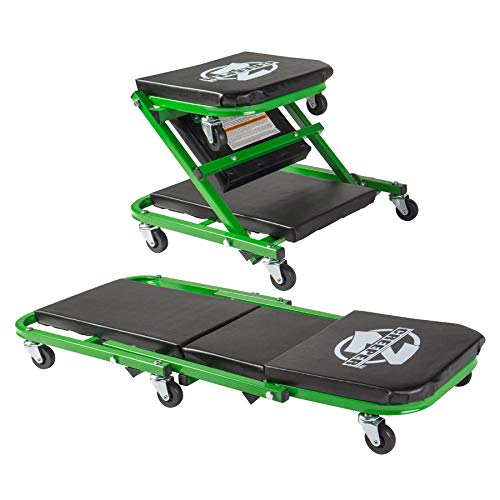
- Converts from creeper to seat
- Six swivel casters and padded surfaces
- 300-pound capacity with low-profile folding design
Best For: Home mechanics needing both rolling and seated maintenance support
Simple Low-Profile Choice

- 39-by-18-inch working surface
- Low 5-inch profile
- Lightweight 10.5-pound plastic design
Best For: Occasional automotive work with a simple, lightweight creeper
Padded Rolling Bench

- Fully padded 40-inch bench
- Adjustable cushioned headrest
- Six swivel casters and 250-pound capacity
Best For: Garage users wanting padded support for longer repair sessions
Heavy-Duty Ergonomic Pick

- 440-pound weight capacity
- Low-profile ergonomic molded body
- Parts trays and chemical-resistant casters
Best For: Serious mechanics needing durable, high-capacity under-vehicle support
Low-Profile Pick
MAXWORKS 40-Inch Rolling Creeper

- 4-3/4-inch low-profile PVC body
- Six swivel casters and tool trays
- 300-pound capacity; padded headrest
Best For: DIY garage work requiring easy-clean plastic construction
Lightweight Capacity Pick
Pro-LifT 40-Inch Plastic Creeper

- Impact-resistant HDPE construction
- Six 3-inch swivel casters
- Padded headrest and integrated carry handle
Best For: Portable automotive maintenance with built-in tool storage
Convertible Design Pick

- Converts from creeper to rolling seat
- Steel frame with 330-pound capacity
- Six non-marring swivel casters
Best For: Repairs requiring both seated and under-car positions
Heavy-Duty HDPE Pick

- 440-pound capacity and roomy 48-inch design
- Lightweight impact-resistant HDPE body
- Six casters, padded headrest, and dual tool trays
Best For: DIYers who prioritize capacity and working space
Compact Garage Value
BIG RED 40-Inch Rolling Creeper

- Lightweight 5.7-pound rolling design
- Padded headrest and shoulder recess
- Dual trays and six swivel casters
Best For: Garage users seeking portability and easy tool access
Balanced DIY Option
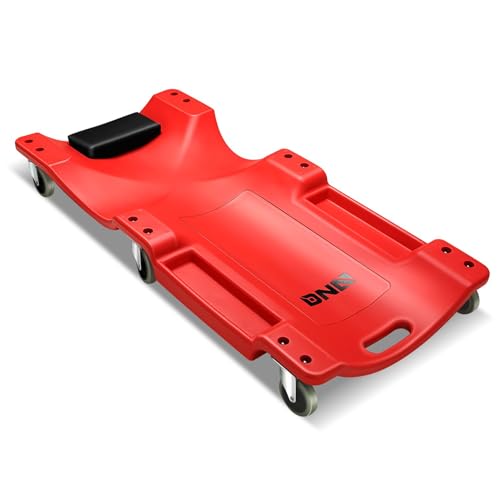
- 350-pound capacity with low-profile clearance
- Impact-resistant ABS body weighs about 13 pounds
- Padded headrest, shoulder recess, and tool tray
Best For: DIYers wanting comfort and portability
Convertible Comfort Pick – Pro-Lift 36-Inch 2-in-1 Creeper
The Pro-Lift 36-inch is a versatile choice among mechanic creepers, converting from a low-profile creeper into a compact seat. Its padded vinyl surfaces, six swivel casters, and 300-pound capacity make it practical for maintenance jobs that alternate between under-vehicle access and seated work.
Best For: Home mechanics who want one tool for both rolling and seated maintenance.
Pros:
- Converts quickly between creeper and seat modes with a retractable pin.
- Six swivel casters support easy maneuvering.
- Padded seat and headrest improve comfort during maintenance.
- Supports up to 300 pounds and folds into a low-profile Z shape.
Cons:
- Its 21.85-inch depth is more compact than the longer full-length designs.
- The manufacturer warranty is limited to 90 days.
This is a strong option when flexibility matters more than a dedicated full-length layout. The convertible design and solid weight rating give it broad usefulness in a home garage.
Simple Low-Profile Choice – Lisle 92102 Plastic Creeper
The Lisle 92102 is a straightforward option for shoppers seeking a low-profile mechanic creeper without extra features. Its plastic construction, 39-by-18-inch footprint, and 10.5-pound product weight suit basic garage and automotive access tasks.
Best For: Buyers who want a simple, lightweight creeper for occasional automotive work.
Pros:
- Low-profile 5-inch height supports access beneath vehicles.
- 39-inch length and 18-inch width provide a broad working surface.
- Lightweight plastic construction is easy to handle.
Cons:
- The supplied specifications do not list padding, casters, or a weight capacity.
- It does not have the convertible or adjustable features found on some alternatives.
The Lisle keeps the design uncomplicated, which can be useful for occasional jobs and buyers prioritizing basic function. Consider the listed dimensions and the absence of a stated capacity when deciding whether it fits your work style.
Padded Rolling Bench – BIG RED TR6452 Shop Creeper
The BIG RED TR6452 is a rolling mechanic creeper built more like a padded shop bench. A fully cushioned surface, adjustable headrest, six swivel casters, and heavy-duty tubular steel frame make it suited to comfortable work in a garage or repair shop.
Best For: Garage users who prioritize padded support and adjustable head positioning.
Pros:
- Fully padded bench and adjustable cushioned headrest support comfortable positioning.
- Six 360-degree swivel casters provide smooth movement.
- Tubular steel construction supports up to 250 pounds.
- Includes a limited one-year manufacturer warranty.
Cons:
- Its 250-pound capacity is lower than the Pro-Lift and AFF models listed here.
- The 4.4-inch height may not be ideal where maximum clearance is needed.
This model is a sensible comfort-first choice for longer garage sessions. Its padded bench format and adjustable headrest are useful advantages, while the 250-pound limit should be checked against the intended user.
Heavy-Duty Ergonomic Pick – AFF Viking 42-Inch Creeper
The AFF Viking is a heavy-duty mechanic creeper designed for low-clearance work and extended use. Its high-density polyethylene body, ergonomic contours, airflow channels, large headrest, and 440-pound capacity provide a durable setup with useful support under most vehicle undercarriages.
Best For: Professional or serious home mechanics who need high capacity and durable low-profile construction.
Pros:
- 440-pound capacity is the highest among these listed products.
- Low-profile 4.65-inch height and 2.16-inch overground clearance suit under-vehicle work.
- Six double-post casters use ball bearings and resist oil, grease, and chemicals.
- Built-in parts trays keep tools and components within reach.
Cons:
- The rigid molded design may provide less cushioning than fully padded alternatives.
- Its 21-inch width may require more floor space than narrower creepers.
The AFF Viking stands out for capacity, chemical-resistant casters, and practical body-focused ergonomics. It is especially compelling for demanding garage use, provided its wider footprint fits your workspace.
Low-Profile Pick – MAXWORKS 40-Inch Rolling Creeper
For routine garage work, the MAXWORKS 50874 is a straightforward mechanic creeper with a low 4-3/4-inch profile, padded headrest, and built-in storage. Its one-piece PVC body resists rust, oil, and solvents, making it easy to clean after automotive maintenance.
Best For: DIY mechanics who want a low-profile plastic creeper with tool trays and a 300-pound capacity.
Pros:
- Low profile provides undercarriage clearance on most vehicles.
- Six smooth-rolling swivel casters support maneuverability.
- Oil- and solvent-resistant PVC body is easy to clean.
- Built-in tool storage and a padded headrest add convenience.
Cons:
- The 90-day manufacturer warranty is relatively limited.
- Plastic construction may not appeal to buyers seeking a steel-frame creeper.
With its light 5.67-kilogram design and practical storage, this is a sensible option for occasional to regular garage repairs, provided the 300-pound limit fits your needs.
Lightweight Capacity Pick – Pro-LifT 40-Inch Plastic Creeper
The Pro-LifT PL9400 is a lightweight mechanic creeper built from impact-resistant HDPE plastic. It combines a 350-pound stated capacity with six 3-inch swivel casters, a padded headrest, and molded-in trays for everyday vehicle maintenance.
Best For: Mechanics who want a portable plastic creeper with a higher stated capacity and an integrated carry handle.
Pros:
- HDPE construction is lightweight, impact-resistant, and designed to resist chemicals.
- Six multi-terrain swivel casters support movement around and beneath vehicles.
- Integrated carry handle makes positioning and transport easier.
- Padded headrest and two molded-in tool trays improve working comfort and access.
Cons:
- At approximately 13 to 14 pounds, it is heavier than some basic plastic creepers.
- The supplied specifications contain inconsistent capacity references, listing both 350 and 300 pounds.
This model offers a useful balance of portability, storage, and durability for workshop tasks. Confirm the applicable load rating before purchase if capacity is a deciding factor.
Convertible Design Pick – M-AUTO Foldable Z Creeper
The M-AUTO Foldable Z Creeper gives mechanic creeper buyers two working positions: a rolling creeper for under-car access and a raised seat for jobs performed beside the vehicle. Its steel frame, padded cushions, and six swivel casters are designed for mobility and comfort.
Best For: Auto repair, detailing, and brake work where switching between a lying and seated position is useful.
Pros:
- Converts between a creeper and seat by unlocking and locking the pin.
- Heavy-duty steel frame supports up to 330 pounds.
- Thick padded cushions provide a more comfortable work surface.
- Non-marring polyurethane swivel casters enable easy movement.
Cons:
- Its 35.5-inch length is shorter than the 40-inch plastic creepers listed here.
- The 16-inch width may provide less lateral room than wider models.
- It has no listed built-in tool trays.
The convertible layout is the main advantage: it can reduce the need to switch between separate seating and rolling equipment. Choose it when versatility matters more than maximum creeper length or integrated storage.
Heavy-Duty HDPE Pick – 48-Inch Plastic Creeper
For mechanics who want a lightweight but generously sized option, the Pro-LifT C-6048 is one of the more capable mechanic creepers in this group. Its impact-resistant HDPE body supports up to 440 pounds, while six swivel casters and a padded headrest help make under-vehicle work more manageable.
Best For: Home mechanics and DIY users who want high weight capacity, extra length, and built-in tool storage.
Pros:
- 440-pound capacity with a 48-inch length and 23-inch width.
- Lightweight, impact-resistant HDPE construction weighs approximately 16 pounds.
- Six 3-inch multi-terrain swivel casters resist oil, chemicals, and grease.
- Padded headrest and two molded-in tool trays support more comfortable repairs.
Cons:
- The 48-inch body may take up more storage space than a shorter creeper.
- Its plastic construction may not suit shoppers specifically seeking a metal frame.
The C-6048 stands out for combining substantial capacity with relatively easy portability. Choose it when body support, working space, and durable caster performance matter more than having the most compact creeper.
Compact Garage Value – BIG RED 40-Inch Rolling Creeper
The BIG RED TRP6240 is a compact choice for garage and shop work. This low-profile mechanic creeper combines a padded headrest, shoulder recess, dual side trays, and six 360-degree swivel casters in a lightweight rolling design.
Best For: Garage users who want an easy-to-move creeper for routine vehicle repairs and convenient tool access.
Pros:
- Low-profile 40-inch design is suited to work under cars, trucks, SUVs, and vans.
- Six 360-degree swivel casters provide smooth, precise movement.
- Built-in shoulder recess and padded headrest improve body support.
- Dual side storage trays keep tools close during repairs.
Cons:
- Its 280-pound maximum capacity is lower than the other listed options.
- The 40-inch length provides less body space than the 48-inch Pro-LifT model.
At 5.7 pounds, the TRP6240 is especially convenient to carry, position, and store. Its lower capacity makes it better suited to users who value compact portability and practical garage features over maximum load rating.
Balanced DIY Option – DNA MOTORING 40-Inch Creeper
The DNA MOTORING TOOLS-00005 offers a practical balance of support, portability, and capacity. This low-profile mechanic creeper uses impact-resistant ABS plastic, six 3-inch swivel casters, a padded headrest, and integrated tray storage for work beneath vehicles.
Best For: Dedicated DIYers and technicians who want a portable creeper with professional-oriented comfort features.
Pros:
- Supports up to 350 pounds across a 40-inch-long, 19-inch-wide body.
- Low-profile design helps provide clearance beneath vehicles.
- Padded headrest and built-in shoulder recess support longer repair sessions.
- Weighs about 13 pounds and includes six smooth 3-inch swivel casters.
Cons:
- Its 350-pound capacity is below the Pro-LifT C-6048’s 440-pound rating.
- The supplied notes identify side-tray storage rather than dual trays.
This creeper is a well-rounded middle ground for users who need more capacity than a compact entry option but still want manageable weight. Its low profile and comfort-focused layout are useful for repeated under-vehicle work.
How We Picked These Mechanic Creepers
We focused on the features that matter when you spend time working beneath a vehicle: overall length, low-profile clearance, body support, caster design, weight capacity, tool storage, and ease of movement. We also included different formats, such as traditional rolling creepers, padded shop carts, and folding 2-in-1 designs, so the list covers both occasional DIY repairs and frequent professional use.
Product specifications can vary by seller or production run, so confirm the current dimensions, capacity, and included features before ordering. A creeper should be evaluated alongside your vehicle’s ground clearance, garage floor condition, and available storage space.
Quick Comparison
| Best For | Look For |
|---|---|
| Basic DIY repairs | Simple plastic construction, stable casters, and a comfortable headrest |
| Long jobs | Padded support, ergonomic shaping, and smooth-rolling wheels |
| Tool access | Dual side trays or integrated storage compartments |
| Heavy-duty use | A high stated weight capacity and a rigid blow-molded body |
| Limited storage | A folding or convertible creeper-seat design |
Key Buying Factors for Mechanic Creepers
Clearance and Overall Length
A low profile helps the creeper fit under vehicles with limited clearance, but check the usable height as well as the advertised body thickness. Longer models can support more of your body, while shorter designs are easier to maneuver in cramped garages.
Comfort and Ergonomics
Look for a contoured body, padded headrest, and smooth edges. A shaped creeper can reduce pressure on your shoulders and back during extended work. If you frequently alternate between standing, sitting, and lying down, a convertible model may be more useful than a standard board.
Casters and Floor Conditions
Six casters generally provide broad support and can make repositioning easier, but wheel quality matters more than the count alone. Smooth, level concrete is ideal. Rough floors, expansion joints, and debris can restrict small casters, so prioritize stable construction and predictable rolling in your workspace.
Capacity and Storage
Choose a listed capacity that comfortably exceeds your body weight plus clothing or gear. Tool trays are convenient for keeping sockets, fasteners, and hand tools nearby, although they may add width. Measure your storage area and vehicle access before selecting a long or wide model.
Who Should Buy Which Mechanic Creepers?
Choose a basic 36- or 40-inch plastic creeper if you need an affordable option for occasional oil changes, inspections, or light repairs. A padded low-profile model is a better fit for longer jobs where shoulder and neck comfort matter most. Pick a heavy-duty 42- or 48-inch creeper if you want more body support, carry heavier loads, or expect frequent shop use.
Models with dual tool trays suit mechanics who want essentials within reach, while a folding 2-in-1 creeper is ideal for small garages or buyers who need both a rolling seat and an under-car platform. Before buying, compare the folded dimensions, caster clearance, and capacity with your actual workspace and repair needs.