
The best high-capacity deep-cycle batteries deliver dependable stored power for RVs, boats, solar systems, trolling motors, and emergency backup applications. The right choice depends on usable capacity, battery chemistry, charging requirements, and available installation space.
This roundup compares lithium and AGM options ranging from compact 35Ah batteries to high-capacity 314Ah models, helping you match performance, durability, and budget to your power needs.
Best 10 High Capacity Deep Cycle Batteries Picks for 2026
Top Lightweight Pick

- 2,560Wh capacity with 15,000-cycle rating at 60% depth of discharge
- Built-in 200A BMS with temperature protection
- Supports up to 48V series or 800Ah parallel setups
Best For: RV, solar, off-grid, and trolling-motor power
Compact Power Cell Option
Kinetik BLU HC2400 12V Power Cell
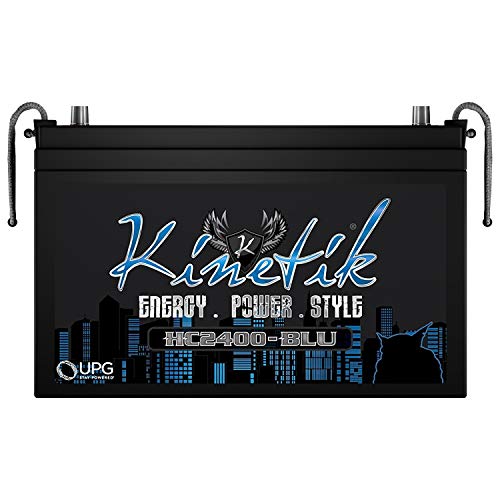
- 12V power cell rated at 2,400 watts
- Compact 12.91 × 6.77 × 8.68-inch dimensions
- Weighs 59 pounds
Best For: Compact 12V power installations
Highest Capacity Pick
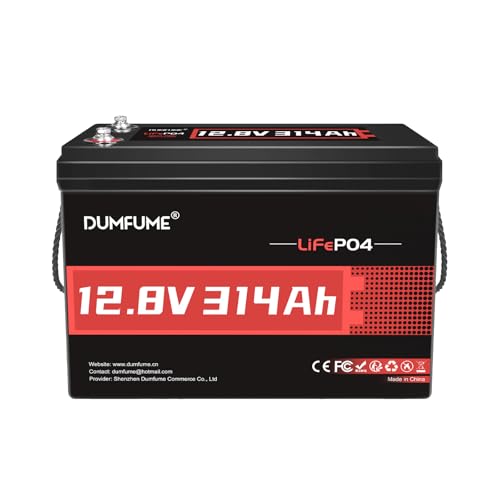
- 314Ah capacity and up to 4,019.2Wh of energy
- IP65 casing with built-in 200A BMS
- Supports 4S4P expansion and includes a five-year warranty
Best For: Large RV, solar, backup, and off-grid battery banks
Lead-Acid Alternative

- 200Ah 12V AGM deep cycle capacity
- Maintenance-free, valve-regulated construction
- Below 3% monthly self-discharge at 77°F
Best For: Maintenance-free RV and solar AGM systems
Lightweight Lithium Pick
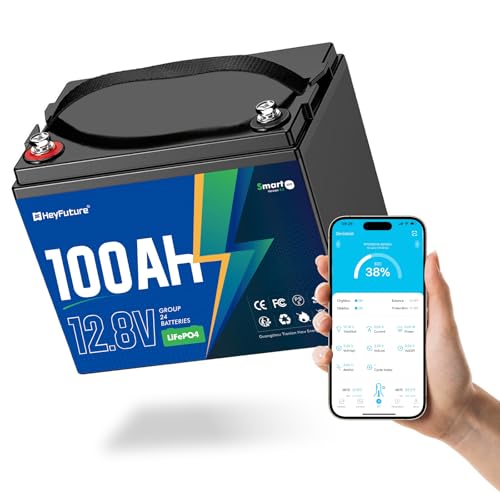
- 12V 100Ah LiFePO4 deep-cycle design
- Bluetooth BMS with multiple protections
- Expandable to 48V 400Ah
Best For: RV, marine, trolling motor, solar, and off-grid use
Proven AGM Value

- Sealed 12V 100Ah AGM construction
- 1100A five-second maximum discharge
- Low monthly self-discharge rate
Best For: RV, cabin, solar, and backup-power users who prefer AGM
Cold-Weather Lithium Option

- 12.8V 100Ah deep-cycle capacity
- 100A BMS with temperature protection
- Expandable to 51.2V 400Ah
Best For: RV, marine, solar, and off-grid energy storage
Marine Power Pick
Newport 12V50Ah AGM Deep Cycle Battery

- 50Ah capacity for marine electrical systems
- Sealed, leak-proof AGM construction
- Trolling-motor compatible; 32-pound design
Best For: Boaters needing dependable 12V power for trolling motors and boat equipment
Mobility Specialist
Interstate 12V35Ah SLA AGM Battery

- 35Ah sealed AGM deep-cycle design
- Insert terminal with bolt hardware
- Built for wheelchairs, scooters, and similar devices
Best For: Mobility equipment owners seeking a maintenance-free replacement battery
High-Output Versatile Choice
VEVOR 12V40Ah AGM Deep Cycle Battery

- 40Ah rechargeable AGM capacity
- 400A maximum discharge for five seconds
- Suitable for scooters, wheelchairs, go-karts, and e-bikes
Best For: Light electric vehicles needing versatile 12V deep-cycle power and startup support
Top Lightweight Pick – 12V 200Ah LiFePO4 Battery
For shoppers comparing high capacity deep cycle batteries, this 12V 200Ah LiFePO4 model combines a 2,560Wh rating with a relatively light 58.9-pound build. Its integrated 200A BMS, low-temperature protection, and expandable configuration make it a practical option for RV, solar, boating, and off-grid setups.
Best For: RVs, off-grid solar systems, backup power, and 12V trolling motors up to 55–62 pounds of thrust.
Pros:
- Rated for 4,000 cycles at 100% depth of discharge and up to 15,000 cycles at 60% depth of discharge.
- Supports up to four batteries in series or four in parallel, reaching up to 48V or 800Ah at 12V.
- Built-in 200A BMS protects against overcharging, overdischarging, overcurrent, overheating, and short circuits.
- Much lighter than similarly rated lead-acid batteries.
Cons:
- It should not be used as a car, starting, or golf-cart battery.
- Expansion requires appropriately matched batteries and properly sized cables.
- The manufacturer recommends charging and discharging it at least every six months during storage.
This battery is a strong fit when long cycle life and manageable weight matter more than a traditional lead-acid design. Its expansion support also leaves room to build a larger energy bank over time.
Compact Power Cell Option – Kinetik BLU HC2400 12V Power Cell
Among high capacity deep cycle batteries, the Kinetik BLU HC2400 is a compact 12V power cell rated for 2,400 watts. Its 59-pound weight and relatively short footprint may suit installations where available space is more important than extensive published feature details.
Best For: Compact 12V power installations that need a 2,400-watt Kinetik BLU power cell.
Pros:
- Provides a 12V electrical platform.
- Rated at 2,400 watts for demanding power applications.
- Compact dimensions of 12.91 × 6.77 × 8.68 inches.
- Weighs 59 pounds.
Cons:
- The supplied specifications do not state amp-hour capacity.
- The notes do not provide cycle-life, BMS, or installation information.
- Its 59-pound weight may still be substantial for portable setups.
This model is worth considering when a compact 12V power cell and wattage rating align with your system. Verify the required capacity, charging method, and compatibility before buying because those details are not specified here.
Highest Capacity Pick – 12.8V 314Ah LiFePO4 Battery
For buyers seeking high capacity deep cycle batteries, this 12.8V LiFePO4 unit stands out with 314Ah of capacity and up to 4,019.2Wh of energy. It adds a 200A BMS, IP65-rated casing, low-temperature protection, and 4S4P expansion support for larger solar, RV, and backup-power systems.
Best For: RVs, home solar storage, off-grid systems, backup power, boats, and larger 12V battery banks.
Pros:
- Offers 314Ah and up to 4,019.2Wh of energy in a 57-pound package.
- Rated for 4,000 cycles at 100% depth of discharge and up to 15,000 cycles at 60% depth of discharge.
- IP65 waterproof ABS casing is designed for impact, heat, weather, and flame resistance.
- Includes a 200A BMS and supports 4S4P expansion.
Cons:
- Its larger 15.16 × 7.6 × 9.84-inch size requires adequate mounting space.
- Expansion requires batteries with the same model, voltage, and capacity.
- It requires a 14.6V LiFePO4 charger or compatible solar charge controller.
This is the strongest capacity choice in the group for users who want substantial energy in a single 12V-class battery. The five-year manufacturer warranty and expansion flexibility further support long-term system planning.
Lead-Acid Alternative – Renogy 12V 200Ah AGM Battery
This Renogy AGM model offers a maintenance-free alternative for shoppers comparing high capacity deep cycle batteries. The 12V, 200Ah lead-acid battery uses AGM construction and valve-regulated technology, with a low stated self-discharge rate and no routine watering requirement.
Best For: RV and solar installations that prefer a maintenance-free 12V AGM lead-acid battery.
Pros:
- Provides a 200Ah capacity at the C20 reference rate.
- AGM and valve-regulated construction helps avoid acid leakage and frequent maintenance.
- Self-discharge is rated below 3% per month at 77°F.
- Designed for discharge performance across a wide operating temperature range.
Cons:
- At 127.9 pounds, it is substantially heavier than the listed lithium alternatives.
- It should be installed upright; upside-down installation is not allowed.
- The warranty is a two-year prorated material and workmanship warranty.
This battery makes sense for buyers who want familiar AGM technology and low maintenance rather than lithium weight savings. Its 200Ah rating is useful for 12V systems, but installation space and lifting requirements should be planned carefully.
Lightweight Lithium Pick – Bluetooth LiFePO4 Battery
For shoppers comparing high capacity deep cycle batteries, this 12V 100Ah LiFePO4 model stands out for its lighter design, Bluetooth connectivity, and broad RV and marine compatibility. Its integrated BMS helps protect against common battery hazards, while the Group 24 format supports straightforward replacement in many setups.
Best For: RVs, trolling motors, boats, solar systems, and off-grid applications where low weight and expandable capacity matter.
Pros:
- LiFePO4 chemistry offers deep-cycle charging and discharging with high energy density.
- Bluetooth-equipped intelligent BMS helps protect against overcharging, over-discharging, overcurrent, and overheating.
- Supports up to four batteries in series or parallel, reaching a potential 48V 400Ah configuration.
- Group 24 sizing and a lightweight design make it a convenient lead-acid replacement.
Cons:
- May require charging-system upgrades when replacing some older lead-acid setups.
- Series and parallel installations should follow the instructions and may be best handled by a professional.
This is a practical lithium upgrade for buyers who want portable, maintenance-free deep-cycle power and the flexibility to build a larger storage bank over time.
Proven AGM Value – Renogy 100Ah AGM Battery
This Renogy model is a conventional choice among high capacity deep cycle batteries, using sealed AGM lead-acid construction for dependable power without routine internal maintenance. It can support appliances such as refrigerators, microwaves, CPAP machines, and laptops, making it suited to practical solar and backup-power setups.
Best For: RVs, cabins, solar systems, and users who prefer sealed AGM construction and broad charger compatibility over a lighter lithium design.
Pros:
- Sealed AGM design provides stable, maintenance-free operation.
- 1100A maximum discharge current for five seconds can help power common appliances.
- Rated for discharge performance from -4°F to 140°F.
- Self-discharge is listed below 3% per month at 77°F.
Cons:
- At 63.9 pounds, it is considerably heavier than the listed lithium alternatives.
- Only a two-year prorated material and workmanship warranty is specified.
- AGM batteries generally offer less energy density than LiFePO4 options.
Choose this battery when sealed lead-acid simplicity, stable discharge, and established AGM construction are more important than minimizing system weight.
Cold-Weather Lithium Option – Group 24 LiFePO4 Battery
For buyers seeking high capacity deep cycle batteries in a drop-in format, this 12.8V 100Ah SUPER EMPOWER LiFePO4 battery combines Group 24 sizing with a built-in 100A BMS. It is designed for energy storage rather than engine starting and includes charging protections for cold-weather operation.
Best For: RV, marine, solar, and off-grid energy-storage systems needing a compact lead-acid replacement with expansion potential.
Pros:
- Grade A LiFePO4 cells provide high energy density and deep-cycle performance.
- Group 24 dimensions and M8 terminals support drop-in replacement in many battery boxes.
- BMS protects against overcharge, over-discharge, overcurrent, short circuit, and temperature issues.
- Supports up to 4S4P configurations for a potential 51.2V, 400Ah, 20.48kWh bank.
Cons:
- It is not suitable for engine starting or cranking applications.
- Charging below 32°F is disabled, and a lithium-compatible charger or controller is required.
- Non-lithium chargers are not recommended.
This battery is a strong fit for planned energy-storage installations, particularly when users want lithium efficiency, standard Group 24 dimensions, and clearly defined low-temperature safeguards.
Marine Power Pick – Newport 12V50Ah AGM Deep Cycle Battery
For shoppers comparing high capacity deep cycle batteries for marine use, the Newport 12V50Ah model offers a practical balance of capacity, portability, and sealed AGM construction. Its 50Ah rating is suited to boat electrical systems and compatible trolling motors.
Best For: Boaters who need a 12V deep cycle battery for a trolling motor or other marine electrical equipment.
Pros:
- 50Ah capacity provides long-lasting power for marine applications.
- Sealed AGM design is leak-proof and maintenance-free in normal use.
- At 32 pounds, it is relatively easy to transport and install for a marine battery.
- Includes marine terminals and a one-year limited warranty.
Cons:
- Its lead-acid construction is heavier than many comparable lithium options.
- The 50Ah capacity is intended for moderate marine power needs rather than very large systems.
The Newport is a straightforward choice when sealed construction, trolling-motor compatibility, and 50Ah capacity matter more than minimizing battery weight.
Mobility Specialist – Interstate 12V35Ah SLA AGM Battery
Among high capacity deep cycle batteries for mobility equipment, the Interstate DCM0035 is designed specifically for electric wheelchairs, scooters, and similar devices. Its 35Ah sealed AGM format is rechargeable, spill-proof, and sized for Group U1 or GT9L applications.
Best For: Electric wheelchairs, mobility scooters, and compatible light-duty equipment requiring an insert-terminal battery.
Pros:
- AGM and VRLA construction is maintenance-free and spill-proof.
- Designed for deep-discharge use with longer life and more cycles claimed for demanding applications.
- Insert terminals include bolt hardware and fit the listed Group U1 or GT9L size.
- Backed by a 12-month performance warranty and Interstate’s quality protocol.
Cons:
- 35Ah capacity is lower than the 40Ah and 50Ah options in this roundup.
- It is not intended as a replacement for golf-cart batteries.
- Buyers must verify terminal style and device compatibility before ordering.
This Interstate battery is a focused replacement option rather than a general-purpose marine battery, making terminal compatibility and device fit especially important.
High-Output Versatile Choice – VEVOR 12V40Ah AGM Deep Cycle Battery
The VEVOR 12V40Ah is one of the more versatile high capacity deep cycle batteries for light electric vehicles and mobility equipment. Its AGM construction requires no routine maintenance, while a stated maximum 400A discharge current for five seconds supports device startup.
Best For: Mobility scooters, electric wheelchairs, go-karts, e-bikes, and other light electric vehicles using a compatible 12V battery.
Pros:
- 40Ah capacity can extend runtime for many light-duty electric devices.
- AGM design avoids liquid top-ups and routine maintenance.
- Maximum 400A discharge current for five seconds supports startup demands.
- Compact dimensions and broad application range add installation flexibility.
Cons:
- Professional charging equipment is required during use.
- At 24.7 pounds, it is not a particularly lightweight battery.
- Compatibility should be checked against the device’s dimensions and electrical requirements.
Choose the VEVOR when you want more capacity than a 35Ah mobility battery and value strong short-duration discharge performance across several light electric vehicle applications.
How We Picked the Best High Capacity Deep Cycle Batteries
We evaluated these batteries by capacity, chemistry, cycle-life potential, discharge capability, protection features, form factor, and intended use. The selection includes LiFePO4 lithium batteries for low weight and long service life, plus AGM lead-acid batteries for simpler installation and lower upfront cost.
We also considered practical applications such as RV power, solar storage, marine electronics, trolling motors, mobility equipment, and emergency backup. Always confirm the manufacturer’s charging profile, terminal layout, dimensions, and system-voltage requirements before buying.
Quick Comparison
| Battery type | Typical strengths | Best suited for |
|---|---|---|
| LiFePO4 lithium | Low weight, high usable capacity, long cycle life | RVs, solar systems, boats, frequent cycling |
| AGM deep cycle | Sealed design, straightforward replacement, lower initial cost | Marine use, backup power, occasional cycling |
| Compact SLA/AGM | Small footprint and simple installation | Mobility devices, alarms, small electronics, compact systems |
Key Buying Factors for High-Capacity Deep-Cycle Batteries
Capacity and Usable Energy
A battery’s amp-hour rating indicates stored capacity, but usable energy varies by chemistry and recommended depth of discharge. Lithium batteries generally provide more usable capacity at a similar rated size, while AGM batteries may need a larger capacity to deliver comparable runtime without reducing service life.
Chemistry and Cycle Life
LiFePO4 batteries are typically lighter and better suited to frequent cycling, but they require a compatible lithium charger and may cost more initially. AGM batteries are sealed, maintenance-free, and broadly compatible with many existing systems, though they are heavier and usually less efficient under deep, repeated discharge.
Discharge Current and BMS Protection
For lithium models, check the battery-management system’s continuous discharge rating, temperature protections, balancing functions, and low-voltage cutoff. Match the continuous and peak current ratings to your inverter, trolling motor, refrigerator, or other loads.
Fit, Charging, and Wiring
Verify dimensions, weight, terminal type, polarity, and cable-gauge requirements. A 12V battery may not be suitable for a 24V or 48V system unless multiple batteries are configured correctly. Do not mix different chemistries, ages, or capacities in one bank unless the manufacturer specifically permits it.
Who Should Buy Which High Capacity Deep Cycle Batteries?
Choose a large LiFePO4 battery if you need substantial energy storage for an RV, off-grid solar setup, or frequent-use backup system and can support lithium charging.
Choose a 100Ah lithium battery for a balanced option that fits many RV, marine, and trolling-motor applications while reducing weight compared with lead acid.
Choose a 100Ah or 200Ah AGM battery if you want a sealed, familiar replacement and your existing charger is designed for lead-acid batteries. Expect more weight and plan for a shallower discharge to support longevity.
Choose a compact 35Ah–50Ah AGM or SLA battery for smaller loads, mobility equipment, auxiliary electronics, or installations where space and cost matter more than maximum runtime.