
If you want better sound without turning your car into a complicated project, car amplifiers with DSP can be the smartest upgrade. They combine amplification and digital tuning in one package, helping you fine-tune speakers, correct response issues, and improve overall clarity.
Below, we focus on models that offer the best mix of power, control, and install flexibility for different budgets and systems.
Best 10 Car Amplifiers with Dsp Picks for 2026
Flagship Multi-Channel DSP Amp
AudioControl D-6.1200 DSP Car Audio Amplifier

- 6-, 5-, 4-, or 3-channel configurable
- Matrix DSP with app-based tuning controls
- Up to 1200W with AccuBASS restoration
Best For: High-control multi-speaker systems with flexible OEM integration
Bluetooth DSP Crossover Processor
Taramps Pro 2.4 BT DSP Processor
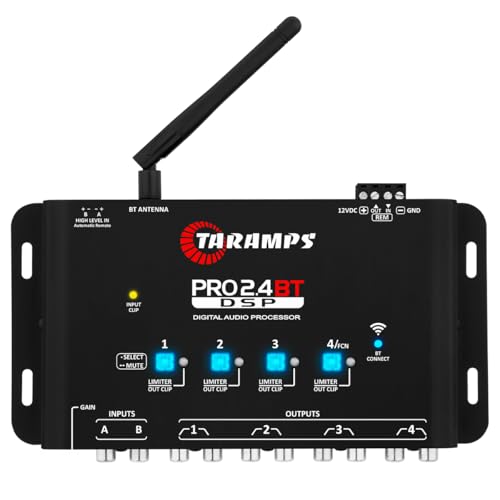
- Bluetooth 5.4 app-based real-time tuning
- 15-band EQ with delay, phase, and limiter controls
- High-level input with auto turn-on support
Best For: Wireless DSP tuning and factory-head-unit integration
Compact 4-Channel DSP Amp
AudioControl D-4.800 DSP Car Audio Amplifier

- Configurable as 4-, 3-, or 2-channel
- Matrix DSP with app control and crossovers
- Up to 800W with AccuBASS bass restoration
Best For: Front-stage or moderate OEM-upgrade systems needing DSP control
High-Output Amp Choice
MHD130.4D 4-Channel Full Range Amplifier

- 130W x 4 RMS at 4Ω, 260W x 4 at 2Ω
- Infineon IRS2093M with >96dB SNR and low distortion
- HP/LP/FULL modes and RCA inputs for flexible integration
Best For: Power-focused systems paired with external DSP
Advanced Sound Shaping
Taramps PRO 2.4S DSP Equalizer

- 15-band graphic EQ with parametric EQ and delay alignment
- RCA and high-level inputs for OEM or aftermarket systems
- Active crossover, limiter, and anti-pop protection features
Best For: Custom builds needing detailed DSP control
Flexible Power Amp
AudioControl EPICSIX Compact 6-Channel Amplifier

- 6-channel, 1200W RMS Class D amp
- 12dB/octave crossovers with line-level inputs
- Compact chassis with smart protection
Best For: Aftermarket builds needing flexible amplifier power and crossover control
Tuning-Focused DSP
PRV AUDIO DSP 2.4X 4-Channel Processor

- 2 inputs and 4 independent crossover outputs
- 15-band EQ plus 12 presets
- LCD interface with sequencing support
Best For: Compact tuning and crossover control for a 4-channel system
Expanded DSP Control
PRV AUDIO DSP 2.8X 8-Channel Processor
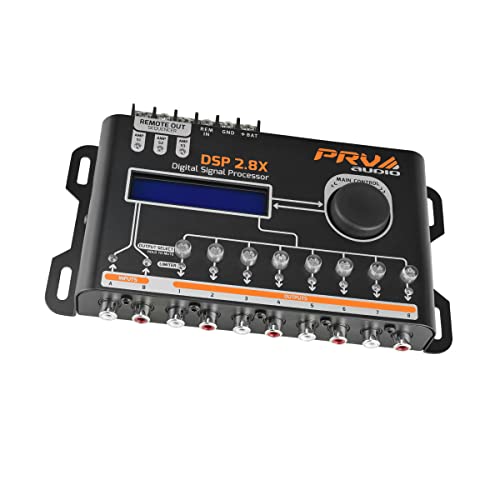
- 8 independent crossover outputs
- 2 inputs with flexible source routing
- 15-band EQ, parametric EQ, and sequencer
Best For: Larger builds that need an 8-channel processor and detailed tuning
Flagship Multi-Channel DSP Amp – AudioControl D-6.1200 DSP Car Audio Amplifier
If you want one of the more capable car amplifiers with dsp for a serious OEM or aftermarket upgrade, the AudioControl D-6.1200 gives you a lot of tuning control in a single chassis. Its flexible channel layout, matrix DSP, AccuBASS restoration, and app-based control make it a strong fit when you need both power and precise system correction.
Best For: Drivers building a high-control multi-speaker system that needs flexible integration and detailed tuning.
Pros:
- Configurable as a 6-, 5-, 4-, or 3-channel amp for different system layouts
- Matrix DSP with crossovers, filters, EQ, and the DM Smart App for detailed setup
- AccuBASS helps correct bass roll-off from factory head-unit processing
- Up to 1200W output with 6 x 125W @ 4Ω, 6 x 200W @ 2Ω, or bridged power options
Cons:
- More advanced than a simple plug-and-play amplifier
- Larger and heavier than compact 4-channel options
- Tuning features may be more than basic systems need
Overall, this is a feature-rich choice for buyers who care about tuning depth as much as output. If your build needs flexible routing and strong OEM integration, it stands out as a premium all-in-one solution.
Factory Stereo Sound Upgrade – Kicker Key 4-Channel DSP Smart Amplifier
Among car amplifiers with dsp aimed at factory-system upgrades, the Kicker KEY 200.4 focuses on making your speakers sound cleaner and more realistic rather than simply louder. Its internal computer, microphone-assisted setup, 40-band EQ, and 24dB crossover are designed to quickly improve tonality and soundstage in a compact package.
Best For: Drivers who want an easy, compact way to improve factory door speakers and overall clarity.
Pros:
- Auto-tuning process uses the microphone to streamline setup
- 40-band EQ helps improve tonality and system balance
- 24dB crossover refines speaker output
- Compact 4-channel design with 4x50W output
Cons:
- Much lower total output than larger DSP amplifiers
- Focused more on clarity than high-power system expansion
- Less flexible than multi-input DSP processors for complex builds
This is a smart pick if your main goal is to wake up a factory stereo without a complicated install. It prioritizes quick improvement, compact size, and practical sound correction.
Bluetooth DSP Crossover Processor – Taramps Pro 2.4 BT DSP Processor
If you are comparing car amplifiers with dsp for system tuning rather than direct speaker power, the Taramps PRO 2.4 BT is built around control and integration. It offers Bluetooth app adjustment, high-level input with auto turn-on, selectable EQ tools, and crossover functions that make it useful for both OEM and aftermarket setups.
Best For: Tuners who want wireless DSP control and flexible signal processing in a compact processor.
Pros:
- Bluetooth 5.4 BLE app control for real-time wireless tuning
- 15-band graphic EQ, parametric EQ, delay, phase inversion, and limiter
- High-level input with auto turn-on supports factory head units
- RCA inputs handle up to 9V RMS and the unit is compact and lightweight
Cons:
- It is a DSP processor, not a high-power amplifier
- Requires app-based setup for full use of its features
- Best results depend on careful tuning and system matching
For users who want fine control over sound shaping and integration, this is a very capable processor-style option. It is especially appealing if you value wireless setup, preset management, and advanced filtering tools.
Compact 4-Channel DSP Amp – AudioControl D-4.800 DSP Car Audio Amplifier
For buyers looking at car amplifiers with dsp in a simpler 4-channel format, the AudioControl D-4.800 offers a strong mix of power and tuning flexibility. It includes Matrix DSP control, AccuBASS restoration, selectable crossovers, and a smaller channel count that suits many front-stage or moderate OEM-upgrade builds.
Best For: 4-channel systems that need serious tuning tools in a more compact amplifier.
Pros:
- Configurable as a 4-, 3-, or 2-channel amplifier
- Matrix DSP with crossovers, filters, EQ, and DM Smart App control
- AccuBASS helps restore bass lost to factory processing
- Up to 800W output with bridged options for flexible installs
Cons:
- Fewer channels than the D-6.1200 for larger systems
- Bigger and more complex than a basic amplifier-only upgrade
- May be more than needed for a simple two-speaker setup
This model makes sense when you want AudioControl DSP features but do not need six channels. It is a practical middle ground for buyers who want strong tuning control without going to a full multi-channel build.
Precision DSP Power – Eonon A304 16-Pin Car DSP Amplifier
If you want car amplifiers with dsp that are easy to live with, the Eonon A304 focuses on straightforward installation and simple tuning. It combines a dedicated automotive DSP chip with a Class D amp, giving you 4-channel power plus bass, treble, volume, and preset EQ control for quick sound shaping.
Best For: Drivers who want a compact plug-and-play DSP amp with basic tuning controls and voice prompts.
Pros:
- 4 x 50W max output with a dedicated automotive DSP chip
- Adjustable bass, treble, volume, and 6 EQ presets
- 16-pin plug-and-play connection for compatible stereos
- Aluminum alloy housing helps dissipate heat
Cons:
- Compatibility depends on your stereo’s 16-pin interface
- Power output is modest compared with larger aftermarket amps
- Tuning options are simpler than full-featured processors
The A304 is a practical pick if you want DSP refinement without a complicated install. It fits best in systems that prioritize clean control, compact size, and easy day-to-day use over advanced multi-channel tuning.
High-Output Amp Choice – MHD130.4D 4-Channel Full Range Amplifier
Among car amplifiers with dsp-friendly setups, the MHD130.4D is built for users who want strong output and flexible crossover control alongside a processor or factory integration. It delivers 4-channel Class D power, supports RCA inputs, and includes HP, LP, and FULL modes with an adjustable 50-250Hz crossover for speaker matching.
Best For: Aftermarket systems that need a powerful 4-channel amp with flexible tuning and DSP or LOC integration.
Pros:
- 130W x 4 RMS at 4Ω, or 260W x 4 RMS at 2Ω
- Infineon IRS2093M design with >96dB SNR and <0.05% THD
- HP, LP, and FULL modes with adjustable 50-250Hz crossover
- RCA inputs support aftermarket head units, DSPs, and LOCs
Cons:
- No built-in DSP processing, so tuning depends on external gear or source setup
- Requires compatible wiring and integration planning
- Bridged output use is more system-specific than basic speaker hookups
This amp stands out when you want clean, efficient power and the freedom to tune speakers externally. It is best viewed as a strong foundation for systems where a separate DSP handles deeper correction and alignment.
Advanced Sound Shaping – Taramps PRO 2.4S DSP Equalizer
If you’re comparing car amplifiers with dsp and want a true processor-style upgrade, the Taramps PRO 2.4S is the most tuning-oriented option here. It offers 15-band graphic EQ, parametric EQ, active crossover control, delay alignment, limiter protection, and both RCA and high-level inputs for OEM or aftermarket systems.
Best For: Custom car audio builds that need detailed DSP tuning and flexible factory or aftermarket integration.
Pros:
- 15-band graphic EQ plus parametric EQ for detailed adjustment
- Active crossover, delay alignment, and limiter functions
- RCA and high-level inputs for OEM or aftermarket use
- Anti-Pop System and clip indicators add system protection
Cons:
- It is a DSP equalizer, not a power amplifier
- Best results depend on a properly matched audio system
- Advanced controls may be more than casual users need
The PRO 2.4S is the strongest fit when sound quality and tuning control matter more than raw amplification. It works well as the brain of a custom system, especially if you want precise frequency management and clean integration with factory audio.
Flexible Power Amp – AudioControl EPICSIX Compact 6-Channel Amplifier
If you’re comparing car amplifiers with dsp-style tuning flexibility, the AudioControl EPICSIX stands out for systems that need both power and control. This 6-channel Class D amp is built for active front stages, 5-channel setups, active 6-channel builds, or bridged configurations, while its high/low pass crossovers help keep the signal clean and targeted.
Best For: Drivers building a flexible aftermarket system who want a compact, high-power amplifier with built-in crossover control.
Pros:
- 6-channel, 1200W RMS design with multiple configuration options
- 12dB/octave Linkwitz-Riley crossovers for frequency control
- 4/2-ohm stable with 98dB+ signal-to-noise ratio
- Compact chassis for easier fitment in tight spaces
Cons:
- External fuse is required and sold separately
- No standalone digital signal processor is listed in the supplied notes
- Best suited to aftermarket-radio installs with line-level inputs
Overall, the EPICSIX is a strong choice if you want a compact amplifier that can anchor a more advanced speaker setup without taking up much room. It focuses on clean power, protection, and useful crossover tools rather than flashy extras.
Tuning-Focused DSP – PRV AUDIO DSP 2.4X 4-Channel Processor
The PRV AUDIO DSP 2.4X is a practical option in the car amplifiers with dsp category when your goal is tuning rather than adding raw amplifier power. It gives you 2 audio inputs, 4 independent crossover outputs, real-time LCD-based adjustments, and equalization tools that make system setup more precise.
Best For: Users who want a compact digital processor for crossover control and EQ tuning in a 4-channel setup.
Pros:
- 2 inputs with 4 independent crossover outputs
- LCD interface for real-time audio adjustments
- 15-band graphic EQ with 12 presets
- Parametric EQ with gain, frequency, and bandwidth control
Cons:
- Processor only; it is not a power amplifier
- Designed around 4 channel outputs, so larger systems may need more hardware
- Setup will appeal most to users comfortable with tuning features
For system builders who want tighter control over crossover and equalization settings, the DSP 2.4X offers a focused feature set in a small package. Its sequencing and source-routing options add flexibility without making the unit overly complicated.
Expanded DSP Control – PRV AUDIO DSP 2.8X 8-Channel Processor
If you need more output flexibility from car amplifiers with dsp-style processing, the PRV AUDIO DSP 2.8X is built for larger, more complex installs. It offers 2 inputs and 8 independent crossover outputs, plus LCD-based real-time adjustments, EQ presets, and parametric tuning tools for dialing in a full system.
Best For: Larger audio builds that need an 8-channel digital processor with broad crossover and EQ control.
Pros:
- 8 independent crossover outputs for more complex systems
- 2 inputs with A, B, or A+B source selection per output
- 15-band graphic EQ with 12 presets
- Parametric EQ and sequencer remote relay included
Cons:
- Processor only; no amplifier power output is listed
- More channels and controls may require extra tuning time
- Better suited to advanced builds than simple plug-and-play installs
The DSP 2.8X is the most expandable of the three options here, especially if your system needs multiple independent outputs and detailed tuning. It keeps the same easy-to-read interface approach while opening the door to more ambitious audio layouts.
How We Picked These Car Amplifiers with Dsp
We looked for models that balance real-world power, usable DSP features, and installation flexibility. Priority went to products with enough output for common speaker setups, adjustable crossover tools, EQ options, and integration features that make them easier to use in factory or aftermarket systems.
We also favored brands with practical controls, app support where helpful, compact footprints for tighter installs, and channel configurations that match common upgrade paths.
Quick Comparison
Not every car system needs the same solution. Four-channel options are a strong fit for basic front-stage upgrades, while 6-channel and 8-channel units give more room for active setups, multiple zones, or future expansion. Some models lean more toward amplification, while others function primarily as DSP processors or crossover tools, so check whether you need power, signal control, or both.
Key Buying Factors for Car Amplifiers with Dsp
Channel Count and System Layout
Match the number of channels to your speaker plan. A 4-channel unit is ideal for front and rear speakers or an active front stage. Six- and eight-channel designs are better if you are running multiple speakers, adding a sub integration path, or want more tuning flexibility.
Power Output and Load Handling
Look at RMS power, not just peak watts. Make sure the amplifier can comfortably drive your speakers at the impedance you plan to use. For DSP-only units, confirm they provide the signal shaping you need and pair them with the right external amplification.
DSP Features That Matter
Helpful tuning tools include crossover control, time alignment, parametric or graphic EQ, gain matching, and input/output routing. If you are integrating with a factory head unit, high-level input support and turn-on options can save time and improve compatibility.
Installation and Tuning Ease
Compact chassis, clear software, app control, and accessible setup menus can make a big difference. If you are new to tuning, choose Car Amplifiers with Dsp that keep adjustment straightforward rather than overwhelming you with unused features.
Who Should Buy Which Car Amplifiers with Dsp?
If you want a simpler all-in-one upgrade, choose a powered DSP amplifier that replaces both tuning and amplification duties. If you already have external amps, a dedicated DSP processor or crossover may be the better fit. Enthusiasts building active front stages or more advanced systems should prioritize more channels and deeper tuning control, while everyday drivers may be happiest with a compact 4-channel setup that improves sound without overcomplicating the install.