
The best automatic dust extractors make dusty work more manageable by combining strong suction, high-efficiency filtration, and filter-cleaning systems that help maintain airflow.
This 2026 roundup compares portable and workshop-focused models from DEWALT, Bosch, Festool, 3M, Oneida, Fein, Rockler, and other manufacturers.
Best 10 Automatic Dust Extractors Picks for 2026
Best Jobsite HEPA Pick
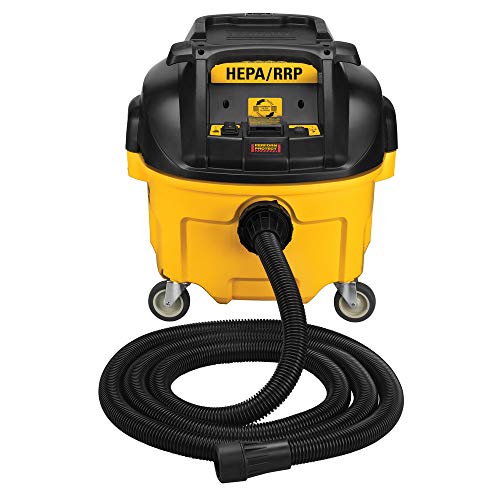
- Automatic filter pulses every 30 seconds
- 15-amp motor provides up to 150 CFM
- Power-tool actuation and HEPA filtration
Best For: Portable renovation and jobsite dust extraction
Best Quiet Workshop Value
Rockler 9 Gal HEPA Dust Collector

- Operation rated at 65 dB or less
- Tool-triggered startup with five-second delay
- Includes hose, tools, filter, and disposable bag
Best For: Quieter indoor workshops and accessory-ready cleanup
Best OSHA-Oriented Option

- Automatic cleaning runs every 15 seconds
- 150 CFM airflow with 97-inch water lift
- HEPA filter and adjustable suction dial
Best For: Power-tool dust extraction with controlled suction
Best High-Suction Shop System

- Combined 5HP fan motors for demanding shop tools
- HEPA-GFM filter with cyclone pre-separation
- Remote control, pulse cleaner, and Dust Sentry sensor
Best For: Dedicated woodworking shops with varied tools and long duct runs
Best Cordless Pick
DEWALT 20V MAX Universal Dust Extractor

- Compact 3.7-pound cordless design
- Included HEPA filter and OSHA Table 1 solution
- Wireless Tool Control and SDS-plus optimization
Best For: Mobile drilling and chipping work
Best Large-Capacity Option
Bosch VAC140AH 14-Gallon Dust Extractor

- Automatic filter cleaning every 15 seconds
- HEPA filtration and 14-gallon capacity
- Power-tool activation with adjustable suction
Best For: High-volume workshop and job-site dust collection
Best Wet/Dry Choice
FEIN Turbo I Wet/Dry Dust Extractor
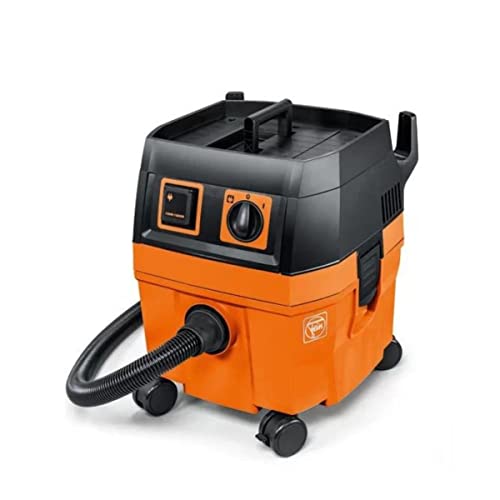
- Wet/dry cleaning with 5.8-gallon capacity
- 151 CFM suction and 98 inches of water lift
- Long cord, hose, and tool-activated outlet
Best For: Workshops needing versatile wet/dry extraction
Compact HEPA Pick

- HEPA filtration and automatic tool start
- 15-liter container with included cleaning tools
- Compact chassis for mobile use
Best For: Mobile indoor cleaning and workshop tasks
Remote-Control Workhorse
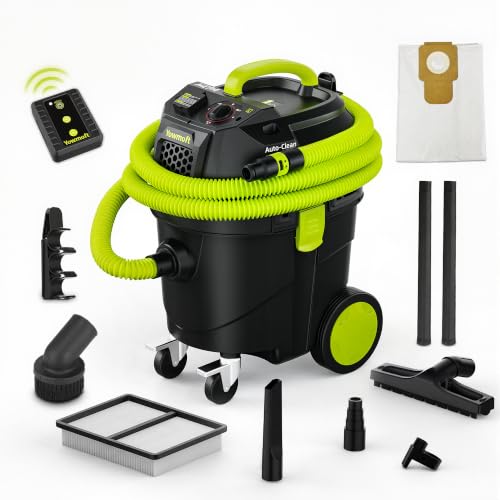
- 150 CFM airflow with 96-inch water lift
- Automatic HEPA cleaning every 20 seconds
- Tool auto-start and included remote control
Best For: Heavy-duty garage and woodworking applications
Industrial Sanding Specialist

- Automatic filter cleaning without flow stoppage
- Works with pneumatic and electric sanders
- Includes 9-gallon capacity and two HEPA cartridges
Best For: Professional sanding and industrial fabrication
Best Jobsite HEPA Pick – DEWALT DWV010
The DEWALT DWV010 is one of the more practical automatic dust extractors for renovation and jobsite cleanup. Its filter pulses every 30 seconds, while the 15-amp motor delivers up to 150 CFM and power-tool actuation starts or stops the vacuum with a connected tool.
Best For: Contractors and DIYers who need portable HEPA dust extraction with automatic filter cleaning.
Pros:
- Automatic filter cleaning supports continuous operation without frequent manual cleaning.
- HEPA filtration, four wheels, and a 15-foot antistatic hose suit mobile jobsite use.
- Power-tool actuation and a universal swivel hose connector improve convenience.
Cons:
- Its listed noise level is 80 dB.
- RRP-rule compliance requires DWV9330 filters.
- The 8-gallon capacity is smaller than some comparable extractors.
Choose the DWV010 when mobility, automatic filter maintenance, and tool activation matter more than maximum tank size or quieter operation.
Best Quiet Workshop Value – Rockler 9 Gal HEPA Dust Collector
The Rockler 9 Gal HEPA Dust Collector is a versatile choice among automatic dust extractors for indoor workshops. It combines tool-triggered startup, pulse filter cleaning, a five-second shutoff delay, and a washable HEPA filter rated to capture particles down to 0.3 microns.
Best For: Workshop users who want quieter operation, included accessories, and automatic power-tool activation.
Pros:
- Runs at 65 dB or less, according to the supplied specifications.
- Automatic activation supports compatible tools up to 7 amps.
- Includes a hose, wands, floor brush, nozzles, adapter, HEPA filter, and disposable bag.
- Oversized 3-inch casters and a 20-foot cord make repositioning easier.
Cons:
- The 85 CFM airflow rating is lower than several larger extractors.
- Tool activation is limited to compatible tools up to 7 amps.
- The system is listed for indoor hard-floor use rather than broad surface applications.
This Rockler model is a sensible pick for a compact shop where low noise, accessory flexibility, and hands-off filter cleaning are high priorities.
Best OSHA-Oriented Option – Bosch VAC090AH
The Bosch VAC090AH is a strong option among automatic dust extractors for power-tool applications. Its filter cleans automatically every 15 seconds, and the 150 CFM airflow, 97-inch static water lift, HEPA filter, fleece bag, and Power Broker suction dial support controlled dry-dust extraction.
Best For: Tool users who want frequent automatic filter cleaning, adjustable suction, and a dust-extraction system designed to help move toward OSHA Silica Table 1 compliance.
Pros:
- Automatic filter cleaning every 15 seconds helps maintain suction.
- HEPA filtration captures 99.97% of particles at 0.3 microns or larger.
- Power-tool activation and a three-level Power Broker dial improve application matching.
- Includes a fleece filter bag for dry-dust containment and filter protection.
Cons:
- At 28 pounds, it is heavier than the DEWALT model listed here.
- It is corded and has a relatively large canister footprint.
- The supplied specifications list a one-year limited warranty.
The VAC090AH stands out when suction control and frequent filter maintenance are more important than minimizing weight or storage space.
Best High-Suction Shop System – Oneida Supercell
Oneida Air Systems Supercell High-Pressure Portable Freestanding HEPA-GFM Dust Collector (14-Gallon)
Check Price On AmazonThe Oneida Air Systems Supercell is a high-pressure automatic dust extractor system built for a broad range of woodworking tools. Its combined 5HP fan motors, cyclone separator, HEPA-GFM filter, pulse cleaner, and included 25-foot hose support demanding shop layouts and longer duct runs.
Best For: Woodworkers who need high static pressure for varied tools, extended hose runs, and a larger 14-gallon collection setup.
Pros:
- Designed to handle tools ranging from handheld sanders to planers and CNC routers.
- HEPA-GFM filtration, cyclone separation, and internal pulse cleaning help manage fine dust.
- Includes a rolling stand, remote control, Dust Sentry level indicator, and automatic bag holder.
- Supports up to 100 feet of 4-inch hose or ductwork according to the supplied notes.
Cons:
- Its 60.88-inch height and rolling-stand format require substantial vertical space.
- The system is more specialized and workshop-focused than a standard portable canister vacuum.
- The supplied details do not provide a CFM rating or noise level for direct comparison.
The Supercell makes the most sense for a dedicated woodworking shop that values high-pressure collection, tool compatibility, and integrated monitoring over compact storage.
Best Cordless Pick – DEWALT 20V MAX Universal Dust Extractor
For portable automatic dust extractors, the DEWALT DWH161B stands out for its compact, cordless design and included HEPA filter. It is built around SDS-plus rotary hammer drilling and chipping, while Wireless Tool Control can link the extractor to a compatible tool for remote activation.
Best For: Mobile drilling and chipping work where low weight and cordless convenience matter.
Pros:
- Compact, lightweight 3.7-pound design with a shoulder strap and belt hook.
- Included HEPA filter and OSHA Table 1-compliant dust-collection solution.
- 45% more dust-box capacity than the DWH302DH and a brushless 20V MAX motor.
- Multiple strap connection points support more ergonomic positioning.
Cons:
- Battery and charger are not included because this is a tool-only model.
- Its 3-minute listed runtime may limit extended cordless work.
- Optimized primarily for SDS-plus rotary hammer applications rather than general cleanup.
The DEWALT is the most mobile option here, especially for users already invested in the 20V MAX platform. Its small form factor is convenient, but the limited listed runtime and specialized design make it less suitable for long, continuous extraction.
Best Large-Capacity Option – Bosch VAC140AH 14-Gallon Dust Extractor
BOSCH VAC140AH Portable 14 Gallon Dust Extractor with Auto Filter Clean and HEPA Filter
Check Price On AmazonThe Bosch VAC140AH is one of the more capable automatic dust extractors for sustained workshop or job-site use. Its automatic filter-cleaning cycle runs every 15 seconds, while the 14-gallon capacity, HEPA filtration, and power-tool activation support longer extraction sessions.
Best For: High-volume dry dust collection where strong suction, automatic filter cleaning, and a large container are priorities.
Pros:
- Automatic filter cleaning helps maintain suction by cleaning every 15 seconds.
- HEPA filter captures 99.97% of particles at 0.3 microns or larger.
- 14-gallon capacity, up to 150 CFM airflow, and 97 inches of static water lift.
- Power-tool activation and a Power Broker dial help match suction to the application.
Cons:
- At 38 pounds, it is substantially less portable than the DEWALT model.
- The included hose is 9.85 feet, providing less reach than the FEIN’s hose.
- Its larger 34.1-inch height may require more storage space.
Choose the Bosch when capacity and automatic filter maintenance outweigh portability. Its robust airflow and OSHA-oriented PRO+GUARD system make it a practical choice for demanding dust-collection work, though its larger footprint is less convenient for quick transport.
Best Wet/Dry Choice – FEIN Turbo I Wet/Dry Dust Extractor
The FEIN Turbo I Set is a versatile choice among automatic dust extractors, combining wet/dry cleanup with tool-activated suction. Its 1100-watt turbine delivers 151 CFM and 98 inches of water lift, while the long cord and hose help cover larger work areas.
Best For: Workshops and job sites that need wet/dry capability, tool synchronization, and extended reach.
Pros:
- Handles wet and dry cleanup with a 5.8-gallon capacity.
- 1100-watt turbine provides 151 CFM and 98 inches of water lift.
- Auto-start outlet with power-on delay synchronizes extraction with power tools.
- 19.7-foot power cord, 13-foot hose, and 360-degree swivel wheels improve mobility.
Cons:
- Its 5.8-gallon capacity is smaller than the Bosch’s 14-gallon container.
- It is corded, so it requires access to a power outlet.
- Anti-static protection depends on optional accessories.
The FEIN offers a strong balance of suction, reach, and versatility for users who need one extractor for both wet and dry jobs. Its corded design and smaller capacity are trade-offs, but the quiet 66 dB operation and tool-activated outlet add practical value indoors.
Compact HEPA Pick – Festool CT 15
The Festool CT 15 is a compact choice among automatic dust extractors for indoor cleanup, furniture work, flooring, and mobile workshop use. Its HEPA filter, automatic tool start, and 15-liter container support convenient, low-interruption dust collection.
Best For: Mobile users who want a compact extractor with HEPA filtration and included cleaning accessories.
Pros:
- HEPA filtration with an adjustable high-performance turbine.
- Automatic tool start and AutoClean system help streamline operation.
- Compact, lightweight design with a robust steel-axle chassis.
- Includes crevice and upholstery cleaning tools with onboard storage.
Cons:
- The 3.96-gallon capacity is smaller than the larger extractors in this roundup.
- It has one power level.
The CT 15 balances portability, filtration, and practical storage. Choose it when easy transport and a compact footprint matter more than maximum container capacity.
Remote-Control Workhorse – 8-Gallon 150 CFM Extractor
This 8-gallon model is one of the more capable automatic dust extractors for heavy-duty garage and woodworking tasks. Its 150 CFM airflow, automatic HEPA filter cleaning, wet/dry capability, and tool-linked starting make it suited to demanding cleanup.
Best For: Workshop users who need high suction, automatic filter cleaning, and remote operation.
Pros:
- 1200-watt motor delivers 150 CFM airflow and up to 96 inches of water lift.
- Automatic HEPA filter cleaning activates every 20 seconds to help maintain suction.
- Auto-start synchronizes with connected tools up to 5 amps.
- Remote control and wet/dry functionality add operating flexibility.
Cons:
- Its 35.2-pound weight and larger dimensions make it less portable than compact models.
- The listed hose length is 11.5 feet, which may be limiting in larger work areas.
With strong stated suction and a generous 8-gallon capacity, this extractor is built around productivity. It is a practical fit for users prioritizing performance and reduced manual filter maintenance.
Industrial Sanding Specialist – 3M Xtract 64256
The 3M Xtract 64256 is a portable industrial extractor designed for sanding workflows. It offers automatic filter cleaning without stopping airflow, automatic on/off compatibility with pneumatic and electric sanders, and dual HEPA filter cartridges.
Best For: Industrial sanding, metal fabrication, woodworking, composites, and other professional applications.
Pros:
- Automatic filter cleaning operates without flow stoppage.
- Compatible with pneumatic and electric sanders for automatic on/off control.
- Includes a 9-gallon container, conductive hose, filter bag, push handle, and two HEPA cartridges.
- Compact, sturdy design is intended for harsh industrial conditions.
Cons:
- It is specified for industrial or occupational use rather than consumer use.
- The listed noise level is 75 dB.
- It has one power level.
This model makes the most sense when integrated dust extraction for sanding is the priority. Its accessories and automatic operation are tailored to professional workflows rather than general household cleaning.
How We Picked the Best Automatic Dust Extractors
We compared these Automatic Dust Extractors by looking at the features that matter during real cutting, sanding, routing, grinding, and cleanup tasks. Our evaluation focused on filtration, automatic filter-cleaning performance, suction design, capacity, portability, tool activation, hose compatibility, and the type of work each model is built to handle.
We also considered whether a unit is better suited to a stationary woodworking setup, a mobile jobsite, power-tool extraction, or wet/dry cleanup. Because specifications and included accessories can vary by package, confirm the manufacturer’s current details before purchasing.
Quick Comparison
- Best for general jobsite extraction: Look for a portable 8- to 9-gallon HEPA unit with automatic filter cleaning.
- Best for larger cleanup tasks: A 14-gallon extractor provides more capacity and can reduce emptying frequency.
- Best for cordless work: A compact 20V extractor offers mobility where an outlet is unavailable.
- Best for sanding and fine dust: Prioritize HEPA filtration, consistent airflow, and automatic cleaning without frequent interruptions.
- Best for mixed cleanup: Choose a wet/dry extractor if the workshop also handles spills or damp debris.
Key Buying Factors for Automatic Dust Extractors
Filtration and Dust Class
For fine wood, drywall, concrete, or grinding dust, a genuine HEPA filter and a sealed collection system are important. Check the manufacturer’s filtration claims and make sure replacement filters and bags are readily available.
Automatic Filter Cleaning
Automatic cleaning helps shake or pulse dust from the filter while you work, preserving airflow as the filter loads. Some systems pause suction briefly, while others clean without stopping airflow. The latter can be useful for continuous sanding or production work.
Airflow, Suction, and Tool Compatibility
Airflow helps capture dust at the tool, while suction helps overcome resistance from hoses, adapters, and restrictive tools. Check hose diameter, tool-start compatibility, power requirements, and whether the extractor supports the accessories you already own.
Capacity and Portability
Larger tanks hold more debris but add weight and bulk. Compact extractors are easier to carry between rooms or floors. Consider wheel quality, handle design, cord length, battery runtime, and storage for hoses and accessories.
Who Should Buy Which Automatic Dust Extractors?
Woodworkers and cabinetmakers should prioritize HEPA filtration, reliable automatic cleaning, and tool activation for sanders, routers, and saws. A 9- to 14-gallon model is often a practical balance for regular shop use.
Contractors and remodelers will usually benefit from a rugged portable extractor with strong filtration, a durable hose, and straightforward filter and bag changes. Choose a larger capacity when moving between jobs is less important than minimizing maintenance.
Concrete and grinding users should look for high suction, effective filter cleaning, and accessories designed for mineral dust. Verify that the extractor is approved or recommended for the specific material and tool.
Mobile and cordless users should choose a compact battery-powered unit when portability outweighs maximum runtime and capacity. For all-day extraction, a corded model is generally more practical.
Workshops handling occasional spills should select a wet/dry-capable extractor, while users focused exclusively on dry fine dust may prefer a specialized HEPA dust extractor with the simplest maintenance routine.