
If you are searching for a 12V oil extractor pump review, this model is aimed at people who want one compact pump for messy fluid transfers.
It is less about specialty extracting through a dipstick tube and more about straightforward pumping from tanks or drain pans.
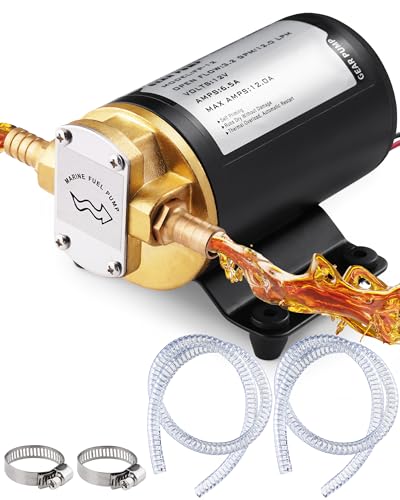
12V Oil Extractor Pump Review Summary
The 12V oil extractor pump makes sense for buyers who maintain cars, motorcycles, lawn mowers, or marine engines and want a simple electric way to move fluids without manual siphoning.
Its strongest appeal is practical versatility: the listing says it handles motor oil, gear oil, transmission fluid, waste oil, lubricants, diesel fuel, and kerosene, so it fits a wide range of garage and maintenance jobs.
Verdict: this is a useful utility pump for owners who value convenience, decent flow, and thermal protection more than refined branding or premium extras.
If you need a pump for engine compartments, drain pans, or general transfer work, it looks well targeted.
If you specifically want an extractor that pulls oil through the dipstick tube, this is not the right design.
Review Scorecard
| Category | Score | Buyer-focused rationale |
|---|---|---|
| Transfer versatility | 9/10 | Listed for oil, trans fluid, diesel, kerosene, and waste oil, which broadens its use cases. |
| Ease of use | 8/10 | Electric self-priming design reduces manual effort during basic transfer tasks. |
| Heat management | 8/10 | Built-in thermal protection is a meaningful safeguard for repeated use. |
| Power and output | 8/10 | The stated 3.2 GPM flow and 43.5 PSI max pressure are solid for a compact 12V unit. |
| Heavy-fluid handling | 7/10 | The listing says it can handle thick oils such as 80W-90, which is useful, though real-world setup still matters. |
| Build confidence | 7/10 | All-copper motor, impeller, and pump head suggest durability more than disposable construction. |
| Fit-for-purpose value | 8/10 | Strong for general transfer and maintenance work, but not for buyers who need a dipstick extractor. |
Key Features and Specifications of 12V Oil Extractor Pump
This pump is built around a simple job: move fluids cleanly and efficiently.
The listing identifies it as a 12V self-priming gear pump with a 78W standard power draw, 120W max load, 3.2 GPM flow, and 0.3 MPa / 43.5 PSI maximum pressure.
Those numbers suggest a compact but capable unit for maintenance tasks where convenience matters more than industrial throughput.
The materials are also a meaningful part of the appeal.
The pump uses all-copper construction for the motor, impeller, and pump head.
That does not automatically guarantee long service life, but it does point to a sturdier design than the cheapest plastic-heavy options.
The thermal protection is another practical detail, especially if you expect repeated cycles or warmer fluids.
Here is the core evidence from the listing:
| Spec | Detail |
|---|---|
| Power | 12V DC |
| Standard power | 78W |
| Max load | 120W |
| Flow rate | 3.2 GPM |
| Max pressure | 0.3 MPa / 43.5 PSI |
| Work cycle | Up to 120 minutes |
| Construction | All-copper motor, impeller, and pump head |
| Safety feature | Built-in thermal protection |
| Intended use | Transfer from tanks or drain pans |
The listing also makes one important limitation explicit: it is not for extracting oil through the dipstick tube.
That matters because many buyers shop for “oil extractor” and assume all extractor pumps are designed for the same task.
This one is better understood as a transfer and drain solution for accessible fluid handling.
Pros and Cons of 12V Oil Extractor Pump
Pros
- Handles a wide range of fluids, including motor oil, gear oil, transmission fluid, waste oil, diesel fuel, and kerosene.
- Electric self-priming operation is easier than manual pumping for routine maintenance.
- The listed 3.2 GPM flow is respectable for a compact 12V pump.
- Thermal protection adds a useful safety layer for longer sessions.
- All-copper construction is a positive sign for durability and heat tolerance.
- The design is practical for cars, motorcycles, lawn mowers, boats, and outboard maintenance.
Cons
- It is not a dipstick-tube extractor, so some common oil-change workflows are off the table.
- The listing gives electrical and flow data, but not enough detail to judge hose quality, noise, or long-term wear.
- Buyers wanting a dedicated premium marine pump or a more specialized extractor may want a more focused product.
- Like most utility pumps, the real experience will depend on hose setup, fluid viscosity, and access to the reservoir.
Who Should Buy 12V Oil Extractor Pump?
This pump is a good fit for DIY maintenance buyers who want one tool that can move different fluids between containers, drain pans, and service points.
It should appeal to people maintaining a mix of equipment: a car in the driveway, a mower in the shed, and a boat or outboard in seasonal storage.
If you value a straightforward electric pump more than a highly specialized extractor, the feature set lines up well.
It is also a sensible choice for users who deal with thicker oils and want a pump that explicitly claims compatibility with 80W-90.
The copper construction and thermal protection make the product look more serious than a basic one-job gadget.
For routine garage or marine use, that combination is attractive.
You should probably skip it if you need an oil change tool that works through a dipstick tube, or if your main goal is a highly refined, purpose-built extraction setup.
In that case, the product’s own limitation becomes the deciding factor, not the pump’s raw capability.
The right buyer is someone who needs transfer flexibility and can work with direct-access fluid handling.
Fluid Handling and Real-World Fit
Transfer Jobs, Not Clever Extraction
The key to understanding this pump is that it is optimized for moving fluid from one place to another.
The listing explicitly says it is designed to pump from tanks or drain pans.
That makes it a better match for direct-access tasks than for delicate vehicle-service routines where a narrow extraction path matters.
Thick Oil Capability
Its claim to handle thick oils such as 80W-90 is one of the more useful details in the listing.
Buyers dealing with gear oil or marine maintenance will care about that more than generic “multi-use” language.
Even so, viscosity always affects flow, so practical setup and temperature will still influence how smoothly it works.
Safety and Work Cycle
Built-in thermal protection is worth paying attention to because it signals an attempt to keep the pump from overheating under sustained use.
The stated work cycle of up to 120 minutes also suggests this is intended for real maintenance sessions rather than a few seconds of occasional movement.
Where It Fits in a Garage
This is the kind of tool that earns its place when you want less mess and less manual labor.
It does not try to replace every service tool.
Instead, it covers a useful middle ground for owners who frequently transfer oils or other compatible fluids and want to do it with an electric pump instead of gravity or hand pumping.
Alternatives to 12V Oil Extractor Pump
If you want a more established brand or a different pump style, look at a few common Amazon search options:
- Mityvac fluid extractors
- Slime transfer pumps
- SEAFLO oil transfer pumps
- BISupply fluid transfer pump
These alternatives are worth comparing if you want a manual extractor, a marine-focused transfer setup, or a pump from a brand with a more established service-tool presence.
The best substitute depends on whether your priority is extraction, transfer speed, or overall build confidence.
Is 12V Oil Extractor Pump Worth It?
Yes, if you need a compact 12V transfer pump for direct-access oil and fluid handling. The listed flow rate, thermal protection, and all-copper construction make it look like a practical maintenance tool rather than a flimsy gadget.
It is not the best choice for buyers who need dipstick extraction, and that limitation matters.
But for garages, mowers, boats, and general fluid-moving chores, it is a sensible buy if the workflow matches the design.