
Choosing the right solar charge controller can make or break an off-grid system. The best match depends on your panel array, battery voltage, and whether you want simple PWM control or higher-efficiency MPPT charging.
Below, we focus on reliable options for small cabins, vans, backup power, and larger off-grid installations, with picks that balance charging performance, system compatibility, and practical features.
Best 10 Solar Charge Controller for Off Grid Picks for 2026
Compact Bluetooth MPPT

- Bluetooth app for live data and settings
- Fast MPPT tracking for shaded panels
- Intelligent load output for battery protection
Best For: Small off-grid systems needing smart monitoring
Heavy-Duty Legacy MPPT

- Built for higher-capacity MPPT charging
- Heavy-duty 14-pound construction
- Simple LED-based interface
Best For: Large off-grid systems needing a rugged controller
Wide-Voltage High-Amps MPPT

- Auto-senses 12V to 96V systems
- High 120A MPPT charging capacity
- LCD display shows status and warnings
Best For: Large multi-voltage off-grid battery banks
Smart High-Voltage MPPT

- Works with 12/24/36/48V systems
- 150V solar input for flexible designs
- VictronConnect app for monitoring and setup
Best For: Medium to larger off-grid systems needing higher PV voltage
Waterproof Budget Pick
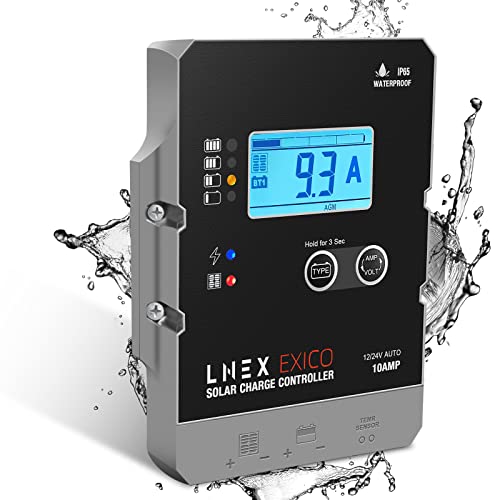
- IP65 waterproof for outdoor use
- 5-stage PWM charging with LCD display
- Auto 12V/24V detection and battery support
Best For: Small off-grid, RV, and marine systems
Compact Starter Choice
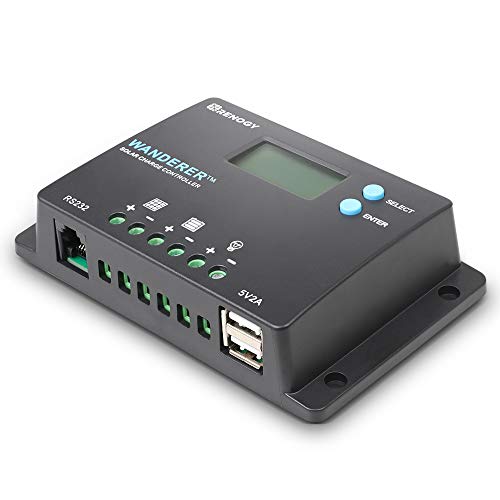
- 4-stage PWM charging for common battery types
- Ultra-low power draw and compact size
- LCD display with USB charging port
Best For: Small RV, marine, and starter off-grid setups
Smart monitoring pick
12V/24V 30A MPPT with Bluetooth and LCD

- 99% tracking efficiency with up to 98% conversion efficiency
- Built-in Bluetooth plus LCD and LED status indicators
- Supports LiFePO4, sealed, gel, and lead-acid batteries
Best For: Small off-grid systems that need easy monitoring and battery flexibility
Rugged all-weather choice
40A MPPT with auto 12V/24V and LCD

- 98% conversion rate and 99% tracking efficiency
- Works with Gel, AGM, Flooded, and Lithium batteries
- Operates from -40°F to 149°F for harsh climates
Best For: Off-grid systems that need durability, auto battery detection, and app-ready monitoring
Compact Bluetooth MPPT – Victron SmartSolar 75V 15A
If you want a solar charge controller for off grid use that focuses on efficiency and easy monitoring, this Victron SmartSolar MPPT is a strong compact option. It uses fast MPPT tracking to squeeze more usable energy from your panels, even when light conditions are uneven, and the Bluetooth app makes setup and performance checks straightforward.
Best For: Small off-grid battery systems where app-based monitoring and reliable MPPT charging matter most.
Pros:
- Lightning-fast MPPT tracking helps maximize output, even with partial shade.
- VictronConnect app provides real-time data, 30-day history, and easy configuration.
- Supports synchronized charging with multiple compatible controllers.
- Intelligent load output can disconnect loads to help protect the battery.
Cons:
- 15A output is better suited to smaller off-grid setups.
- Limited to 12/24V battery systems.
Overall, this model is best when you value quality control, smart connectivity, and efficient charging over raw amperage. It is a practical pick for compact systems where battery management and visibility are priorities.
Heavy-Duty Legacy MPPT – Outback Power FM80
For a solar charge controller for off grid builds that need a rugged, high-capacity unit, the Outback Power FM80 is aimed at serious systems. Its MPPT design is built for solar charging in larger setups, and the heavy-duty construction stands out if you want something more industrial than compact or app-focused.
Best For: Larger off-grid installations where durability and higher-current MPPT charging are the main priorities.
Pros:
- High-capacity MPPT controller suited to bigger solar arrays.
- Heavy 14-pound build suggests a durable, substantial design.
- LED display keeps the interface simple.
Cons:
- No smart app connectivity is listed in the supplied details.
- Bulkier and heavier than compact controllers.
This is the kind of controller to consider when the system is large and the priority is reliable charging hardware rather than convenience features. It fits best in more permanent off-grid installations where size is less of a concern.
Wide-Voltage High-Amps MPPT – POWLAND 120A Auto 12V-96V
If you need a solar charge controller for off grid power systems with a wide battery voltage range, this POWLAND MPPT is built for flexibility. It automatically senses 12V through 96V systems, supports a high 120A charging capacity, and includes an LCD display for checking charging status and warnings.
Best For: Large off-grid systems, RV setups, and multi-voltage battery banks that need high current and broad compatibility.
Pros:
- Auto-sensing supports 12V to 96V battery systems.
- 120A MPPT capacity is suited to demanding solar setups.
- LCD dashboard shows PV input, charging stage, and warnings.
- Supports multiple battery types including LiFePO4, AGM, GEL, and flooded lead-acid.
Cons:
- Large capacity may be more than smaller systems need.
- Plastic construction is less premium than metal-bodied options.
This model makes sense when you want one controller that can adapt to a lot of system types and battery voltages. The combination of high amperage, auto-sensing, and display feedback makes it a practical pick for more complex off-grid builds.
Smart High-Voltage MPPT – Victron SmartSolar 150V 45A
For an off-grid setup that needs more input voltage headroom, this Victron SmartSolar MPPT is a capable solar charge controller for off grid use. It offers fast MPPT tracking, works with 12/24/36/48V systems, and pairs with the VictronConnect app so you can monitor performance and change settings from your phone.
Best For: Medium to larger off-grid systems that benefit from higher PV voltage support and app-based control.
Pros:
- Supports 12/24/36/48V battery systems.
- 150V input rating gives more flexibility on the solar side.
- VictronConnect app provides live data, history, and configuration tools.
- Intelligent load output can disconnect loads to help protect batteries.
Cons:
- No display is listed in the supplied details.
- 45A output may not fit the largest high-current systems.
This is a strong middle-to-upper-range option if you want smart monitoring and broader voltage support without moving into very large industrial hardware. It is especially useful when solar array design and battery flexibility both matter.
Waterproof Budget Pick – LNEX 10A Thin PWM Controller
If you want a compact solar charge controller for off grid use, the LNEX 10A keeps things simple while still covering the basics well. It uses 5-stage PWM charging, auto-detects 12V/24V systems, and adds an IP65 waterproof design for outdoor installs where rain or spray is a concern.
Best For: Small off-grid systems, RVs, marine setups, and battery maintenance on a tight space budget.
Pros:
- Very thin design with no additional self power consumption.
- IP65 waterproof rating for outdoor exposure.
- 5-stage PWM charging with LCD monitoring and LED indicators.
- Supports LiFePO4, AGM, Gel, Flooded, LTO, Calcium, and EFB batteries.
Cons:
- 10A output limits it to smaller systems.
- PWM design is best suited to simpler setups, not higher-end MPPT performance.
- 90-day manufacturer warranty is shorter than many alternatives.
Overall, this is a practical choice if you need a weather-resistant, easy-to-read controller for a modest off-grid build. It focuses on compatibility and protection rather than advanced expansion.
Smart Monitoring Upgrade – Redodo 24V 40A Bluetooth MPPT
For a solar charge controller for off grid systems that need better harvesting and monitoring, the Redodo 40A MPPT stands out. It uses 99% tracking technology, up to 98% conversion efficiency, and built-in Bluetooth so you can check live system status without standing at the controller.
Best For: Off-grid homes, RVs, and DIY solar builds that want MPPT efficiency plus remote monitoring.
Pros:
- MPPT tracking efficiency up to 99% with up to 98% conversion efficiency.
- Built-in Bluetooth and RS485/RJ12 connectivity for remote monitoring.
- LCD screen, LED indicators, and four operating buttons for local control.
- Supports LiFePO4 by default and can be adjusted for FLD, sealed, and gel batteries.
Cons:
- Larger and heavier than basic PWM controllers.
- Bluetooth and advanced monitoring may be more than you need for simple setups.
- Best value comes when you have enough PV input to benefit from MPPT design.
If you want more control and better efficiency from a mid-size off-grid array, this model is a strong upgrade path. Its safety protections and app-friendly monitoring make system management easier.
Compact Starter Choice – Renogy Wanderer 10A PWM
The Renogy Wanderer 10A is a straightforward solar charge controller for off grid setups where reliability and simplicity matter more than advanced features. It offers 4-stage PWM charging, auto 12V/24V support, and a compact body that fits neatly into RV or marine electrical spaces.
Best For: Small RV, marine, and starter off-grid systems that need a compact, low-draw controller.
Pros:
- 4-stage charging for AGM, Gel, Flooded, and Lithium batteries.
- Ultra-low power consumption helps preserve battery capacity.
- Negative ground design with multiple protection features.
- Backlit LCD plus USB charging for phones and tablets.
Cons:
- 10A rating is only suitable for smaller arrays.
- PWM design is less feature-rich than MPPT alternatives.
- IP32 rating is not as weather-resistant as higher-IP controllers.
This is a practical starter controller when you want a dependable brand name and a small footprint. It covers the essentials well, especially in compact mobile power systems.
Smart monitoring pick – 12V/24V 30A MPPT with Bluetooth and LCD
If you’re comparing a solar charge controller for off grid use, this LiTime 30A MPPT model stands out for efficient charging, easy monitoring, and battery compatibility. It uses MPPT technology with stated 99% tracking efficiency and up to 98% peak conversion efficiency, making it a practical fit for smaller off-grid systems that need steady power capture.
Best For: Off-grid builds that want Bluetooth monitoring, LCD readouts, and LiFePO4 or lead-acid support in a 12V/24V setup.
Pros:
- Built-in Bluetooth lets you check usage information remotely without adding a separate module.
- LCD screen and LED indicators make system status easier to read at a glance.
- Supports LiFePO4 plus sealed, gel, and other lead-acid batteries.
- Built-in protections cover reverse connection, overpower, overvoltage, short-circuit, and over-temperature.
Cons:
- 30A output and 12V/24V limits make it better suited to smaller systems than larger arrays.
- Plastic housing may feel less rugged than metal-bodied controllers.
- No advanced app ecosystem is listed beyond the built-in Bluetooth function.
This is a solid pick if you want a feature-rich controller for a modest off-grid setup and value simple status checks from the unit itself or via Bluetooth. It looks especially appealing for users balancing LiFePO4 charging support with straightforward installation extras like the included copper wire connector.
Rugged all-weather choice – 40A MPPT with auto 12V/24V and LCD
For buyers shopping a solar charge controller for off grid systems, the Renogy Rover 40A is built around high-efficiency MPPT charging and broad battery support. It claims 98% conversion and 99% tracking efficiency, plus auto 12V/24V detection, which makes it a strong fit when you want a controller that can adapt easily to changing conditions.
Best For: Off-grid users who need a durable 40A controller for harsher climates and mixed battery types.
Pros:
- High MPPT performance is rated at 99% tracking efficiency and 98% conversion.
- Supports Gel, AGM, Flooded, and Lithium batteries with smart charging stages.
- Built for extreme temperatures, with operating range from -40°F to 149°F.
- DC Home app support provides real-time data, 30-day history, and settings adjustments when paired with BT-2.
Cons:
- Bluetooth connectivity requires the separately sold BT-2 module.
- Rated at 40A, so it may be more controller than very small systems need.
- App features depend on external accessories rather than being fully built in.
The Rover 40A is a practical middle-ground choice if you want a dependable off-grid controller with strong efficiency, wide battery support, and weather tolerance. It makes the most sense for users who want proven Renogy monitoring and charging features without stepping up to a much larger system.
High-capacity upgrade – 60A MPPT for 12V to 48V systems
If your solar charge controller for off grid use needs more headroom, this 60A MPPT model is aimed at larger arrays and higher-voltage battery banks. It supports 12V/24V/36V/48V auto detection, accepts up to 150V PV input, and advertises 99.5% tracking efficiency with 97.5% conversion efficiency for stronger harvest in partial shade.
Best For: Larger off-grid cabins, RVs, or marine systems that need a higher-current controller and broad system-voltage support.
Pros:
- High 60A capacity and 150V PV input suit bigger off-grid solar setups.
- Supports 12V/24V/36V/48V systems and both lead-acid and lithium batteries.
- LCD display and 4-button interface make setup and status checks straightforward.
- Includes temperature compensation and multiple safety protections for stable operation.
Cons:
- Lithium configuration is more manual and requires setting the system voltage correctly.
- The included password step adds setup complexity for advanced menus.
- Its larger size and metal build may be more controller than smaller systems need.
This controller makes sense when you need more capacity than a basic off-grid unit can offer and want support for higher-voltage configurations. It is best viewed as a heavy-duty option for users who are comfortable doing a more detailed setup in exchange for broader system flexibility.
How We Picked These Solar Charge Controller for Off Grid Options
We focused on controller type, voltage and current support, PV input headroom, battery compatibility, display and monitoring features, and brand reputation. For a Solar Charge Controller for Off Grid use, the most important factor is matching the controller to both the array and the battery bank without leaving too little expansion room.
We also favored models that make setup easier, such as auto-detecting system voltage, clear LCD readouts, Bluetooth monitoring, and adjustable charge profiles for common battery chemistries.
Quick Comparison
PWM controllers are best for small, budget-conscious systems with closely matched panel and battery voltages. MPPT controllers are usually the better fit for off-grid builds because they extract more power from the array, especially when panel voltage is higher than battery voltage or weather conditions vary.
Lower-amperage models suit single-panel or compact systems, while 40A, 45A, 60A, 80A, and 120A controllers are better for larger banks and future expansion. High PV input ratings matter if you plan to wire panels in series.
Key Buying Factors for Solar Charge Controller for Off Grid
Controller Type
Choose MPPT for efficiency and flexibility. Choose PWM only if your array is small, the budget is tight, or the panel and battery voltages are closely aligned.
System Voltage and Amperage
Confirm the controller supports your battery bank voltage and leaves enough current capacity for peak production. Oversizing slightly is usually safer than running at the limit.
PV Input Voltage
Higher PV input limits give you more wiring options and reduce the risk of overvoltage when panels are connected in series. This is especially valuable in cold climates or larger arrays.
Battery Compatibility and Charge Profiles
Look for support for lead-acid, AGM, gel, and lithium settings if you may change batteries later. Adjustable charging parameters are a major advantage in off-grid systems.
Monitoring and Installation
LCD screens, Bluetooth apps, and waterproof or compact enclosures can improve day-to-day use, especially in cabins, RVs, and remote shelters where maintenance access is limited.
Who Should Buy Which Solar Charge Controller for Off Grid?
Buy a compact PWM controller if you are building a small, low-cost system with minimal power needs. Choose a 30A to 45A MPPT model if you want a practical balance of price, efficiency, and expandability for cabins, vans, and backup setups. Step up to 60A and above if you are running a larger battery bank, multiple panels, or higher-voltage strings.
If you need remote monitoring or frequent tuning, Bluetooth-enabled MPPT units are the easiest to manage. If you want the simplest install, a basic controller with auto-voltage detection and a clear display may be enough.