
Choosing among EV charging adapters for home use can be confusing, especially when connector standards, outlet types, amperage, and vehicle compatibility all matter. The right option can make home charging more convenient without requiring a complete electrical upgrade.
This roundup includes portable Level 1 and Level 2 chargers, J1772-to-NACS adapters, Tesla charging adapters, and outlet-conversion cords. Use the guide below to match the hardware to your vehicle, home circuit, and everyday charging routine.
Best 10 Ev Charging Adapters for Home Use Picks for 2026
Budget Overnight Charging
Portable 15A Level 1 EV Charger

- Uses a standard 110V NEMA 5-15 outlet
- 21-foot cable supports flexible parking
- Portable J1772 design with safety protection
Best For: J1772 drivers needing simple overnight charging from a household outlet
Fast Home Charging

- Up to 9.6kW from a 240V NEMA 14-50 outlet
- Adjustable from 8A to 40A
- 25-foot cable and 0–12-hour delay timer
Best For: J1772 owners with a 240V NEMA 14-50 outlet
Tesla Compatibility

- Connects NACS vehicles to J1772 chargers
- Rated up to 80A and 250V
- UL 2251 compliant and IP54 rated
Best For: Tesla and NACS owners using J1772 home or public chargers
Flexible Outlet Options

- Works with NEMA 6-20 and NEMA 5-15 outlets
- Up to 3.84kW at 240V and 16A
- Temperature protection and ETL certification
Best For: J1772 owners needing portable Level 1 and Level 2 charging
Best Tesla J1772 Adapter
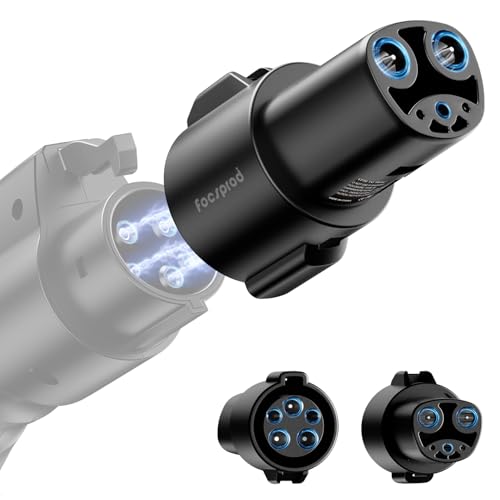
- Supports Tesla Model 3, Y, X, S, and Cybertruck
- Compatible with Level 1 and Level 2 J1772 charging
- SGS certified to UL 2252; 3-year limited warranty
Best For: Tesla owners using J1772 charging stations
Best Basic Home EV Charger
Lectron 120V J1772 Level 1 Charger

- Plugs into a standard 120V household outlet
- Delivers 15A and 1.65kW for overnight charging
- ETL/FCC certified with multiple protection features
Best For: J1772 EV owners charging overnight at home
Best Tesla-to-J1772 Adapter
SEGUMA NACS AC Charging Adapter

- Connects Tesla/NACS AC equipment to J1772 vehicles
- Listed at 60A with 48A output and 250V
- Portable design with a 1-year manufacturer warranty
Best For: Eligible J1772 EVs and PHEVs using NACS AC equipment
High-Output Adapter
NEMA 6-50P to 14-50R EV Adapter

- 6 AWG copper construction for heavy-duty use
- Compatible with Tesla and J1772 EV charging setups
- Not for RVs or 110V household outlets
Best For: EV owners connecting a NEMA 14-50 charger to a NEMA 6-50 outlet
Versatile Connector

- Supports up to 80A at 240V
- UL 2252 certified with temperature monitoring
- IP67 protection for indoor or outdoor charging
Best For: J1772 EV owners using compatible Tesla AC charging equipment
Rugged Portable Pick
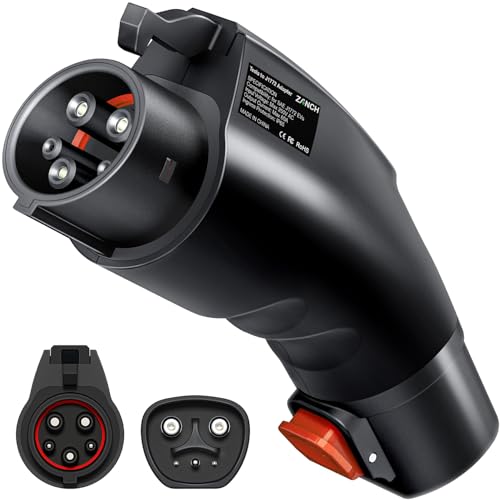
- Supports 60A and 250V AC charging
- IP65-rated and built for extreme temperatures
- Includes a compact carrying pouch
Best For: J1772 drivers using compatible Tesla AC chargers at home or on the road
Budget Overnight Charging – Portable 15A Level 1 EV Charger
For drivers looking for ev charging adapters for home use without installing a 240V circuit, this portable AplysiaTech charger uses a standard 110V outlet and supplies up to 15A and 1.65kW. Its 21-foot cable and included storage bag make it practical for overnight charging at home or for backup use while traveling.
Best For: J1772 EV owners who have access to a standard household outlet and primarily need convenient overnight charging.
Pros:
- Plugs into a common NEMA 5-15 household outlet.
- Offers a long 21-foot charging cable for flexible parking.
- Includes overvoltage, overcurrent, and short-circuit protection.
- Portable design includes a storage bag.
Cons:
- Level 1 charging is substantially slower than Level 2 charging.
- Designed for SAE J1772 vehicles; Tesla owners need a separate adapter.
This is a straightforward choice when affordability and outlet compatibility matter more than fast charging. The 110V setup is convenient, but drivers with higher daily mileage may prefer a Level 2 option.
Fast Home Charging – 40A Level 2 EV Charger
For shoppers comparing ev charging adapters for home use and wanting substantially faster charging, this BETUMODA Level 2 unit delivers up to 40A and 9.6kW from a 240V NEMA 14-50 outlet. Its 25-foot cable, adjustable current settings, and delay timer add flexibility for garage or driveway installations.
Best For: J1772 EV and plug-in hybrid owners with a properly installed 240V NEMA 14-50 outlet who want faster home charging.
Pros:
- Provides up to 9.6kW of Level 2 charging power.
- Five selectable current settings from 8A to 40A.
- 25-foot cable offers extended reach.
- Includes a programmable 0–12-hour delay timer.
Cons:
- Requires a 240V NEMA 14-50 outlet.
- Designed for J1772 vehicles; Tesla owners need a separate adapter.
- Should be used in a dry environment with a properly grounded outlet.
This model is a strong fit for households already equipped for 240V charging. Adjustable amperage helps accommodate different electrical limits, while scheduled charging can support off-peak use.
Tesla Compatibility – LENZ J1772 to NACS Adapter
This LENZ adapter is a useful addition to a home charging setup when a Tesla or other NACS vehicle needs to connect to a J1772 charger. Rather than replacing an existing Level 1 or Level 2 EVSE, it provides a compact bridge for expanding access to J1772 charging stations.
Best For: Tesla and NACS EV owners who want to use compatible J1772 home, workplace, hotel, or public charging stations.
Pros:
- Compatible with Tesla vehicles and NACS-equipped EVs listed by the manufacturer.
- Supports Level 1 and Level 2 AC charging.
- Rated up to 80A and 250V.
- UL 2251 and CSA C22.2 No. 282-17 compliant, with an IP54 rating.
Cons:
- It is an adapter, not a complete EV charger.
- Only helps when the available charging equipment uses a J1772 connector.
For Tesla households with a J1772 wall unit or regular access to J1772 stations, this compact adapter can expand charging options considerably. Its high electrical rating and listed safety certifications make it a practical compatibility accessory.
Flexible Outlet Options – 16A Dual-Level EV Charger
For flexible ev charging adapters for home use, the eTimxon portable charger supports both a dedicated 240V NEMA 6-20 outlet and a standard 120V NEMA 5-15 outlet. It can provide up to 3.84kW at 16A on Level 2, while the included household-outlet adapter supports lower-power Level 1 charging when a 240V connection is unavailable.
Best For: J1772 EV owners who want one portable charger for both dedicated 240V charging and occasional standard-outlet charging.
Pros:
- Supports NEMA 6-20 Level 2 and NEMA 5-15 Level 1 connections.
- Delivers up to 3.84kW at 240V and 16A.
- Includes temperature protection that can reduce or suspend charging if overheating occurs.
- ETL, CE, and FCC certifications are listed.
Cons:
- Requires the correct outlet type; the NEMA 6-20 plug needs a dedicated 240V receptacle.
- When using the NEMA 5-15 adapter, the current must be manually set to 12A.
- Level 1 charging is much slower than Level 2 charging.
This charger is appealing for drivers who need portability and outlet flexibility rather than maximum charging speed. Confirm the available receptacles before ordering, and use the appropriate current setting for the household outlet.
Best Tesla J1772 Adapter – FOCSPROD 80A NACS Adapter
For Tesla owners comparing ev charging adapters for home use, the FOCSPROD J1772-to-Tesla adapter provides a way to use compatible Level 1 and Level 2 J1772 charging stations. It supports Tesla Model 3, Y, X, S, and Cybertruck vehicles, with a compact design suited to home, workplace, or travel charging.
Best For: Tesla owners who need access to J1772 AC charging stations.
Pros:
- Supports Tesla Model 3, Y, X, S, and Cybertruck vehicles.
- Works with Level 1 and Level 2 charging.
- Rated up to 80A and 250V, with a stated operating range of -22°F to 122°F.
- SGS certified to comply with UL 2252 and backed by a 3-year limited warranty.
Cons:
- Designed for Tesla vehicles using the NACS charging connection, not general J1772 vehicles.
- The charging port should be clean and inspected before use.
This is a practical compatibility adapter rather than a charger itself. Its broad Tesla compatibility, portable form, and long warranty make it a useful option when your home or workplace charging equipment uses J1772.
Best Basic Home EV Charger – Lectron 120V J1772 Level 1 Charger
If you want ev charging adapters for home use but need a complete charger rather than a connector adapter, the Lectron Level 1 unit plugs into a standard 120V household outlet. Its 15A output and 16-foot cable are suited to overnight charging for J1772-compatible electric vehicles.
Best For: J1772 EV owners who want straightforward overnight charging from a standard household outlet.
Pros:
- Uses a common 120V outlet with 15A and 1.65kW output.
- Offers a 16-foot extension cord for added reach.
- Compatible with a wide range of J1772 vehicles, including Ford, Hyundai, Kia, Nissan, Toyota, and Volvo models.
- ETL and FCC certified, with overvoltage, overcurrent, and short-circuit protection.
Cons:
- Level 1 charging is slower than Level 2 charging.
- Requires a standard 120V outlet and is not intended for Tesla vehicles without suitable compatibility equipment.
The Lectron is a sensible entry-level home charging choice for drivers who can charge overnight. Its portable design and safety features add flexibility, while the 120V connection avoids requiring a dedicated higher-voltage installation.
Best Tesla-to-J1772 Adapter – SEGUMA NACS AC Charging Adapter
Among ev charging adapters for home use, the SEGUMA Tesla-to-J1772 adapter is intended for J1772 battery-electric and plug-in hybrid vehicles that need to connect to a Tesla/NACS AC charging plug. Its portable design supports AC charging up to the listed 60A rating.
Best For: J1772-equipped EV and PHEV owners who need to use compatible Tesla/NACS AC charging equipment.
Pros:
- Converts a Tesla/NACS AC charging connection to a J1772 vehicle connection.
- Listed with a 60A rating, 48A output current, and 250V output voltage.
- Portable plastic construction with a 1-year manufacturer warranty.
Cons:
- Only for J1772 BEVs and PHEVs; it is not for Tesla cars.
- Not compatible with Jeep Wrangler 4xe or Chrysler Pacifica Hybrid, according to the supplied specifications.
- Compatibility should be confirmed with the specific Tesla/NACS charging equipment before purchase.
This adapter serves a specific direction of compatibility: NACS charging equipment to a J1772 vehicle. It can be useful for eligible non-Tesla owners, but the stated vehicle exclusions make checking your exact model especially important.
High-Output Adapter – NEMA 6-50P to 14-50R EV Adapter
For homeowners looking to connect a Tesla or other compatible EV charger to a NEMA 6-50 outlet, this heavy-duty cord is a straightforward option among ev charging adapters for home use. Its 6 AWG copper wiring and ETL listing support demanding Level 2 charging setups, but the charging current should be limited to 32A as directed.
Best For: Tesla and J1772 EV owners with a NEMA 6-50 outlet and a compatible NEMA 14-50 charging connection.
Pros:
- Uses heavy-duty 6 AWG/3-conductor wiring with a 50A, 250V rating.
- Compatible with Tesla UMC and Cybertruck, Model 3, Y, X, and S charging setups, as well as J1772 EVs.
- ETL listed, with a flame-retardant and UV-resistant outer sleeve.
- Opposite-facing ends help connect the adapter without twisting.
Cons:
- Designed only for EV charging; it is not compatible with RVs or 110V household outlets.
- The recommended charging current is no more than 32A, despite the cord’s higher rating.
- At 1 foot, its reach is limited.
This adapter makes sense when your home outlet is NEMA 6-50 and your charger requires a NEMA 14-50 connection. Confirm the outlet, charger, and vehicle compatibility before use, and follow the stated current limit.
Versatile Connector – Lectron NACS to J1772 Adapter
This Lectron adapter expands home charging options by allowing a J1772 electric vehicle to use compatible Tesla NACS charging equipment. For shoppers comparing ev charging adapters for home use, its 80A and 240V capability, temperature monitoring, and weather-resistant construction make it a feature-rich choice for indoor or outdoor Level 2 charging.
Best For: J1772 EV owners who want to use Tesla Wall Connectors, Destination Chargers, or Mobile Connectors.
Pros:
- Supports up to 80A and 240V for high-current Level 2 charging.
- Works with J1772 EVs and compatible Tesla Wall Connectors, Destination Chargers, and Mobile Connectors.
- UL 2252 certified and equipped with built-in temperature monitoring.
- IP67 protection supports indoor and outdoor use.
Cons:
- Not compatible with Tesla Superchargers.
- Compatibility requirements should be checked in the included user manual.
- Its high current rating does not mean every vehicle or charger will use the full 80A capacity.
For a J1772 vehicle owner with Tesla-branded AC charging equipment, this adapter can broaden charging access without changing the vehicle’s connector. Verify the specific charger and vehicle requirements before purchase.
Rugged Portable Pick – Zanch Tesla to J1772 Adapter
The Zanch Tesla-to-J1772 adapter is a compact option for J1772 EV owners who use Tesla AC charging equipment at home or while traveling. Among ev charging adapters for home use, it stands out for its IP65 protection, broad operating temperature range, locking features, and included carrying pouch.
Best For: J1772 EV drivers who want a durable, portable adapter for Tesla V1/V2 Destination Chargers, Wall Chargers, or Mobile Connectors.
Pros:
- Supports up to 60A and 250V AC charging.
- IP65 water and dust resistance with a stated operating range of -22°F to 122°F.
- Military-grade housing, UL94 V-0 flame-retardant material, and testing for 10,000 mating cycles.
- Compact 0.86-pound design includes a velvet drawstring pouch.
Cons:
- Not compatible with Level 3/4 Tesla Superchargers or Tesla vehicles.
- Vehicle and charger compatibility must be verified before use.
- Its 60A rating is below the 80A capacity offered by some competing adapters.
This is a practical choice when portability and environmental protection matter as much as charging compatibility. Confirm that your Tesla charger is an eligible AC model and that your vehicle uses a J1772 inlet.
How We Picked the Best Ev Charging Adapters for Home Use
We selected these Ev Charging Adapters for Home Use based on connector compatibility, charging level, electrical ratings, portability, certification claims, cable length, weather resistance, and practical installation requirements. The list includes both complete portable chargers and adapters designed to connect an existing EVSE or charging destination to a different vehicle or outlet standard.
Because charging equipment is safety-critical, verify the product’s certification, circuit requirements, and vehicle compatibility before purchase. Product listings and specifications can change, so confirm current details with the manufacturer.
Quick Comparison
| Type | Best For | What to Check |
|---|---|---|
| Level 1 portable charger | Overnight charging from a standard household outlet | 15- or 16-amp rating, cable length, outlet condition |
| Level 2 charger | Faster home charging | 240V circuit, breaker size, plug type, vehicle input limit |
| J1772-to-NACS adapter | Connecting J1772 vehicles to NACS charging equipment | AC-only support, amperage rating, certification, fit |
| Outlet adapter cord | Matching an EV charger to a different receptacle | Correct wiring, matching amperage, grounded outlet |
Key Buying Factors for Ev Charging Adapters for Home Use
Connector and Vehicle Compatibility
Identify whether your vehicle uses J1772, NACS, or another charging connection. A J1772-to-NACS adapter is not interchangeable with a Tesla-to-J1772 adapter; the direction of the connection matters. Also confirm that the adapter supports AC charging if you plan to use a home wall connector or portable EVSE.
Voltage, Amperage, and Circuit Capacity
Level 1 chargers generally use a 120V household outlet and provide slower overnight charging. Level 2 equipment typically requires 208–240V and a properly installed dedicated circuit. Never assume a higher-rated adapter makes a household circuit suitable for more current. Have an electrician verify the receptacle, wiring, grounding, and breaker capacity.
Safety and Construction
Look for credible safety certification, temperature protection, overcurrent protection, secure connectors, and durable strain relief. If equipment will be used outdoors, an appropriate weather-resistance rating and protected outlet are important. Avoid using extension cords or improvised adapters unless the manufacturer specifically permits them.
Length, Portability, and Controls
A longer cable can make driveway charging easier, while a compact design is better for travel. Displays, status lights, adjustable current settings, and included storage bags can improve daily usability, but they should not outweigh electrical compatibility and safety.
Who Should Buy Which Ev Charging Adapters for Home Use?
Choose a portable Level 1 charger if you drive modest daily distances and have reliable access to a standard outlet. Choose a Level 2 charger if you need faster overnight recovery and already have—or can install—the correct 240V circuit. Select a J1772-to-NACS adapter when your vehicle and charging equipment use different connector standards. For Tesla owners using J1772 destination equipment, a Tesla-to-J1772 adapter may be the appropriate solution.
Before ordering, compare the adapter’s direction, maximum amperage, voltage rating, certification, and intended charging environment with your vehicle and home electrical system. When in doubt, consult the vehicle manual, charger manufacturer, or a qualified electrician.