
Reliable battery storage can make camping more comfortable, especially when you need to run lights, refrigerators, electronics, or medical equipment away from shore power. The best choice depends on usable capacity, battery chemistry, portability, and how often you recharge.
These 10 options cover lithium, AGM, battery boxes, solar-compatible bundles, and DIY LiFePO4 cells for campers with different power demands and budgets.
Best 10 Deep Cycle Batteries for Camping Picks for 2026
Lightweight Lithium Upgrade

- 12V, 100Ah maintenance-free lithium battery
- Listed 2,500-cycle life expectancy
- Built-in BMS and series/parallel support
Best For: RV campers replacing a lead-acid battery
Rugged AGM Starting Power

- 12V Extreme Series battery
- Specified for engine-starting use
- Listed weight is 57.1 pounds
Best For: Engine-starting support at camp
High-Capacity Smart Power
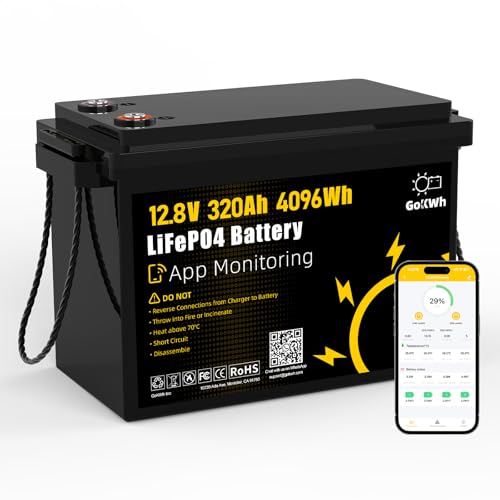
- 4,096Wh of stated energy
- Bluetooth 5.0 monitoring via smartphone
- 200A BMS with low-temperature protection
Best For: Power-hungry RV and off-grid camping systems
Monitored AGM Bank

- 12V, 200Ah maintenance-free AGM battery
- Includes 500A battery monitor
- 20-foot shielded installation cable included
Best For: RV and boat owners wanting monitored AGM power
Portable Power Hub

- Multiple 12V and USB charging outputs
- Built-in voltmeter and circuit breaker
- Works with several battery chemistries and sizes
Best For: Campers using a compatible deep cycle battery for portable device power
Solar-Ready AGM Power
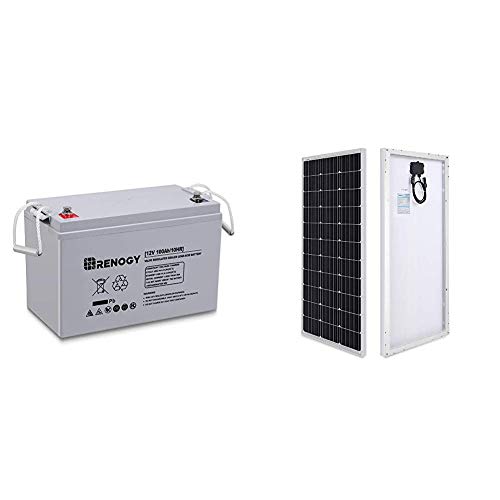
- 100Ah rechargeable 12V AGM battery
- Maintenance-free valve-regulated design
- Includes a 100W monocrystalline solar panel
Best For: RV and off-grid campers building a solar-assisted 12V system
Marine Power Center

- Supports 12V/24V batteries and trolling motors
- USB-C, QC3.0, and 12V charging outputs
- LCD monitoring with protection features
Best For: Campers and anglers needing portable marine-style battery distribution
Best AGM Value
Renogy 12V 100Ah Deep Cycle AGM Battery

- Maintenance-free AGM design
- 100Ah rechargeable capacity
- Low self-discharge for storage
Best For: RV, marine, solar, and off-grid camping systems
Best Battery Protection
12V Outdoor Portable Battery Box
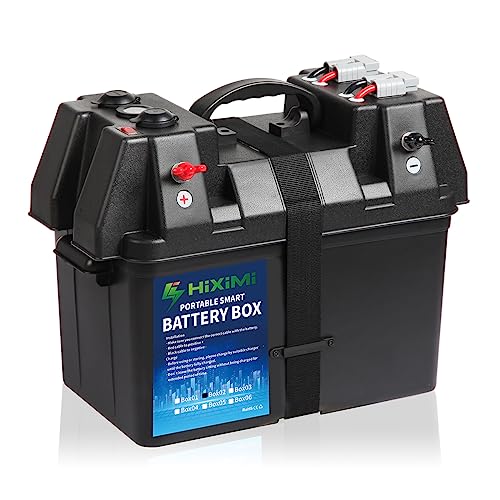
- Impact-resistant protective housing
- Built-in USB and 12V outputs
- Battery not included
Best For: Organizing compatible batteries in RV, marine, and camping setups
Lightweight Lithium Upgrade – 100Ah LiFePO4 Battery
For campers replacing a traditional lead-acid setup, this 100Ah lithium battery offers a lighter, maintenance-free option with a listed 2,500-cycle life expectancy. It is a practical choice among deep cycle batteries for camping when you want a direct 12V replacement and flexible installation options.
Best For: RV campers seeking a lighter 12V replacement for a lead-acid battery.
Pros:
- LiFePO4 design is lighter than traditional sealed lead-acid batteries.
- Built-in BMS provides protection from overcharge, short circuits, excessive current, and temperature issues.
- Can be connected in series or parallel with up to four identical batteries.
Cons:
- Must be fully charged before first use.
- Requires a compatible lithium charger.
- Battery and screws are included, but no wire harness or mounting accessories.
Its 100Ah capacity, 31.5-pound weight, and one-year warranty make it a well-rounded option for moderate RV and camping power needs, provided your charging system is lithium-compatible.
Rugged AGM Starting Power – Odyssey Extreme 12V Battery
The Odyssey ODX-AGM24F is identified as an Extreme Series EngineStart 12V battery. For shoppers comparing deep cycle batteries for camping, it is worth noting that the supplied information emphasizes engine-starting use rather than a stated deep-cycle capacity or camping-energy specification.
Best For: Campers who need a 12V battery focused on engine-starting applications.
Pros:
- Designed as part of Odyssey’s Extreme Series.
- Uses a 12V battery format.
- Provides a dedicated option for engine-starting needs.
Cons:
- The supplied details do not list amp-hour capacity.
- Deep-cycle performance is not specified.
- At 57.1 pounds, it is relatively heavy to move around camp.
This battery may suit a starting-power role, but buyers seeking sustained power for camping appliances should verify its capacity and deep-cycle suitability before choosing it as their primary house battery.
High-Capacity Smart Power – 320Ah Bluetooth LiFePO4
This 320Ah LiFePO4 battery delivers 4,096Wh of stated energy for RV appliances, outdoor gear, and off-grid systems. Among deep cycle batteries for camping, its Bluetooth monitoring and expandable architecture make it especially suited to longer stays with substantial electrical demands.
Best For: RV travelers, van lifers, and off-grid campers running multiple appliances or building a larger solar bank.
Pros:
- Bluetooth 5.0 enables monitoring of voltage, current, capacity, and temperature.
- Large 4,096Wh energy rating supports refrigerators, fans, laptops, coffee makers, and similar loads.
- Built-in 200A BMS includes low-temperature discharge protection.
- Supports expansion up to a 4P4S system rated at 51.2V and 65.54kWh.
Cons:
- Its 55-pound weight may be more difficult to install than smaller batteries.
- The supplied details do not state a manufacturer warranty.
- Large capacity may be unnecessary for minimalist camping setups.
With substantial storage and phone-based monitoring, this is a strong fit for power-intensive camping systems. Confirm your charger, inverter, wiring, and installation space can accommodate its higher-capacity design.
Monitored AGM Bank – Renogy 200Ah AGM Bundle
Renogy Deep Cycle AGM Battery 12 Volt 200Ah and Renogy 500A Battery Monitor Bundle
Check Price On AmazonThis Renogy bundle pairs a 12V 200Ah AGM battery with a 500A battery monitor, giving campers both stored energy and a way to track voltage, current, and capacity. It is a useful option among deep cycle batteries for camping when you prefer maintenance-free AGM construction and built-in usage monitoring.
Best For: RV and boat owners who want a 200Ah AGM battery with a dedicated monitor.
Pros:
- 200Ah AGM battery is maintenance-free and has a stated 3% monthly self-discharge rate.
- Battery supports cyclic applications such as RVs and boats.
- 500A monitor measures key battery data with stated 1% accuracy.
- Bundle includes 20 feet of shielded monitor cable.
Cons:
- AGM batteries are generally heavier than lithium alternatives, though the supplied weight is not listed.
- The monitor requires installation and wiring.
- The supplied details do not specify a manufacturer warranty.
The combination of 200Ah storage and a capable monitor makes this a convenient packaged solution for campers who want clearer insight into battery usage without maintaining flooded lead-acid cells.
Portable Power Hub – Redodo Smart Battery Box
For campers who already own a compatible deep cycle battery, the Redodo Smart Battery Box adds portable power distribution without replacing the battery itself. It provides several 12V charging options, battery monitoring, and basic overload protection in a carryable housing.
Best For: Campers, RV users, and boat owners who need organized power access from a Group 24, 27, or 31 battery.
Pros:
- Offers a 15A 12V socket, QC 3.0 port, and USB-C port for multiple devices.
- Built-in voltmeter provides at-a-glance battery monitoring.
- Compatible with lithium, gel, sealed, flooded lead-acid, and Li-ion batteries.
- Lightweight 3.04-pound housing includes a carry handle and a 12V 16A circuit breaker.
Cons:
- It is an empty battery box, so a compatible battery must be purchased separately.
- Connections need to be fastened securely to help prevent overheating.
- It should not be immersed or exposed to water for extended periods.
The Redodo is a practical accessory rather than a complete deep cycle battery system. It makes an existing battery easier to transport and use at camp, especially when multiple small DC devices need charging.
Solar-Ready AGM Power – Renogy 100Ah AGM Battery
The Renogy 100Ah AGM battery is a maintenance-free option for camping setups that need rechargeable 12V storage. This bundle also includes a 100W monocrystalline solar panel, making it suited to RV, marine, and off-grid applications where replenishing power away from an outlet matters.
Best For: RV campers and off-grid users building a 12V solar charging setup with a rechargeable AGM deep cycle battery.
Pros:
- 100Ah capacity supports common 12V camping and off-grid power needs.
- AGM construction and valve-regulated design require no routine watering.
- Monthly self-discharge is rated below 3% at 77°F.
- Included 100W monocrystalline panel has pre-drilled mounting and grounding holes.
Cons:
- AGM batteries are heavier than many lithium alternatives, though the supplied notes do not list the battery weight.
- The solar panel requires mounting and a suitable charging setup.
- The bundle’s listed panel dimensions may require planning for limited roof or rack space.
For shoppers comparing deep cycle batteries for camping, this bundle stands out as a ready starting point for solar-assisted 12V power. Its AGM design reduces maintenance, while the included panel can help extend usability away from shore power.
Marine Power Center – Smart 12V/24V Battery Box
The KELZENO Smart Marine Battery Box organizes power and connections for 12V or 24V deep cycle batteries used around camp or on the water. It combines USB charging, a 12V socket, battery monitoring, and a trolling-motor connector in a portable enclosure, but the battery is not included.
Best For: Campers, anglers, and boat or kayak users who need a portable power center for a compatible deep cycle battery and trolling motor.
Pros:
- Supports 12V/24V deep cycle battery setups and includes a 50A Anderson-style quick connector.
- Provides USB-C PD 30W, QC3.0 USB-A 18W, and a 12V socket.
- LCD voltmeter, master switch, fuse protection, and a resettable circuit breaker add convenient system control.
- Rugged PP housing supports batteries up to 35kg and includes a carrying strap.
Cons:
- The unit does not include a battery.
- The supplied details identify a 10A circuit-breaker rating, so higher-demand equipment may require careful compatibility checks.
- Its marine-oriented connector and features may be more than needed for simple campsite charging.
This battery box is a strong fit when camping power overlaps with boating or trolling-motor use. Its monitoring and connection options are useful for a larger portable setup, while buyers should confirm battery, connector, and current requirements before purchase.
Best AGM Value – Renogy 12V 100Ah Deep Cycle AGM Battery
For campers who want a rechargeable power source without routine fluid checks, this Renogy AGM battery is a practical option among deep cycle batteries for camping. Its sealed, valve-regulated design is intended for RV, marine, solar, and off-grid use.
Best For: RVs, off-grid camping setups, marine applications, and solar systems needing a maintenance-free 12V battery.
Pros:
- Maintenance-free AGM construction helps reduce concerns about acid leakage.
- 100Ah capacity and high discharge performance support demanding applications.
- Low monthly self-discharge can help during storage.
- Designed to retain discharge performance in temperatures below 32°F.
Cons:
- The battery is relatively specialized for users who already need a 12V, 100Ah unit.
- The included connector assembly tool is useful for solar connector work but may not matter to every buyer.
Choose this model when straightforward AGM operation and low maintenance matter more than building a custom lithium battery bank. Confirm that its 12V, 100Ah specifications match your camping power system.
Best Battery Protection – 12V Outdoor Portable Battery Box
This portable battery box helps organize and protect a compatible 12V battery in a camping setup. It is not a battery itself, but it can add practical power-access features for batteries used with camp lights, fridges, solar panels, boats, and RVs.
Best For: Campers who need a protective 12V battery enclosure with USB ports, power sockets, switching, and voltage monitoring.
Pros:
- Impact-resistant housing is designed to resist shock, acid, gas, oil, dust, and corrosion.
- Includes 12V sockets, USB ports, an on/off switch, and a colorful LED voltmeter.
- Accessories include a fastening strap, Anderson plugs, and 8AWG wiring with M8 ring terminals.
- Supports compatible lead-acid, AGM, lithium, and LiFePO4 batteries.
Cons:
- The battery is not included.
- Compatibility depends on selecting the correct box size and matching the battery dimensions.
- Its many accessories may be unnecessary for a simple battery installation.
This is a useful companion product rather than a standalone power source. Check the internal dimensions carefully before buying, especially if you plan to use it with a 12V 100Ah battery.
Best DIY Lithium Bank – 280Ah LiFePO4 Battery Cells
These four prismatic LiFePO4 cells are aimed at experienced buyers building a custom camping power bank. Connected appropriately, they can support DIY 12V, 24V, or 48V systems, but the supplied notes specify that a battery management system is required.
Best For: DIY builders creating high-capacity RV, camping, boat, golf-cart, solar, or off-grid battery banks.
Pros:
- Four 3.2V cells can be configured for different system voltages.
- Advertised true capacity is more than 290Ah, with a claimed lifespan of up to 10,000 cycles.
- Cells are voltage- and resistance-matched and balanced before delivery.
- Includes bus bars, screws, insulating boards, mesh fiber tape, and a 12-month warranty.
Cons:
- These are individual cells, not a finished battery pack.
- A BMS is required for protection.
- Assembly and series or parallel configuration require appropriate technical knowledge.
This set can offer substantial capacity for a custom camping system, but it is best suited to buyers comfortable designing and protecting a battery bank. Plan the wiring, enclosure, and BMS before purchase.
How We Picked the Best Deep Cycle Batteries for Camping
We compared the selected products by chemistry, rated capacity, intended use, portability, maintenance needs, expandability, and included accessories. Lithium iron phosphate batteries generally offer more usable energy, lower weight, and longer cycle life than lead-acid designs, while AGM batteries remain appealing for their simpler setup and broad compatibility.
We also considered whether each option works well for RVs, marine systems, solar charging, portable power setups, or DIY battery builds. Capacity ratings are not the same as usable capacity: lead-acid batteries are commonly discharged less deeply than LiFePO4 batteries to preserve service life.
Quick Comparison
| Type | Best For | Main Advantage | Trade-Off |
|---|---|---|---|
| LiFePO4 battery | Frequent camping and high energy use | Light weight and long cycle life | Higher upfront cost |
| AGM battery | Simple RV or marine replacements | Widely compatible and maintenance-free | Heavier with less usable capacity |
| Battery box | Portable battery organization | Outlets, protection, and easier transport | Does not include battery capacity by itself |
| DIY LiFePO4 cells | Custom battery projects | Flexible capacity and configuration | Requires a proper BMS and electrical knowledge |
Key Buying Factors for Deep Cycle Batteries for Camping
Capacity and Runtime
Estimate your daily watt-hours before choosing a battery. Multiply each device’s watts by the hours used, then add a reserve for cold weather, inverter losses, and unexpected demand. A 100Ah battery is not automatically enough for a refrigerator, heater, or frequent inverter use.
Battery Chemistry
AGM batteries are a practical choice for occasional trips and direct replacements. LiFePO4 models are usually better for repeated cycling, solar systems, and weight-sensitive builds. Check that your charger, solar controller, and low-temperature protections are compatible with the selected chemistry.
Size, Weight, and Installation
Confirm the battery’s dimensions, terminal location, mounting requirements, and cable length. A battery box can add useful fuses, USB ports, and 12V outlets, but it must fit the battery group size and allow adequate ventilation and protection.
Charging and Safety
Review recommended charging voltage, maximum charge and discharge current, built-in BMS features, and any Bluetooth monitoring. Use correctly sized cables, fuses, and connectors. DIY cell packs require balancing, a suitable BMS, secure compression where specified, and an enclosure that prevents accidental shorts.
Who Should Buy Which Deep Cycle Batteries for Camping?
- Choose a 100Ah LiFePO4 battery for lightweight weekend camping, modest 12V loads, and frequent cycling.
- Choose a 200Ah AGM battery when you need a straightforward RV, marine, or solar replacement and can accommodate extra weight.
- Choose a 320Ah LiFePO4 system for extended off-grid stays, larger inverters, refrigerators, and high daily energy use.
- Choose a battery box when portability, protected connections, and organized 12V power matter more than adding storage capacity.
- Choose DIY 280Ah cells only if you are comfortable designing and testing a complete battery system with the required safety components.
Before buying, verify capacity, physical fit, charging equipment, warranty terms, and the seller’s specifications. Matching the battery to your actual loads and charging setup is more important than choosing the largest rating.