
Older vehicles can gain a useful modern upgrade with a head-up display that projects speed and driving information near the windshield. These devices help you check your speed with less dashboard distraction, even when your car lacks a built-in HUD.
This roundup compares 10 options, including plug-and-play GPS units and OBD2 displays with additional vehicle data. The best choice depends on your car’s compatibility, display preferences, and tolerance for installation.
Best 10 Car Head Up Displays for Older Cars Picks for 2026
OBD+GPS Insight
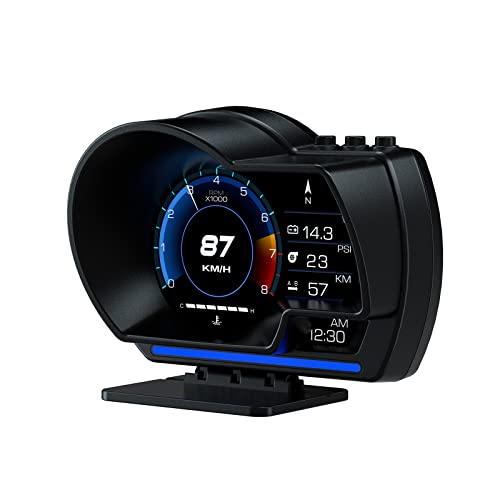
- OBD+GPS speed and vehicle data
- Automatic brightness with overspeed color alert
- Dashboard or windshield mounting
Best For: Older OBD2-compatible cars needing speed and diagnostic-style readings
Large-Screen Safety

- Large display for speed and travel data
- Overspeed and fatigue-driving alerts
- Automatic brightness adjustment
Best For: Older or incompatible vehicles needing a clear GPS speedometer
OBD Value Pick
Dual-Mode Car Multi-Function HUD

- Compact 3-inch high-definition display
- Shows speed, RPM, temperature, and voltage
- Automatic vehicle power with manual control
Best For: Compatible older cars needing essential OBD readings
GPS Road-Trip Aid

- GPS speed with six display modes
- Overspeed and fatigue-driving alerts
- Simple 5V lighter-port installation
Best For: Older 12V vehicles needing an easy-install speed and trip display
Best OBD-II Screen
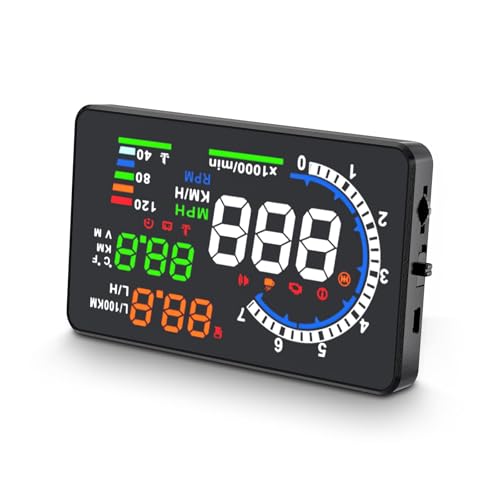
- Large 5.5-inch HD display
- Shows speed, voltage, temperature, and distance
- Reads compatible vehicle fault information
Best For: Older cars with OBDII or EOBD compatibility
Best Feature-Rich OBD Display
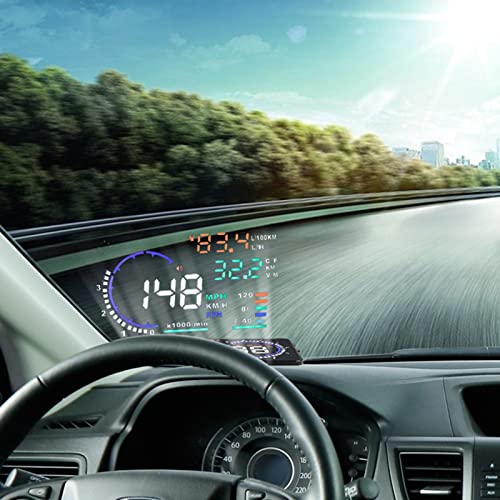
- Displays speed and multiple engine readings
- Includes several configurable driving alerts
- Uses adjustable brightness and automatic power control
Best For: OBD II or EUOBD vehicles needing detailed readouts
Best No-OBD Option

- USB plug-and-play installation
- Large MPH or KM/H speed display
- Includes brightness and overspeed settings
Best For: Older cars needing a simple GPS-based speed display
Best Value GPS HUD
AZIJYV M22 Windshield Speedometer

- Shows GPS speed, trip data, and compass direction
- USB plug-and-play with automatic power control
- Includes overspeed alert and reflective film
Best For: Older cars needing a simple GPS speed display
Best for Easy Reading

- Large speed display designed for quick viewing
- Automatic brightness adjusts for lighting conditions
- USB-powered without requiring an OBD port
Best For: Drivers prioritizing readable speed information
Best Display Design

- GPS and BeiDou positioning with 10Hz updates
- Large HD speed digits project onto windshield film
- Automatic power and GPS-time brightness controls
Best For: Drivers wanting a durable, highly visible windshield display
OBD+GPS Insight – wiiyii P6 Smart Gauge HUD
For drivers comparing car head up displays for older cars, the wiiyii P6 stands out for combining OBD2 vehicle data with GPS backup. It can show speed and other readings at a glance, while its adjustable brightness and red overspeed warning are designed to keep key information in view.
Best For: Older cars with OBD2 compatibility and drivers who want speed plus broader vehicle information.
Pros:
- OBD+GPS operation can provide speed data even when a vehicle lacks OBD2 support.
- Displays numerous readings, including voltage, fuel consumption, RPM, and water temperature.
- Offers dashboard or windshield mounting with an adjustable bracket and non-destructive installation.
- Automatic brightness adjustment and a red overspeed warning add practical visibility cues.
Cons:
- OBD-based features depend on the vehicle’s supported protocol.
- The unit has a larger footprint than a minimal speed-only display.
The P6 is a versatile choice when an older vehicle needs more than a basic speed readout. Its dual-mode design is especially useful for compatibility, though buyers should confirm which OBD2 data their car can provide.
Large-Screen Safety – SinoTrack 5.5-Inch GPS HUD
Among car head up displays for older cars, the SinoTrack model is a straightforward GPS option for vehicles where OBD2 compatibility may be uncertain. Its 5.5-inch display shows speed alongside travel information, with automatic brightness control and alerts for overspeeding or extended driving.
Best For: Drivers who want a large, GPS-based speed display with trip information and journey reminders.
Pros:
- Large 5.5-inch screen can show speed, driving time, mileage, time, and direction.
- GPS operation is suited to vehicles that may not provide usable OBD2 data.
- Automatic light sensing adjusts brightness for changing conditions.
- Includes overspeed and fatigue-driving alerts, with configurable display information.
Cons:
- It requires a 5V power supply; using a higher voltage is prohibited.
- Trip distance does not retain or accumulate after the vehicle is powered off.
- GPS speed displays may not provide the broader vehicle data available from OBD systems.
The SinoTrack is appealing if screen size and simple GPS installation matter most. Its power requirement and non-retained mileage behavior are important practical details to consider before buying.
OBD Value Pick – Dual-Mode Car Multi-Function HUD
This dual-mode display is a practical candidate for shoppers seeking car head up displays for older cars with OBD II or EUOBD support. Its 3-inch screen presents common engine and driving readings, while nanotechnology is intended to reduce reflections and improve legibility.
Best For: Owners of compatible older cars who want a compact OBD display with basic alerts and vehicle data.
Pros:
- Designed to automatically adapt to vehicles using OBD II or EUOBD systems.
- Shows speed, engine RPM, water temperature, battery voltage, and related alerts.
- Supports kilometer/mile and Celsius/Fahrenheit switching.
- Can power on and shut down with the vehicle while retaining a manual switch option.
Cons:
- OBD II or EUOBD compatibility is required for the stated vehicle integration.
- The 3-inch display provides less viewing area than larger GPS alternatives.
This model makes sense for buyers who prioritize plug-and-play OBD readings over a large screen. Confirming the older car’s diagnostic-system compatibility should be the first step.
GPS Road-Trip Aid – Universal 3D Speedometer HUD
For older vehicles without dependable dashboard information, this GPS unit offers a simple alternative among car head up displays for older cars. It uses a 5V connection from the car lighter port, provides six display modes, and adds overspeed and fatigue-driving reminders.
Best For: Older 12V cars, hybrids, or gas vehicles needing an easy-install GPS speedometer for everyday driving and road trips.
Pros:
- GPS-based operation avoids reliance on the vehicle’s OBD system.
- Auto-adjusting 3000-lumen display is designed for visibility in bright and low-light conditions.
- Six modes can show speed, time, trip distance, altitude, and GPS signal strength.
- Plug-and-play lighter-port installation includes automatic vehicle-linked power and MPH/KM/H switching.
Cons:
- It is not compatible with 24V or higher heavy trucks.
- GPS functions require the included 5V power connection and satellite signal.
- Its information centers on GPS travel data rather than comprehensive OBD diagnostics.
This is a convenient fit when installation simplicity matters more than engine-data monitoring. Its compatibility with many 12V vehicle types makes it a useful upgrade for older cars with limited built-in displays.
Best OBD-II Screen – wiiyii A8 5.5-Inch Car HUD
For drivers comparing car head up displays for older cars, the wiiyii A8 is a practical option when the vehicle has OBDII or EOBD compatibility. Its large 5.5-inch screen presents speed and other vehicle information in an easy-to-monitor format.
Best For: Older vehicles with compatible OBDII or EOBD ports that need a large, information-rich display.
Pros:
- Large 5.5-inch HD display with 800×480 resolution.
- Shows speed, water temperature, voltage, driving distance, and alarm prompts.
- Supports fault detection, fault alarms, and fault clearing through trip-computer data.
- Offers kilometer/mile switching and plug-and-play operation.
Cons:
- Not compatible with OBD I or JOBD systems.
- Vehicle compatibility depends on having OBDII or EOBD support.
The A8 stands out for its screen size and broad vehicle-data readout. Confirm the car’s diagnostic interface before buying, especially when shopping for an older vehicle.
Best Feature-Rich OBD Display – 5.5-Inch Multi-Color OBD HUD
This 5.5-inch model is worth considering among car head up displays for older cars if the vehicle uses an OBD II or EUOBD interface. It combines front-of-driver speed information with configurable brightness and several warning functions.
Best For: Drivers seeking speed, engine, temperature, voltage, fuel-use, and warning information from a compatible OBD-equipped car.
Pros:
- Displays speed, engine speed, water temperature, battery voltage, fuel consumption, and mileage.
- Provides overspeed, high-temperature, low-voltage, shift, and fatigue-driving reminders.
- Uses a 5.5-inch high-definition display with adjustable brightness and reflection reduction.
- Includes automatic power-on and power-off behavior with the vehicle.
Cons:
- Limited to cars using OBD II or EUOBD systems.
- The display’s numerous readings may be more than some drivers need.
Its broad data coverage and reminder system make it a versatile choice, provided the older car has the required OBD connection. The 180-day return and refund guarantee adds buying flexibility.
Best No-OBD Option – K4 GPS Car HUD
For older cars without a suitable diagnostic interface, the K4 is a straightforward alternative to OBD-based car head up displays for older cars. It uses GPS and BDS satellite positioning, draws power through USB, and shows speed in a large, readable format.
Best For: Older drivers or vehicles needing a simple USB-powered GPS speed display rather than an OBD data reader.
Pros:
- USB 5V plug-and-play power makes installation simple.
- Uses GPS+BDS reception, up to 32 satellite signals, and a 10 Hz refresh rate.
- Supports MPH/KM/H switching and manual speed calibration.
- Offers adjustable brightness, anti-reflective shading, and a customizable overspeed alert.
Cons:
- GPS performance may be affected in tunnels, underground garages, heavy rain or fog, and behind metallic windshield film.
- It primarily provides GPS speed information rather than OBD vehicle data.
The K4 is particularly appealing when compatibility with an older car’s OBD system is uncertain. Its large numerals, brightness adjustment, and USB setup keep the focus on simple speed monitoring.
Best Value GPS HUD – AZIJYV M22 Windshield Speedometer
For drivers comparing car head up displays for older cars, the AZIJYV M22 offers a straightforward USB-powered way to view GPS speed without relying on an OBD port. It also adds an overspeed alert, travel information, and a compass in a compact dashboard unit.
Best For: Older vehicles needing a simple plug-and-play GPS speed display with basic trip information.
Pros:
- Displays speed, clock, travel time, and distance traveled.
- Supports MPH and KM/H, with an adjustable overspeed alarm.
- Turns on and off automatically with the vehicle and includes a reflective film.
- USB installation is simple and compatible with all vehicle types according to the supplied notes.
Cons:
- Speed appears only after the unit acquires a GPS signal.
- Garages, overpasses, dense buildings, and metallic windshield film can slow signal acquisition.
- Daytime reflections may require the included film or a brightness adjustment.
The M22 is a practical choice when an older car lacks modern dashboard connectivity. Its feature set is broader than a basic speed display, but GPS limitations and possible windshield reflections should be considered before buying.
Best for Easy Reading – Large-Font GPS Car HUD
Among car head up displays for older cars, this model emphasizes visibility and simple installation. Its large-font speed display, automatic brightness adjustment, and USB power make it suited to vehicles without an available OBD connection.
Best For: Drivers who want a large, easy-to-read speed display with automatic brightness control.
Pros:
- Uses GPS and BDS positioning with a 10Hz refresh rate and support for up to 32 satellites.
- Projects speed into the driver’s line of sight in a large font.
- Automatically adjusts brightness for daytime and nighttime viewing.
- USB-powered and compatible with most cars, trucks, and motorcycles with a USB port.
Cons:
- Requires clear satellite reception for best performance.
- GPS conditions in tunnels, underground garages, heavy rain, fog, or behind metallic film can affect operation.
- A small GPS speed deviation is normal according to the supplied notes.
This HUD is a strong fit for older drivers or anyone who values a prominent display without looking down at the instrument panel. It remains dependent on satellite reception, so it is less suitable for frequent tunnel or garage driving.
Best Display Design – GPS HUD with Large Font
This GPS windshield projector is a useful option for shoppers seeking car head up displays for older cars with USB power but no OBD compatibility. It combines GPS and BeiDou positioning, a high-definition large-font display, and automatic brightness and power controls.
Best For: Drivers wanting a durable, highly visible HUD with automatic startup and brightness changes.
Pros:
- Dual GPS and BeiDou chipsets and a 10Hz refresh rate support fast speed updates.
- Large, high-definition numerals are projected onto the windshield film.
- Automatically powers on with the vehicle and shuts down when the engine is off.
- ABS construction is designed to resist heat, impact, and wear.
Cons:
- Initial satellite positioning takes approximately one to three minutes.
- Requires a projection sticker or film and a USB vehicle port.
- Brightness is described as changing based on GPS time, including dimming at 18:00.
The combination of large digits and automatic controls makes this a convenient older-car upgrade. Allow time for positioning after startup, and confirm that your vehicle has a suitable USB port and enough windshield space for the projection sticker.
How We Picked the Best Car Head Up Displays for Older Cars
We focused on the features that matter most when adding a HUD to an older vehicle: installation method, speed accuracy, display readability, alert settings, power requirements, and compatibility. The selection includes both OBD2 models, which can draw information from the car’s diagnostic port, and GPS models that work more broadly across vehicles.
We also considered practical details such as adjustable brightness, large numerals, MPH and KM/H support, fatigue or overspeed warnings, windshield visibility, and whether the unit is suitable for a clean, low-effort installation.
Quick Comparison
| Type | Best For | Main Advantage | Potential Limitation |
|---|---|---|---|
| OBD2 HUD | Compatible cars with an accessible OBD2 port | Can show speed and selected vehicle data | Compatibility varies by vehicle and protocol |
| GPS HUD | Older cars or vehicles without reliable OBD2 support | Broad vehicle compatibility and simple setup | May take time to acquire a satellite signal |
| Dual-mode HUD | Drivers who want installation flexibility | Can switch between input methods | More settings may mean a less simple setup |
| Large-screen HUD | Drivers who prioritize visibility | Large digits and easier glance reading | Can occupy more dashboard or windshield space |
Key Buying Factors for Car Head-Up Displays for Older Cars
OBD2 or GPS Compatibility
Check your vehicle before choosing an OBD2 display. Some older cars may use an incompatible diagnostic protocol, while GPS models generally avoid that issue. GPS is often the safer choice for broad compatibility, especially for classic, imported, or electronically limited vehicles.
Display Visibility
Look for large digits, adjustable brightness, and a display or projector that remains readable in both daylight and darkness. A dimming function is important because an overly bright screen can become distracting at night.
Power and Installation
USB-powered units are usually straightforward, but consider cable routing and whether the device starts automatically with the car. OBD2 models typically use the diagnostic port, while GPS units may need a USB adapter or a 12-volt connection.
Alerts and Units
Speed alarms and fatigue-driving alerts can be useful reminders, but they should be adjustable rather than intrusive. Confirm that the HUD supports your preferred MPH or KM/H setting and that warnings can be muted or customized.
Who Should Buy Which Car Head Up Displays for Older Cars?
Choose an OBD2 Model If:
Your older car has a compatible OBD2 port and you want more than basic GPS speed. These models are convenient for drivers who value vehicle-linked information and quick startup.
Choose a GPS Model If:
You want the simplest compatibility across older vehicles, or you are unsure whether an OBD2 display will work. GPS units are also practical when you prefer a standalone speedometer.
Choose a Large-Display or Multi-Color Model If:
You have difficulty reading small dashboard instruments or drive frequently in changing light. Prioritize adjustable brightness and a stable mounting position so the projection stays easy to see without blocking your view.