
Choosing among the best welding machines for automotive work means matching the welder to your metal thickness, repair type, power supply, and experience level. Automotive projects can range from sheet-metal patching and dent repair to brackets, exhaust work, and heavier frame components.
This roundup includes compact stick welders, multiprocess machines, spot welders, stud dent pullers, and plasma-cutting combinations. Use the guide below to narrow the options by capability, portability, and the control needed for clean automotive repairs.
Best 10 Welding Machines for Automotive Work Picks for 2026
Best Budget MIG
Portable 135A Flux-Core Welder

- Gasless MIG, stick, and lift TIG capability
- Synergic controls help with thin panels
- Lightweight design with included wire
Best For: DIY automotive repairs and outdoor welding
Best Simple ARC Option

- 110/220V dual-voltage operation
- Hot start and anti-stick functions
- Portable design for general repairs
Best For: Portable stick welding on varied metals
Best for Sheet-Metal Joining
Portable Automotive Spot Welder
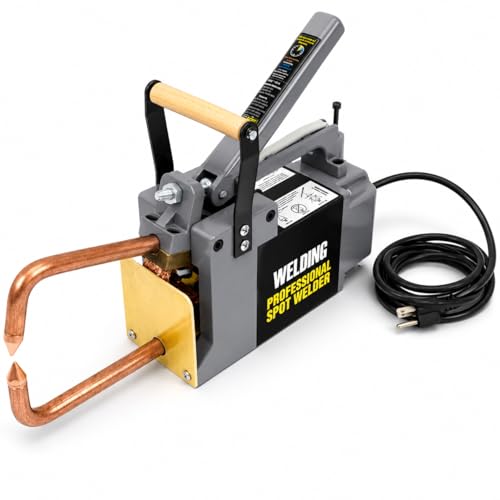
- Purpose-built for sheet metal and auto repair
- 5500A maximum output
- Handheld lever operation with copper tips
Best For: Automotive sheet-metal spot welding
Best Multi-Process Upgrade
200A Welder and Plasma Cutter Combo

- Six functions including MIG, TIG, stick, and cutting
- 110/220V dual-voltage operation
- Includes multiple torches and accessories
Best For: Workshops needing welding and plasma cutting versatility
Best Portable Pick
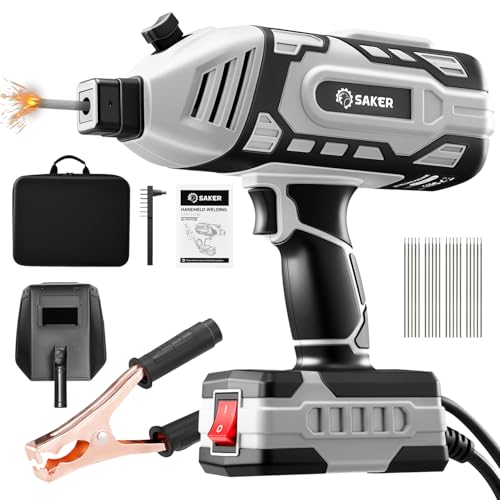
- 3.3-pound handheld design for mobile jobs
- 20–120A output with five current settings
- Hot start and IGBT inverter support stable arcs
Best For: Light automotive repairs and portable DIY welding
Best for Dent Repair

- Six modes for varied dent and panel shapes
- Automatic contact welding and timing
- Includes 16 accessory types in a toolbox
Best For: Vehicle body-panel dent pulling and repair
Best High-Output Mini

- 20–200A adjustable current range
- 3.7-pound portable 110V design
- Includes rods, gloves, and chip hammers
Best For: Portable DIY automotive and garage repairs
Best for Auto-Body Dent Repair

- Purpose-built for steel-panel dent removal
- Automatic and manual welding modes
- Includes five stud types and accessories
Best For: Car and truck body-panel dent repair
Best Multi-Process Choice

- Six processes, including MIG, stick, TIG, and spot welding
- 110V/220V dual-voltage operation
- 250A output with synergic controls
Best For: Versatile garage and automotive fabrication work
Best Budget MIG – Portable 135A Flux-Core Welder
For welding machines for automotive work, this YESWELDER model is a practical choice for thin mild-steel repairs and general garage projects. Its synergic control helps match voltage to wire speed, while the gasless flux-core setup avoids the need for a shielding-gas cylinder.
Best For: Beginners and DIY users working on thin automotive panels, outdoor repairs, and light mild-steel projects.
Pros:
- Supports gasless flux-core MIG, stick, and lift TIG with an additional torch.
- Synergic control and ±3V adjustment help manage arc settings and reduce burn-through risk.
- Compact 11.4-pound design with a carrying handle and included flux-core wire.
- Built-in over-current, overload, and overheating protection.
Cons:
- Its 135A output is intended for mild steel up to 3/32 inch, limiting heavier work.
- Lift TIG requires an extra torch.
- Gasless flux-core welding can produce more cleanup than a gas-shielded setup.
This is a well-equipped entry-level option when portability, simple controls, and thin-panel capability matter more than high-output fabrication capacity.
Best Simple ARC Option – DEKOPRO 160A MMA Welder
Among welding machines for automotive work, the DEKOPRO 160A MMA welder suits users who prefer straightforward electrode welding. Its 110/220V input, digital display, hot start, and anti-stick features provide a compact setup for repair and fabrication tasks.
Best For: Garage users who need a portable stick welder for mild steel, stainless steel, cast iron, or other compatible metal projects.
Pros:
- 110/220V operation offers flexibility across different power supplies.
- IGBT inverter technology is designed for stable, efficient operation.
- Hot start, anti-stick, and arc-stability features make electrode welding easier to manage.
- Compact 11.11-pound body with a carrying handle.
Cons:
- MMA/stick welding is less convenient than MIG for clean, thin automotive sheet metal.
- The supplied notes do not identify a dedicated automotive body-panel mode.
- Electrode welding requires choosing and changing suitable rods for the material.
This machine is a sensible pick for general metal repair when portability and broad material compatibility are priorities, but MIG is usually more convenient for delicate bodywork.
Best for Sheet-Metal Joining – Portable Automotive Spot Welder
For welding machines for automotive work that focus on overlapping sheet metal, this Stark USA spot welder offers a specialized alternative to arc welding. Its handheld design, 6-inch throat depth, copper tips, and 1/8-inch stated capacity are suited to spot-welding applications.
Best For: Auto-body and sheet-metal repair where quick, repeatable spot welds are more useful than continuous bead welding.
Pros:
- Designed specifically for sheet metal and automotive repair applications.
- 5500A maximum output and 1.5KVA rated input support fast spot welding.
- Copper welding tips are designed for durability and reliable contact.
- Simple lever-operated design is approachable for beginners and professionals.
Cons:
- Spot welding is specialized and cannot replace a MIG or stick welder for beads or general fabrication.
- The stated 1/8-inch capacity may not suit thicker assemblies.
- Its 110V handheld format is less versatile than a multi-process machine.
Choose this model when your automotive projects center on sheet-metal spot welds; select a MIG or multi-process unit if you also need seams, brackets, or varied welding techniques.
Best Multi-Process Upgrade – 200A Welder and Plasma Cutter Combo
For buyers seeking versatile welding machines for automotive work, this 6-in-1 unit combines gas and gasless MIG, HF TIG, stick, spot welding, and plasma cutting. Dual-voltage operation and included torches make it a broad workshop solution for welding, cutting, and repair preparation.
Best For: Experienced DIYers and small workshops that need one machine for automotive welding, sheet-metal cutting, and multiple process types.
Pros:
- Combines MIG, gasless MIG, HF TIG, stick, spot welding, and plasma cutting.
- 110/220V capability provides power-supply flexibility.
- At 220V, it lists a 10mm ideal clean cut and 16mm maximum severance cut with a 60% duty cycle.
- Includes MIG, plasma, and TIG torches plus regulator, hose, consumables, and adapters.
Cons:
- At 42 pounds, it is substantially less portable than compact single-process welders.
- The broad feature set may be more than needed for simple automotive repairs.
- Plasma cutting requires a compressed-air supply, and the notes do not state that a compressor is included.
This is the most capable all-around choice in the group for a workshop that values process flexibility, though its larger size and more involved setup favor users with more space and experience.
Best Portable Pick – Saker 110V Mini Arc Welder
For shoppers comparing welding machines for automotive work, the Saker is a compact stick welder built for mobile repairs and general metal projects. Its 20–120 amp range, IGBT inverter, hot-start ignition, and 3.3-pound handheld design make it convenient for light-duty work in a garage or at a remote job site.
Best For: Portable automotive repairs, DIY projects, fencing, and general carbon-steel or iron work.
Pros:
- Compact 3.3-pound design can fit in a vehicle or workshop storage area.
- Adjustable 20–120 amp output offers five current settings.
- IGBT inverter, hot start, and thermal management support stable arc starting and operation.
- Designed for 3/32-inch rods and includes 20 rods.
Cons:
- Its 120-amp maximum is lower than some larger stick welders.
- The supplied notes specify compatibility with 3/32-inch rods rather than a broad range of sizes.
- It is intended for AC 110V operation.
The Saker stands out when portability and straightforward controls matter more than maximum output. It is a practical option for smaller automotive and household repairs, provided the job matches its stated amperage and rod requirements.
Best for Dent Repair – VEVOR 3KW Stud Welder Kit
Among welding machines for automotive work, the VEVOR Stud Welder is specialized for pulling dents and repairing vehicle body panels. It combines six welding modes with automatic contact welding and a broad accessory kit, making it more targeted to autobody restoration than general stick welding.
Best For: Automotive dent pulling on cars, trucks, and motorcycles, including repairs involving carbon steel, stainless steel, iron, and galvanized sheet metal.
Pros:
- Designed specifically for automotive dent repair and bodywork.
- Six functional modes accommodate pointed shapes, deep dents, curves, and flat areas.
- Automatic timing and contact welding help simplify consistent repairs.
- Includes 16 types of accessories in a portable toolbox.
Cons:
- At 50.6 pounds, it is substantially heavier than the mini welders in this roundup.
- Its maximum single-side welding thickness is 1.2 mm.
- Its specialized stud-welding design is less suited to general-purpose stick welding.
The VEVOR is the most focused choice here for autobody dent work. Its heavier build may limit portability, but the dedicated modes, automatic operation, and included accessories can be valuable for repeat collision-repair tasks.
Best High-Output Mini – Hpoouo 200A Stick Welder
For buyers seeking welding machines for automotive work with a higher stated current range, this 110V Hpoouo stick welder offers adjustable 20–200A output in a compact package. Hot start, anti-stick, arc-force functions, and included rods and accessories make it suited to home garages and portable repair work.
Best For: DIY automotive repairs, garage projects, and portable welding involving mild steel, cast iron, and compatible stainless-steel rods.
Pros:
- 20–200A adjustable range supports a variety of small repair tasks.
- Compact 3.7-pound welder fits in a backpack or toolbox.
- Hot start, anti-stick, and arc-force functions support easier operation.
- Includes 20 rods, gloves, chip hammers, and an instruction manual.
Cons:
- It is a 110V stick welder, so users must match the job and power supply to its specifications.
- Stainless steel use is specified with E308L-16 rods only.
- Correct polarity depends on the electrode type.
The Hpoouo offers the broadest stated amperage range of the three general-purpose options while remaining highly portable. Its included accessories and welding functions are useful for beginners, but rod selection and polarity require attention before starting a repair.
Best for Auto-Body Dent Repair – VEVOR Stud Welder Dent Puller
For welding machines for automotive work focused on steel-panel dent repair, the VEVOR Stud Welder Dent Repair Kit is purpose-built rather than a general fabrication welder. Its automatic and manual modes, seven welding modes, and multiple stud types help cover both quick repairs and more controlled work on varied dents.
Best For: Pulling dents from steel car and truck body panels, including minor dings and larger dents on flat or curved surfaces.
Pros:
- Designed specifically for controlled automotive dent pulling.
- Offers automatic and manual welding modes for different repair situations.
- Includes five stud types and a comprehensive accessory kit in a portable toolbox.
- Compact design with a convenient handle supports use around the workshop.
Cons:
- Its specialized dent-repair design is less suitable for general-purpose welding jobs.
- The supplied details list 220V, so verify electrical compatibility before purchase.
- At 43.2 pounds, it is heavier than a small portable arc welder.
The VEVOR is a strong match when automotive panel correction is the priority. Its mode selection and included studs add flexibility, while the relatively heavy body may matter if you need to move equipment frequently.
Best Portable Starter – HONE MMA205 Mini Stick Welder
Among welding machines for automotive work, the HONE MMA205 is a lightweight option for small repairs, brackets, and other low-carbon steel or mild-steel projects. Its 20–205A adjustment range, stick mode, and included starter accessories make it practical for basic workshop or roadside tasks, though it is not a dedicated automotive MIG machine.
Best For: DIYers and hobbyists who need a compact 110V stick welder for small automotive repairs and general metalwork.
Pros:
- Very portable at approximately 4.4 pounds with a compact design.
- Adjustable 20–205A output supports several metal thicknesses and electrode types.
- Offers stick and lift-TIG modes, with hot start, arc force, and anti-stick functions.
- Includes rods, gloves, face shield, brush, and chipping hammer for basic setup.
Cons:
- The TIG torch is not included for lift-TIG use.
- Stick welding is less convenient than MIG for clean, thin automotive body-panel work.
- The supplied notes describe it for workpieces up to 0.22 inch thick, limiting heavier repairs.
The HONE stands out for portability and value in light-duty work. Choose it for occasional repairs, brackets, and thicker steel tasks where a compact stick welder is more useful than a body-panel-focused machine.
Best Multi-Process Choice – BILT HARD 250A MIG Welder
For shoppers comparing welding machines for automotive work, the BILT HARD 250A offers the broadest process selection in this group. It supports gas MIG, flux-core MIG, spool-gun MIG, lift TIG, stick, and spot welding, while dual-voltage input and synergic controls make it adaptable for garage projects and more demanding fabrication.
Best For: Automotive DIYers and shop users who want one machine for bodywork, steel fabrication, aluminum-compatible MIG setups, and occasional stick or TIG work.
Pros:
- Six welding functions provide substantial process flexibility.
- 110V/220V dual-voltage operation suits different workshop power setups.
- Up to 250A output and a stated 3/8-inch plate capacity support heavier work.
- Synergic controls and a large LED display simplify parameter adjustment.
Cons:
- The TIG gun and spool gun are not included.
- Its 21.5-pound weight and larger footprint are less portable than a mini welder.
- Multiple processes and settings may be more than beginners need for simple repairs.
The BILT HARD is the most versatile pick when automotive work varies from sheet-metal tasks to thicker fabrication. Its accessories and process-specific setup requirements should be considered, but the dual-voltage, multi-process platform offers room to expand.
How We Picked the Best Welding Machines for Automotive Work
We compared these machines by welding process, amperage range, input voltage, portability, controls, and automotive-specific utility. MIG and flux-core capability received particular attention because they are practical for many body and fabrication repairs. We also considered whether a machine supports TIG, stick, spot welding, stud pulling, or plasma cutting for users who need more than one tool.
Because listed specifications can vary by configuration, always confirm duty cycle, included accessories, consumables, and electrical requirements before ordering. A high maximum amperage does not automatically mean better performance on thin automotive sheet metal.
Quick Comparison
| Need | Best-fit machine type | Why it matters |
|---|---|---|
| Body panels and general fabrication | MIG or flux-core MIG | Offers approachable operation and adjustable wire-feed control. |
| Rust repair and dent removal | Spot welder or stud welder | Supports localized repairs while limiting panel distortion. |
| Heavy brackets or outdoor work | Stick welder | Works without shielding gas and handles many thicker materials. |
| Flexible shop projects | Multiprocess welder | Combines MIG, TIG, stick, and sometimes spot or cutting functions. |
| Cutting plus welding | Plasma-cutter combo | Reduces the need for separate equipment in a compact setup. |
Key Buying Factors for Automotive Welding Machines
Process and Material Thickness
For thin steel bodywork, choose a machine with stable low-amperage control and compatible small-diameter wire. MIG is usually the most straightforward option, while flux core can be useful outdoors but may produce more cleanup. TIG offers precise, clean welds on suitable materials but demands more skill and preparation.
Voltage, Duty Cycle, and Control
A 110V welder is convenient for home garages, but 220V models generally provide more headroom for sustained or thicker-material work. Duty cycle indicates how long the machine can weld before cooling. Look for adjustable voltage and wire speed, a clear display, inductance or arc-control settings where available, and thermal overload protection.
Automotive-Specific Features
Spot-welding modes, stud-pulling accessories, and included dent-repair consumables can be more valuable for collision work than extra peak amperage. For aluminum, verify spool-gun support or a suitable TIG function rather than assuming a multiprocess label guarantees aluminum capability.
Safety and Setup
Use proper eye, hand, clothing, and ventilation protection, and disconnect or shield sensitive vehicle electronics according to the vehicle manufacturer’s guidance. Confirm grounding, circuit capacity, gas compatibility, torch connections, and replacement-part availability before beginning a project.
Who Should Buy Which Welding Machines for Automotive Work?
Home mechanics and beginners: A compact MIG, flux-core, or simple stick welder is often the easiest entry point. Prioritize intuitive controls, low-amperage stability, and portability over maximum output.
Bodywork specialists: A dedicated spot welder or stud dent-puller is the more targeted choice for panel repairs and dent removal. It can complement, rather than replace, a conventional MIG welder.
Versatile garage users: Choose a dual-voltage multiprocess machine if you regularly switch between steel, aluminum, brackets, repairs, and fabrication. Make sure its accessories and duty cycle match your actual workload.
Heavy-duty fabricators: Favor a 220V-capable unit with a stronger duty cycle and appropriate MIG, TIG, or stick output. For frequent cutting, a plasma-welder combination may save space, but dedicated machines can offer better performance and serviceability.