
Working between studs, beneath sinks, inside cabinets, or around crowded framing calls for more than raw cutting power. The best reciprocating saws for tight spaces combine a compact body, manageable vibration, variable-speed control, and a blade setup suited to the material.
This roundup compares 10 cordless options across professional tool platforms, compact one-handed designs, and budget kits. Check battery compatibility, clearance, control, and included accessories before choosing the saw that fits your work.
Best 10 Reciprocating Saws for Tight Spaces Picks for 2026
Best Compact Choice
DEWALT 20V MAX Compact Reciprocating Saw
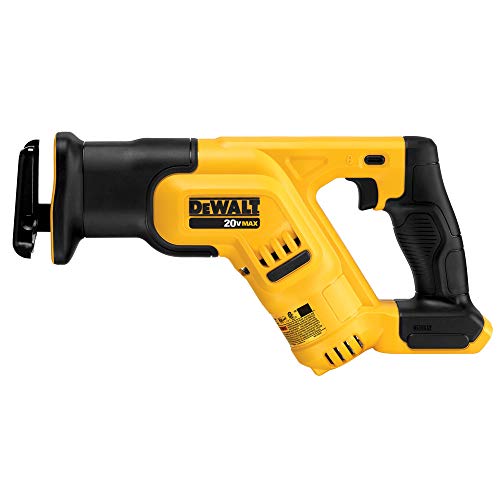
- 14-inch body fits between studs
- Four-position clamp enables flush cuts
- Variable speed and LED improve control
Best For: Confined cuts and users with DEWALT 20V batteries
Best Complete Kit
SEESII Cordless Reciprocating Saw with Batteries

- Two 4.0Ah batteries and charger included
- Lightweight one-handed design
- Brushless motor reaches 3,500 SPM
Best For: Home projects needing a ready-to-use kit
Best One-Handed Platform Pick
RYOBI ONE+ HP Compact Reciprocating Saw

- Compact one-handed design for overhead work
- Brushless motor reaches 3,000 SPM
- Compatible with 300+ ONE+ batteries
Best For: RYOBI ONE+ owners working in cramped locations
Best Blades-and-Batteries Kit
Olmlmo 21V Brushless Reciprocating Saw

- Two 4.0Ah batteries and eight blades included
- 3,200 SPM brushless motor with 1.1-inch stroke
- Compact body with rotating shoe and LED
Best For: DIYers handling varied indoor and outdoor materials
Best Compact Power Pick
DEWALT 20V MAX XR Compact Reciprocating Saw

- 14.5-inch compact body for confined cuts
- 1-1/8-inch stroke with up to 2,900 SPM
- Brushless motor, pivoting head, and LED light
Best For: Professional users who need compact access and strong cutting performance
Best Mini DIY Option
Fanttik R11 Pro Mini Reciprocating Saw
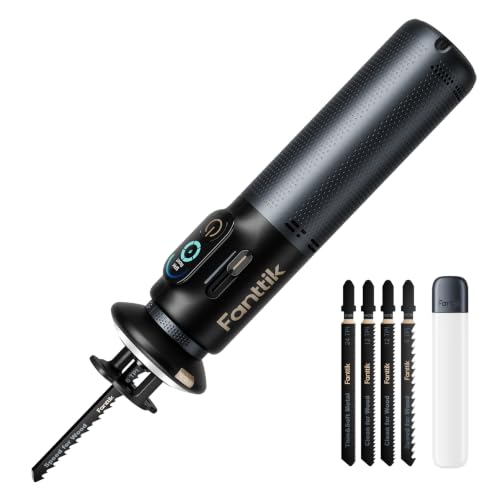
- 8.92-inch compact design for portability
- 0–2,200 SPM stepless speed control
- Built-in battery with Type-C fast charging
Best For: Light DIY cutting in wood and PVC
Best One-Handed Choice
DEWALT Xtreme 12V MAX Reciprocating Saw

- Compact, lightweight design for tight access
- Ergonomics optimized for one-handed use
- 0–2,800 SPM variable speed with LED
Best For: Portable one-handed cutting in confined workspaces
Versatile Brushless Pick
VTEK Cordless Reciprocating Saw

- Brushless motor reaches up to 3,000 SPM
- Three speed settings and tool-free blade changes
- Includes two batteries, charger, blades, and case
Best For: DIYers needing a versatile, ready-to-use cordless saw
Compact Brand-Name Option

- Compact 10-inch, 2.1-pound design
- Variable-speed trigger and battery fuel gauge
- Accepts HACKZALL and SAWZALL style blades
Best For: M12 users seeking a compact bare tool for controlled cuts
High-Speed Compact Kit
FULLYEA Cordless Reciprocating Saw

- Reaches up to 3,500 SPM with a 28 mm stroke
- Built-in LED and power indicator support visibility
- Includes two 2.0Ah batteries and four blades
Best For: Home workshops wanting speed, lighting, and a complete kit
Best Compact Choice – DEWALT 20V MAX Compact Reciprocating Saw
For shoppers comparing reciprocating saws for tight spaces, the DEWALT DCS387B stands out with a compact 14-inch design that can fit between studs. Its four-position blade clamp, variable-speed trigger, LED light, and pivoting shoe add useful control when access and cutting position are limited.
Best For: DIYers and tradespeople who need a compact saw for confined cuts, flush cutting, and overhead or dimly lit work.
Pros:
- Compact 14-inch length fits between studs and in confined spaces.
- Four-position blade clamp supports flush cutting and positional flexibility.
- Variable speed up to 2,900 strokes per minute and an LED improve control and visibility.
- Pivoting shoe adds versatility while cutting.
Cons:
- Sold as a bare tool, so the battery and charger are not included.
- Its listed 1-1/8-inch stroke is shorter than some heavy-duty reciprocating saws.
The DCS387B is a focused option when maneuverability matters more than a complete kit. It is especially appealing to users already invested in DEWALT’s 20V platform.
Best Complete Kit – SEESII Cordless Reciprocating Saw with Batteries
The SEESII is a practical pick among reciprocating saws for tight spaces when you want a ready-to-use package. It includes two 4.0Ah batteries, six blades, a charger, and a compact, lightweight body with an LED work light for cuts under furniture, inside cabinets, or in dim basements.
Best For: Home users who want an all-in-one cordless kit for wood, plastic, metal, and light outdoor cutting tasks.
Pros:
- Includes two 4.0Ah batteries, a fast charger, six blades, case, gloves, and safety glasses.
- Lightweight one-handed design is listed at 2.0 pounds.
- Brushless motor offers variable speed up to 3,500 strokes per minute.
- Tool-free blade changes and an LED support efficient work in dark areas.
Cons:
- Its 21V battery system is less established in the supplied information than major branded platforms.
- The included 8-inch blades may offer less reach for some larger cuts.
With batteries and accessories included, the SEESII offers strong convenience for occasional projects. Its light weight and built-in illumination are particularly useful where space and visibility are restricted.
Best One-Handed Platform Pick – RYOBI ONE+ HP Compact Reciprocating Saw
RYOBI ONE+ HP 18V Brushless Compact One-Handed Reciprocating Saw (Tool Only) PSBRS01B
Check Price On AmazonThe RYOBI ONE+ HP PSBRS01B is designed for users who prioritize one-handed control in cramped or overhead locations. Its compact body, brushless motor, rapid blade-change system, and compatibility with more than 300 ONE+ batteries make it a convenient choice for renovation and demolition work.
Best For: RYOBI ONE+ users who need a compact saw for tight spaces, overhead applications, and quick material changes.
Pros:
- Compact one-handed form is suited to tight spaces and overhead work.
- Brushless motor delivers up to 3,000 strokes per minute.
- Rapid blade-change system allows tool-free swaps.
- Works with the broad RYOBI ONE+ 18V battery system.
Cons:
- Battery and charger are sold separately.
- The supplied notes do not specify an LED light, variable-speed trigger, or stroke length.
This saw makes the most sense for shoppers already using RYOBI ONE+ batteries. Its compact one-handed layout directly addresses awkward positioning, while the brushless motor supplies useful cutting speed for renovation tasks.
Best Blades-and-Batteries Kit – Olmlmo 21V Brushless Reciprocating Saw
The Olmlmo RS03 combines a compact 3-pound cordless body with two 4.0Ah batteries and eight task-specific blades. For reciprocating saws for tight spaces, its rotating shoe, safety button, built-in LED, and tool-free blade changes make it a flexible kit for home repair, branch trimming, PVC, wood, and metal.
Best For: DIY users who want broad material coverage and included batteries for indoor, outdoor, and demolition-style tasks.
Pros:
- Includes two 4.0Ah batteries, charger, carrying case, and eight blades.
- Brushless motor provides variable speed up to 3,200 strokes per minute with a 1.1-inch stroke.
- Blades are supplied for wood, plastic, aluminum, steel, fiberglass, sheetrock, and other tasks.
- Compact 3-pound design includes a rotating shoe, LED, and safety button.
Cons:
- The 21V battery platform may be less convenient for users without compatible tools.
- The listed blade assortment includes different lengths and applications, so users must select the correct blade for each material.
The RS03 is a versatile value-oriented kit rather than a bare compact tool. Its included batteries and broad blade selection make it convenient when one saw needs to cover several materials and locations.
Best Compact Power Pick – DEWALT 20V MAX XR Compact Reciprocating Saw
For professionals seeking reciprocating saws for tight spaces, the DEWALT DCS367B combines a compact 14.5-inch body with a pivoting head and four-position blade clamp. Its brushless motor, 1-1/8-inch stroke, and variable speed up to 2,900 SPM make it suited to demanding cutting work, while the 5-pound tool-only weight helps with maneuverability.
Best For: Professionals cutting between studs and in other confined work areas who already use DEWALT 20V MAX batteries.
Pros:
- Compact 14.5-inch length fits between studs and into tight spots.
- Pivoting head and four-position keyless clamp improve access and blade-change convenience.
- Brushless motor provides up to 2.5x more runtime, according to the supplied product information.
- LED light and variable-speed trigger improve visibility and control.
Cons:
- Battery and charger are not included.
- At 5.4 pounds in the listed specifications, it is heavier than mini one-handed options.
Choose this model when compact access matters but you still want a full-size 1-1/8-inch stroke and aggressive cutting performance. It is particularly compelling for users invested in the DEWALT 20V MAX platform.
Best Mini DIY Option – Fanttik R11 Pro Mini Reciprocating Saw
The Fanttik R11 Pro is one of the most portable reciprocating saws for tight spaces, measuring 8.92 by 2.4 inches and using a built-in rechargeable battery. Its 160W brushless motor, stepless 0–2,200 SPM control, low-vibration design, and included blade kit make it a practical choice for lighter DIY cutting in wood and PVC.
Best For: DIY users who want a small, rechargeable saw for wood and PVC projects, outdoor tasks, and easy storage.
Pros:
- Very compact 8.92-inch form factor is easy to store and carry.
- Dual counterweights are designed to reduce vibration and improve control.
- Built-in battery supports Type-C fast charging without a separate battery pack or dock.
- Includes five 4-inch jigsaw blades and a tool-free blade-change design.
Cons:
- Recommended maximum cutting thickness is 3/4 inch.
- Blade compatibility is limited to T-shank blades up to 1.4mm thick and 3–4 inches long.
- Its listed applications are wood and PVC rather than broad heavy-duty cutting.
Its small size and built-in charging make the R11 Pro convenient for occasional cuts and cramped access. Keep the 3/4-inch thickness recommendation and specified blade requirements in mind when matching it to a project.
Best One-Handed Choice – DEWALT Xtreme 12V MAX Reciprocating Saw
DEWALT Xtreme 12V MAX* Reciprocating Saw, One-Handed, Cordless, Tool Only (DCS312B)
Check Price On AmazonThe DEWALT DCS312B is a compact one-handed option for reciprocating saws for tight spaces. Its ergonomics are optimized for one-handed use, while the brushless motor, variable-speed trigger, LED, and tool-free blade release support controlled cutting in confined work areas.
Best For: Users who prioritize one-handed portability and already have compatible DEWALT 12V MAX batteries.
Pros:
- Lightweight, compact design supports portability and tight-space access.
- One-handed ergonomics make it easier to maneuver in confined areas.
- Brushless motor is designed for performance and extended life.
- 0–2,800 SPM variable speed, LED illumination, and tool-free blade release add convenience.
Cons:
- Battery and charger are not included.
- Its 12V platform may be less suitable for users needing larger, heavy-duty cutting capacity.
- Only two blades are included.
This saw is a strong fit when maneuverability is more important than maximum size or power. Its one-handed design and compact construction make it especially useful for quick cuts where access is restricted.
Versatile Brushless Pick – VTEK Cordless Reciprocating Saw
For shoppers comparing reciprocating saws for tight spaces, the VTEK stands out with a one-handed design, ergonomic grip, and cordless portability. Its brushless motor reaches up to 3,000 SPM, while three speed settings help tailor cuts in wood, metal, plastic, plaster, PVC, and more.
Best For: DIYers who want a multi-material saw with adjustable speed and a complete battery-powered kit.
Pros:
- Three speed levels support more controlled cutting across different materials.
- Tool-free chuck accepts widely available reciprocating saw blades.
- Includes two batteries, charger, five blades, case, and manual.
- One-handed ergonomic design can reduce fatigue during extended use.
Cons:
- Its listed 5 mm maximum metal cutting depth is relatively limited.
- At 2.1 kg, it may feel heavier than some compact options.
With a 22 mm stroke and stated cutting capacities for wood, plastic pipe, and metal, this is a flexible option for general renovation and workshop tasks. The included accessories also make it ready to use without assembling a separate battery kit.
Compact Brand-Name Option – Milwaukee M12 HACKZALL
Milwaukee 2420-20 M12 12-Volt Lithium-Ion HACKZALL Cordless Reciprocating Saw (Tool-Only)
Check Price On AmazonThe Milwaukee M12 HACKZALL is a compact choice for reciprocating saws for tight spaces, measuring 10 inches long and weighing 2.1 pounds. Its variable-speed trigger supports controlled cuts, and the saw accepts both HACKZALL and SAWZALL style blades.
Best For: Users already invested in Milwaukee’s M12 platform who want a lightweight bare tool for controlled cutting.
Pros:
- Compact 10-inch form factor suits work in confined areas.
- Variable-speed trigger helps manage cutting speed.
- Accepts both HACKZALL and SAWZALL style blades.
- Battery fuel gauge displays remaining runtime.
Cons:
- Sold as a tool-only product, so a compatible battery and charger are needed.
- Its 12-volt platform is less powerful on paper than higher-voltage alternatives.
- The motor is brushed rather than brushless.
This model prioritizes portability and control over included accessories or maximum power. The five-year limited warranty is an added consideration for buyers who value established brand support.
High-Speed Compact Kit – FULLYEA Cordless Reciprocating Saw
For reciprocating saws for tight spaces, the FULLYEA combines a compact 10.9-inch body with a built-in LED and one-hand-friendly ergonomic grip. Its motor reaches up to 3,500 SPM, and the 28 mm stroke is designed for cutting wood, plastic, pipes, and metal.
Best For: Home workshops needing a high-speed cordless saw with dual batteries and lighting for dim work areas.
Pros:
- Up to 3,500 SPM provides fast cutting performance.
- Built-in LED helps illuminate dimly lit workspaces.
- Includes two 2.0Ah batteries for alternating use.
- Tool-free all-metal collet enables quick blade changes.
Cons:
- Listed cutting depths are limited to 20 mm for metal and 50 mm for wood.
- The product is supplied with carbon steel blades, which may require replacement for specialized work.
- Its stated 1,200-watt rating may suggest higher energy demands than smaller cordless saws.
The power indicator, safety switch, LED, and rubberized handle add practical features for routine jobs. With four included blades and two batteries, it offers a substantial starter package for cutting tasks around the home or workshop.
How We Picked the Best Reciprocating Saws for Tight Spaces
We focused on the traits that matter when access is limited: compact dimensions, one-handed usability where available, variable-speed control, balance, blade-change convenience, and the ability to make controlled cuts without excessive bulk. We also considered battery ecosystem, included batteries and blades, brushless motor claims, LED lighting, pivoting or compact heads, and the difference between tool-only purchases and complete kits.
Specifications and included accessories can vary by seller or package, so verify the exact model number and contents before ordering. A bare tool is usually the better value for users already invested in a battery platform; a kit may cost less overall if you need batteries and a charger.
Quick Comparison
| Best For | What to Look For |
|---|---|
| Professional remodeling | Established 12V or 18V/20V battery platform, brushless motor, strong control |
| One-handed overhead work | Compact grip, balanced weight, variable speed, secure blade release |
| Occasional home repairs | Complete battery kit, useful blade assortment, reasonable price |
| Wood and PVC trimming | Lightweight body, short blade options, easy speed adjustment |
Key Buying Factors for Reciprocating Saws for Tight Spaces
Size, Balance, and Access
A shorter saw is easier to position between pipes, framing, and cabinet components. Balance matters just as much as overall length: a compact tool that places the battery or motor awkwardly can still become tiring during overhead cuts. One-handed models improve access, but they require careful control and are not automatically the best choice for heavy demolition.
Speed Control and Cutting Action
Variable speed helps you start accurately, protect delicate materials, and reduce snagging. Higher stroke rates are useful for faster cuts in suitable materials, while slower settings provide better control in confined areas. Match the blade and speed to wood, plastic, metal, or demolition work rather than relying on maximum speed.
Battery Platform and Runtime
Tool-only models make sense when you already own compatible batteries. Otherwise, compare the total kit cost, battery capacity, charger availability, and replacement-battery pricing. A smaller battery can improve maneuverability, while a higher-capacity pack may provide longer runtime but add noticeable bulk.
Comfort, Visibility, and Maintenance
LED lighting, a tool-free blade clamp, a pivoting shoe, and a comfortable trigger can make close-quarters work easier. Brushless motors may offer improved efficiency and durability, but they generally increase purchase cost. Keep blades sharp and use the correct length to limit flex and vibration.
Who Should Buy Which Reciprocating Saws for Tight Spaces?
Choose a DEWALT, RYOBI, Milwaukee, or other established-platform tool if you already own that brand’s batteries or need dependable support for regular remodeling. Compact one-handed models are best for electricians, plumbers, installers, and DIY users making controlled cuts where two-handed handling is awkward. Complete kits from SEESII, Fanttik, VTEK, or similar value-oriented options can suit occasional repairs when included batteries and blades matter more than platform depth. For demanding demolition, prioritize balance, battery availability, vibration control, and blade quality over the highest advertised stroke rate.