
A good battery tester can save you from guesswork, surprise no-starts, and unnecessary battery replacements. For home mechanics, the right tool makes it much easier to check battery health, cranking performance, and charging-system issues before they turn into bigger problems.
In this roundup, we compared beginner-friendly and more advanced options to help you find a tester that fits your vehicles, skill level, and budget.
Best 10 Car Battery Testers for Diy Users Picks for 2026
Best Budget Diagnostic Tester
KONNWEI KW208 12V Battery Tester

- Tests 12V flooded, AGM, and gel batteries
- Runs battery, starter, and alternator checks
- Compact plug-and-play design for home use
Best For: DIY drivers who want affordable battery and charging-system diagnostics at home.
Best Analog Load Tester
Yaegoo Car Battery Tester 12V 100A / 6V 50A

- Analog load tester for 6V and 12V batteries
- 100A load test for 12V batteries up to 1000 CCA
- Insulated handle and ventilated case for safer use
Best For: DIY vehicle owners who want an affordable manual tester for quick 6V and 12V battery and charging-system checks.
Best for Easy Voltage Checks
MOTOPOWER MP0514A Battery Tester
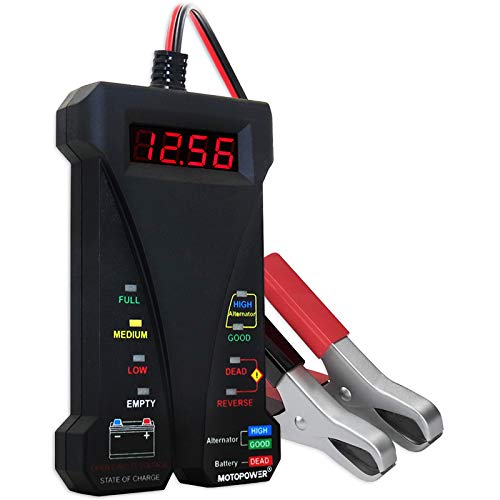
- Plug-and-test design for quick checks
- LCD readout with 0.01V resolution
- Built-in reverse-polarity protection
Best For: DIY car owners who want a simple tester for quick battery and alternator checks.
Best for 12V/24V Coverage
TopDiag BT300 Battery Load Tester

- Tests 12V and 24V batteries
- Checks battery, cranking, and charging systems
- Backlit screen with simple DIY-friendly operation
Best For: DIY owners who need one tester for mixed 12V and 24V vehicles.
Best Bluetooth Battery Monitor
ANCEL BM200 Bluetooth Battery Tester

- Bluetooth app monitoring from 15 to 30 feet
- Cranking, charging, and voltage tests for 12V batteries
- 70-day voltage history with real-time alerts
Best For: DIY drivers who want installed battery monitoring and app alerts across multiple vehicles.
Best for Multi-Voltage Testing

- 6V/12V/24V support for multiple vehicle types
- Tests battery, starter, and charging system health
- Compatible with AGM, gel, EFB, SLA, VRLA, and lithium
Best For: DIY owners maintaining mixed vehicles and battery types who want broader diagnostic coverage in one tester.
Best for Multi-Voltage DIY Testing
KAIWEETS 12V/24V Car Battery Tester

- 12V/24V support with 50-2000 CCA range
- Tests SOH, SOC, voltage, resistance, and CCA
- Color screen with safety-focused clamp design
Best For: DIYers maintaining multiple vehicle types and both 12V and 24V battery systems.
Best for Multi-Vehicle Testing
TOPDON BT100 12V Car Battery Tester

- Tests battery, cranking, and charging systems
- Works with 100-2000 CCA lead-acid batteries
- Compact unit with simple LED-guided operation
Best For: DIY owners who need one tester for several 12V vehicle types at home.
Best Heavy-Duty Pick
BR502 6V/12V/24V Car Battery Tester

- Tests 6V, 12V, and 24V batteries
- Shows SOH, SOC, CCA, voltage, and resistance
- Plug-and-play with reverse-polarity protection
Best For: DIYers checking different battery types across cars, trucks, motorcycles, and boats.
Best for First-Time Diagnostics

- Reads battery health, charge, cranking, and charging data
- Works with many 12V lead-acid battery types and standards
- Backlit screen and battery-powered operation keep testing simple
Best For: DIY drivers who want a simple 12V battery and alternator tester for home use.
Best Budget Diagnostic Tester – KONNWEI KW208 12V Battery Tester
The KONNWEI KW208 stands out as a low-cost option that still covers the core checks most people need at home. For shoppers comparing car battery testers for diy users, it offers battery, cranking, and charging-system analysis in a simple plug-and-play tool that works with common 12V battery types.
Best For: DIY drivers who want an affordable tester for quick battery health checks and basic alternator/starter diagnosis without stepping up to a pricier shop-style unit.
Pros:
- Tests 12V batteries from 100-2000 CCA, including flooded, AGM, and gel types.
- Also checks cranking and charging systems, giving more than a basic voltage reading.
- Compact, glove-box-friendly design with easy plug-and-play operation.
- Updated galvanized alloy clips improve grip, safety, and contact accuracy.
Cons:
- Designed only for 12V batteries, so it will not suit 6V or heavier-duty 24V applications.
- The feature set is practical, but the interface is more functional than premium.
If you want one of the more approachable car battery testers for diy users, the KW208 hits a smart middle ground between price and useful diagnostics. It is especially appealing for home mechanics who want fast, actionable battery information before replacing or recharging a weak battery.
Best Analog Load Tester – Yaegoo Car Battery Tester 12V 100A / 6V 50A
If you want a simple, no-frills way to check battery health at home, the Yaegoo is one of the more straightforward car battery testers for diy users. Its analog design keeps operation basic, while the built-in load testing gives you more useful information than a voltage-only checker.
Best For: DIY vehicle owners who want an affordable manual tester for quick 6V and 12V battery and charging-system checks.
Pros:
- Works with both 6V and 12V batteries, including cars, motorcycles, boats, and RVs.
- Provides load testing up to 100A on 12V batteries and supports batteries up to 1000 CCA.
- Portable design with insulated handle, clear polarity grips, and ventilated housing for safer use.
Cons:
- Analog readout is less precise and less beginner-friendly than digital testers with guided prompts.
- Bulkier and more hands-on to use than compact electronic conductance testers.
For shoppers comparing car battery testers for diy users, this Yaegoo model makes the most sense if you specifically want a traditional load tester that can also help check starter draw and charging-system performance without adding much complexity.
Best for Easy Voltage Checks – MOTOPOWER MP0514A Battery Tester
The MOTOPOWER MP0514A is a straightforward pick for shoppers comparing car battery testers for diy users because it focuses on quick, no-fuss voltage and charging-system checks. Its plug-and-test design, clear LCD readout, and LED indicators make it easy to verify battery condition or alternator output without dealing with a steep learning curve.
Best For: DIY car owners who want a simple tester for fast battery and alternator checks at home or on the go.
Pros:
- Plug-and-test operation is beginner-friendly and fast to use.
- LCD display with 0.01V resolution gives clear, precise voltage readings.
- Reverse-polarity and over-voltage protection add peace of mind.
- Compact body and long cable make it easy to store and connect in tight spaces.
Cons:
- Designed for basic voltage and charging checks rather than deep battery diagnostics.
- Works within a 4V to 20V DC range, so it is mainly suited to 12V systems.
If you want one of the more approachable car battery testers for diy users, this MOTOPOWER model stands out for simplicity, safety features, and easy-to-read results. It is especially appealing for drivers who want a quick answer on whether the battery is weak or the alternator is charging properly.
Best for 12V/24V Coverage – TopDiag BT300 Battery Load Tester
If you want one of the more versatile car battery testers for diy users, the TopDiag BT300 stands out by handling both 12V and 24V systems while still keeping the interface simple. It covers battery, cranking, and charging checks in one handheld tool, which makes it useful for routine garage diagnostics without adding much complexity.
Best For: DIY owners who want to test both 12V and 24V vehicle batteries, starters, and alternators with a straightforward handheld unit.
Pros:
- Works with 12V and 24V systems across cars, trucks, motorcycles, boats, and RVs.
- Provides battery health, charge status, CCA, and impedance readings in about 10 seconds.
- Includes cranking and charging tests for a more complete starting-system check.
- Backlit LCD and simple controls make it approachable for non-professional users.
Cons:
- Not compatible with 6V or lithium batteries.
- Requires correct battery info input for the quickest test mode.
- USB port is only for software updates, not charging.
The BT300 makes sense for drivers who maintain multiple vehicle types and want broader coverage than a basic tester offers. For shoppers comparing car battery testers for diy users, this model is especially appealing if you need 24V support without stepping up to a more complicated professional tool.
Best Bluetooth Battery Monitor – ANCEL BM200 Bluetooth Battery Tester
The ANCEL BM200 stands out among car battery testers for diy users who want ongoing battery monitoring instead of just occasional spot checks. Its Bluetooth app, voltage history, cranking and charging tests, and real-time alerts make it especially useful for drivers who want a simple way to keep tabs on a vehicle battery without opening the hood every time.
Best For: DIY drivers who want app-based battery monitoring, alerts, and historical voltage tracking for cars, motorcycles, RVs, or boats.
Pros:
- Bluetooth monitoring lets you check battery status from about 15 to 30 feet away.
- Supports 12V lead-acid and lithium batteries with cranking and charging system tests.
- Stores up to 70 days of voltage history and sends abnormal voltage alerts through the app.
Cons:
- Works only with 12V systems, so it is not the right fit for other battery voltages.
- App-based features may feel less convenient for users who prefer a simple screen-on-device tester.
If you like the idea of a battery tester that stays installed and keeps watch between drives, the BM200 is a practical pick. For car battery testers for diy users, it offers a strong mix of convenience, multi-vehicle support, and early warning features that can help prevent surprise no-start situations.
Best for Multi-Voltage Testing – BT60 PRO Car Battery Tester
If you want one of the more versatile car battery testers for diy users, the BT60 PRO stands out by covering 6V, 12V, and 24V systems instead of limiting you to standard passenger cars. That wider range makes it useful for households with multiple vehicle types, while still keeping operation straightforward for routine battery, starter, and charging checks.
Best For: DIY owners who want one tester for cars, motorcycles, trucks, boats, and mixed battery chemistries including AGM, gel, and lithium.
Pros:
- Supports 6V, 12V, and 24V batteries across 2Ah to 120Ah and 100–3000 CCA.
- Tests battery health, charge, cranking, and charging system performance in one tool.
- Works with AGM, EFB, GEL, SLA, VRLA, and lithium batteries for broad DIY flexibility.
- QR-based cloud report sharing is convenient when you want a saved result without installing an app.
Cons:
- Feature set may be more advanced than necessary for casual users who only check a single 12V car battery.
- The listing emphasizes broad compatibility, but hands-on ease of menu navigation may vary by user.
For shoppers comparing car battery testers for diy users, this model makes the strongest case when flexibility matters more than absolute simplicity. If you maintain several vehicles or want room to grow into deeper diagnostics, the BT60 PRO offers a lot of capability in one compact tester.
Best for Multi-Voltage DIY Testing – KAIWEETS 12V/24V Car Battery Tester
If you want one of the more versatile car battery testers for diy users, this KAIWEETS model stands out by handling both 12V and 24V batteries while covering a wide 50-2000 CCA range. It gives quick readouts for battery health, charge status, voltage, resistance, and cranking capacity, making it a practical choice for home garages with more than one type of vehicle.
Best For: DIYers who maintain multiple vehicles, including cars, trucks, motorcycles, RVs, and boats, and want one tester that works across 12V and 24V systems.
Pros:
- Works with 12V and 24V batteries, including Flooded, EFB, AGM, and GEL types.
- Measures SOH, SOC, voltage, resistance, and CCA for a fuller battery-health picture.
- Color display is easier to read than basic monochrome screens, even outdoors.
- Kelvin 4-wire clamps and built-in safety protections support accurate, safer testing.
Cons:
- More feature-rich than casual users may need for occasional basic voltage checks.
- Designed for battery diagnostics, so it may be less appealing if you only want a simple go/no-go tool.
For shoppers comparing car battery testers for diy users, this KAIWEETS tester makes a strong case if flexibility matters more than simplicity. Its broad battery compatibility, fast diagnostics, and easy-to-read screen make it especially useful for households with several vehicle types.
Best for Multi-Vehicle Testing – TOPDON BT100 12V Car Battery Tester
The TOPDON BT100 is a practical pick for shoppers comparing car battery testers for diy users because it goes beyond a simple voltage check. It reads battery health, charge level, cranking performance, and charging system status, giving home mechanics a clearer picture of whether a battery needs charging, replacement, or further diagnosis.
Best For: DIY owners who want one compact tester for checking 12V batteries across cars, motorcycles, trucks, ATVs, boats, and other small vehicles.
Pros:
- Supports a wide 100-2000 CCA range and multiple lead-acid battery types including AGM, EFB, GEL, and flooded.
- Performs battery, cranking, and charging tests for more complete diagnostics than basic testers.
- Compact design with simple menu navigation and color LEDs makes it easy to keep in the glove box and use quickly.
Cons:
- Works only with 12V lead-acid batteries, so it is not suitable for lithium or 24V systems.
- Passive power design means it only turns on when properly connected to a battery.
If you want one of the more versatile car battery testers for diy users, the BT100 stands out for its broad compatibility and straightforward readouts. It is especially useful for households with multiple vehicle types and for anyone who wants fast answers before buying a new battery or calling for a jump-start.
Best Heavy-Duty Pick – BR502 6V/12V/24V Car Battery Tester
The BR502 is a practical pick if you want one of the more versatile car battery testers for diy users. It handles 6V, 12V, and 24V batteries, reads 100-2000 CCA, and gives quick health, charge, resistance, and voltage data without a complicated setup.
Best For: DIYers who want to check multiple vehicle battery types at home, including cars, trucks, motorcycles, and boats.
Pros:
- Works with 6V, 12V, and 24V batteries across flooded, AGM, spiral, and gel types.
- Displays useful battery metrics like SOH, SOC, CCA, internal resistance, and voltage.
- Beginner-friendly plug-and-play design with results shown in about two seconds.
- Reverse-polarity protection adds a layer of safety during testing.
Cons:
- The interface is basic compared with more advanced professional analyzers.
- Clip connection needs to be secure or the screen may flicker during use.
If you want broad compatibility without stepping into pro-level pricing, this model covers the essentials well. For shoppers comparing car battery testers for diy users, the BR502 stands out for its wide voltage support and easy-to-understand readouts.
Best for First-Time Diagnostics – ANCEL BA101 Battery Tester
The ANCEL BA101 is a practical pick for anyone shopping for car battery testers for diy users who want straightforward readings without stepping up to a pro-level tool. It covers the essentials well, giving you battery health, charge status, cranking, and charging-system checks in one compact handheld unit.
Best For: DIY drivers who want an easy-to-read 12V tester for checking battery condition and alternator performance at home.
Pros:
- Tests SOH, SOC, voltage, CCA, cranking, and charging system in one device.
- Wide 12V compatibility for flooded, AGM, GEL, and EFB batteries across many vehicle types.
- Simple backlit display and no internal batteries required, since it powers from the vehicle battery.
Cons:
- Not compatible with lithium batteries or 24V systems.
- Accuracy depends on entering the correct battery rating and type before testing.
If you want one of the more approachable car battery testers for diy users, the BA101 stands out for making battery and charging checks less intimidating. It is especially appealing for home mechanics who want better insight than a basic voltmeter without paying for advanced shop equipment.
How We Picked the Best Car Battery Testers for Diy Users
We focused on the features that matter most to home users: clear readouts, simple menu systems, broad battery compatibility, and enough testing depth to be genuinely useful without requiring professional shop experience. We also looked at CCA range, supported battery types, voltage support, and whether each unit can check more than just resting voltage.
For this list of Car Battery Testers for Diy Users, we prioritized models that can help diagnose common problems at home, including weak batteries, charging faults, and cranking issues. Ease of use matters just as much as raw specs, so straightforward controls and readable displays carried extra weight.
Quick Comparison
Basic Testers
These are best if you want quick battery voltage checks and simple charging-system feedback. They are usually the easiest to use and the most affordable, but they may offer less detailed battery-health analysis.
Mid-Range Analyzers
These tools typically add cranking and alternator tests, wider CCA support, and better guidance on battery condition. For many DIY users, this is the best balance of price, accuracy, and usefulness.
Advanced Multi-System Models
If you maintain multiple vehicles, work on 12V and 24V systems, or want support for AGM, gel, and sometimes lithium batteries, a more capable analyzer is worth considering. These models offer more data but may take a little longer to learn.
Key Buying Factors for Car Battery Testers for Diy Users
Battery Type Compatibility
Not every tester works equally well with flooded, AGM, gel, and lithium batteries. Match the tester to the battery types in your car, truck, motorcycle, or other vehicles before buying.
Voltage Support
Many home users only need 12V support, but some buyers will benefit from 6V or 24V capability. If you work on older vehicles, powersports equipment, or heavier trucks, broader voltage support can make a big difference.
CCA and Ah Range
The tester should cover the cold cranking amps or amp-hour ratings of the batteries you plan to check. A wider supported range gives you more flexibility if you maintain multiple vehicles.
What It Actually Tests
Some units mainly report voltage, while others estimate battery health, internal resistance, cranking ability, and alternator output. If you want to do more than confirm whether a battery is charged, choose a tester with true battery, cranking, and charging tests.
Display and Usability
A bright screen, simple prompts, and fast results matter more than many buyers expect. The best Car Battery Testers for Diy Users reduce confusion and help you make a decision quickly, especially in a cold garage or at the side of the road.
Vehicle Coverage
If you only own one sedan, a simple 12V unit may be enough. If you have a family SUV, pickup, motorcycle, or RV, it can be smarter to buy a tester with broader support now instead of replacing it later.
Who Should Buy Which Car Battery Testers for Diy Users?
Buy a Basic Tester If…
You only want to verify battery voltage occasionally, confirm whether a charging system is working, or keep a low-cost diagnostic tool in the glove box or garage.
Buy a Mid-Range Analyzer If…
You handle your own battery replacements, want clearer pass/fail guidance, and need dependable battery, cranking, and alternator checks for one or two household vehicles.
Buy an Advanced Model If…
You maintain several vehicles, need 6V/12V/24V support, or want compatibility across AGM, gel, and lithium batteries. These are the best fit for serious DIYers who want more complete diagnostic information.
Buy a Bluetooth Monitor If…
You prefer ongoing battery tracking instead of occasional manual tests. A Bluetooth option can be useful for stored vehicles, seasonal cars, or anyone who wants alerts before a battery becomes a no-start problem.
For most buyers, the best Car Battery Testers for Diy Users are the ones that provide clear results, support the batteries you actually own, and give enough diagnostic detail to prevent unnecessary parts swapping. Focus on compatibility and ease of use first, then choose the extra features that match how often you really work on your vehicles.