


Upgrading to a lithium battery can be one of the simplest ways to reduce vehicle weight and sharpen starting performance. For many enthusiasts, the right battery also improves reliability during short trips, storage periods, and demanding high-load use.
In this roundup, we focused on practical buying factors that matter for performance cars: cranking power, battery chemistry, fitment, charging compatibility, and whether each option makes sense for street, track, or mixed use.
Best 6 Lithium Car Batteries for Performance Cars Picks for 2026
Best Lightweight LTO Upgrade
XS Power XV4800 Group 47 LTO Battery

- LTO chemistry for long service life
- Only 6.4 lbs for weight-sensitive builds
- Up to 1335 max amps in Group 47 size
Best For: Performance car owners who want a compact, lightweight Group 47 battery with strong starting power.
Best for High-Voltage Audio Builds
Limitless NoLi Sodium 30Ah Battery

- Up to 8,000W RMS at 16V
- 1,125 CCA with compact 9.9-lb design
- Built for demanding car audio setups
Best For: Performance cars with high-output audio systems and 14.6V to 16V electrical demands.
Best Lightweight Multi-Fit Option
MMG YTZ12S Lithium Ion Powersports Battery

- Compact lightweight sealed design
- 300 CCA with fast charging
- Ready to use out of the box
Best For: Custom builds or small compatible vehicles needing a lightweight lithium battery with strong starting power.
Best for DIY High-Capacity Builds
CATL 280Ah LiFePO4 4-Cell Battery Set

- Grade A CATL 280Ah matched cells
- Excellent long-cycle LiFePO4 chemistry
- Built for custom 12V pack assembly
Best For: Experienced DIY builders creating a custom high-capacity 12V lithium battery setup.
Best Charger for Mixed Battery Types
Bosch C80-LI 15A/20A Smart Battery Charger
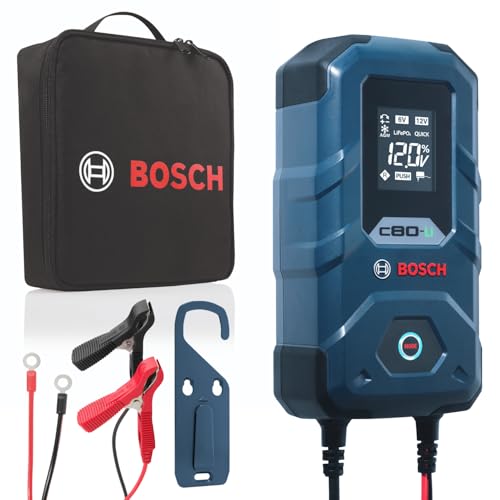
- Handles lithium, AGM, and lead-acid batteries
- Up to 20A fast charging mode
- Includes maintenance and power supply functions
Best For: Drivers with performance cars and other vehicles who want one smart charger for lithium and conventional batteries.
Best Lightweight LTO Upgrade – XS Power XV4800 Group 47 LTO Battery
The XS Power XV4800 is a strong fit for drivers shopping for lithium car batteries for performance cars who want fast starting power without the weight penalty of a traditional AGM battery. Its lithium titanate oxide chemistry, compact Group 47 footprint, and 6.4-pound weight make it especially appealing for performance-focused builds where packaging and weight reduction both matter.
Best For: Performance car owners who want a compact, lightweight Group 47 battery for quicker starts, reduced front-end weight, and accessory support in street or race-oriented setups.
Pros:
- LTO chemistry offers long cycle life and strong durability compared with many conventional AGM options.
- Very light at just 6.4 pounds, making it useful for weight-conscious performance builds.
- Delivers high output for its size, with up to 1335 max amps in a compact Group 47 case.
Cons:
- 6Ah capacity is relatively small, so it is less suited to vehicles with heavy parasitic draw.
- Premium battery chemistry may be overkill for casual daily-driver use.
Overall, the XV4800 stands out when low weight and strong cranking performance are bigger priorities than reserve capacity. For enthusiasts comparing lithium car batteries for performance cars, this is a compelling option for compact, high-output applications that still need real starting power.
Best for High-Voltage Audio Builds – Limitless NoLi Sodium 30Ah Battery
Limitless Lithium NoLi Sodium 30AH Battery for Car Audio Systems Up to 8,000W 10v-16v
Check Price On AmazonThe Limitless NoLi Sodium 30Ah is a niche option among lithium car batteries for performance cars, aimed less at lightweight street builds and more at vehicles running demanding electrical systems. With support for 10V-16V operation, strong cranking output, and very high wattage capability for car audio setups, it makes the most sense for enthusiasts who need starting power and serious accessory support in one compact battery.
Best For: Performance-car owners building high-output audio systems who want a compact battery that can handle strong cranking demands and 14.6V to 16V electrical setups.
Pros:
- Supports up to 8,000W RMS at 16V for serious car audio applications.
- Strong 1,125 CCA and 1,500 CA ratings for performance-oriented starting power.
- Compact Group 30 size and roughly 9.9-pound weight help save space and reduce mass.
Cons:
- No built-in BMS, so setup and charging management require more attention than some alternatives.
- Its feature set is geared heavily toward audio builds rather than general-purpose street performance use.
If your car needs more than a basic lightweight starter battery, this model stands out by combining compact packaging with high-current output. For buyers comparing lithium car batteries for performance cars, it is most compelling when electrical demand is a major part of the build rather than just shaving weight for track days.
Best Lightweight Multi-Fit Option – MMG YTZ12S Lithium Ion Powersports Battery
If you’re researching lithium car batteries for performance cars, this MMG unit stands out more for lightweight construction and strong starting power than for direct automotive fitment. It is primarily a powersports battery, but its fast charging, 300 CCA rating, and compact sealed design will appeal to buyers focused on reducing weight and improving startup response in compatible small-platform applications.
Best For: Drivers and builders who want a compact, lightweight lithium battery for compatible small vehicles, powersports machines, or custom projects where space savings matter.
Pros:
- Lightweight, compact case helps save space and reduce overall vehicle weight.
- 300 CCA output offers solid cranking performance for quick, reliable starts.
- Ships fully charged and activated, with fast recharge capability and no spill risk.
Cons:
- Designed mainly for motorcycles, ATVs, and other powersports vehicles rather than standard cars.
- Fitment must be checked carefully because compatibility depends on size and terminal requirements.
For shoppers comparing lithium car batteries for performance cars, the key takeaway is that this MMG battery makes the most sense when your build can use a powersports-format battery and you prioritize low weight, compact dimensions, and quick cranking over conventional automotive sizing.
Best Battery Maintainer for Stored Cars – NOCO GENIUS1 Smart Battery Charger
If you already run lithium car batteries for performance cars, a quality maintainer matters just as much as the battery itself. The NOCO GENIUS1 is a compact 1-amp smart charger designed for long-term maintenance, automatic charging, and battery health support for both lithium and lead-acid setups.
Best For: Owners of performance cars that spend time parked and need a safe, low-amp lithium-compatible maintainer.
Pros:
- Compatible with both 6V/12V lead-acid and lithium batteries
- Automatic smart charging with overcharge protection for worry-free maintenance
- Compact size makes it easy to keep in the garage or transport to the track
Cons:
- 1-amp output is too slow for quickly recharging larger depleted batteries
- Better suited to maintenance than heavy-duty charging duties
For drivers using lithium car batteries for performance cars, the GENIUS1 is a practical support tool rather than a performance upgrade. It stands out most for preserving battery condition during storage, seasonal downtime, or between weekend drives.
Best for DIY High-Capacity Builds – CATL 280Ah LiFePO4 4-Cell Battery Set
This 4-cell CATL LiFePO4 set is a different kind of option in the world of lithium car batteries for performance cars. Rather than a drop-in starter battery, it is aimed at experienced DIY builders who want to assemble a custom 12V pack with very high capacity, strong cell consistency, and long cycle life.
Best For: Advanced DIY users building a custom 12V lithium pack for dual-purpose performance vehicles, support systems, or high-demand accessory loads.
Pros:
- Grade A CATL 280Ah cells with original QR codes and matched voltage, capacity, and internal resistance.
- Very long service life, with claimed 6000+ to 8000+ cycle durability depending on depth of discharge.
- Flexible 4-cell format allows custom 12V assembly for specialized automotive, RV, marine, or backup power projects.
Cons:
- Not a ready-to-install automotive starter battery and requires pack design, assembly, and battery management planning.
- Its 280Ah capacity is excessive for most street performance cars focused mainly on weight savings.
- Product positioning leans more toward energy storage than dedicated cold-cranking automotive use.
If you know exactly how to build and manage a custom pack, this CATL kit offers serious capacity and premium cells. For most shoppers comparing lithium car batteries for performance cars, though, it makes more sense as a niche DIY solution than a simple under-hood upgrade.
Best Charger for Mixed Battery Types – Bosch C80-LI 15A/20A Smart Battery Charger
If you run lithium car batteries for performance cars, a capable charger matters just as much as the battery itself. The Bosch C80-LI stands out as a smart maintenance and charging solution for owners who want faster charging, lithium compatibility, and added flexibility for other vehicles in the garage.
Best For: Performance-car owners who use LiFePO4 batteries but also want one charger that can maintain AGM, lead-acid, and other 6V/12V batteries.
Pros:
- Supports 12V lithium, AGM, EFB, GEL, SLI, and 6V lead-acid batteries.
- Fast charging mode delivers up to 20 amps for quicker battery recovery.
- Includes maintenance charging and power supply mode to preserve vehicle settings during service.
Cons:
- It is a charger, not a battery, so it only fits roundups where maintenance gear is relevant.
- Designed for the U.S. market only.
For enthusiasts who depend on lithium car batteries for performance cars, this Bosch unit makes a strong support tool rather than a direct battery upgrade. Its broad compatibility, safety protections, and fast-charge capability make it especially useful for seasonal vehicles, weekend builds, or multi-car garages.
How We Picked the Best Lithium Car Batteries for Performance Cars
We evaluated these products based on the factors that matter most to performance-car owners: starting output, weight-saving potential, battery chemistry, voltage behavior, case size, terminal design, maintenance needs, and overall fit for high-demand automotive use. We also considered whether a product is truly intended as a starting battery, a specialty power solution, or a support accessory such as a charger. That distinction matters because not every lithium-related product sold for vehicles is equally suitable for replacing a conventional car battery.
We also looked at real-world ownership concerns, including charging compatibility, low-temperature behavior, durability under vibration, and whether the product is better suited to street driving, track use, seasonal vehicles, or custom electrical builds.
Quick Comparison of Lithium Car Batteries for Performance Cars
The most important split is between dedicated automotive starting batteries and adjacent products. Some options prioritize lightweight engine starting, while others are better for accessory power, powersports applications, DIY energy storage, or battery maintenance. For performance-car shoppers, that means the best choice is not automatically the highest amp rating or largest capacity. The right pick depends on your vehicle’s starting demands, charging system, and how often the car sits between drives.
In general, purpose-built lithium starting batteries make the most sense for performance cars. Chargers from established brands can be just as important, because lithium chemistry often benefits from compatible maintenance equipment. By contrast, oversized DIY cells or powersports batteries may work only in narrow custom scenarios and usually require more technical knowledge before installation in a car.
Key Buying Factors for Lithium Car Batteries for Performance Cars
Battery Chemistry
Lithium is not one single format. LiFePO4 is generally valued for stability and long cycle life, while LTO can offer strong charge acceptance and useful performance advantages in demanding environments. Chemistry affects charging requirements, cold-weather behavior, safety profile, and cost. Always confirm that your vehicle and charger are compatible with the battery chemistry you choose.
Starting Power and Reserve Capacity
Performance cars need more than a lightweight battery. You still need enough cranking output for your engine’s displacement, compression, and temperature range. If the car has electric fans, fuel pumps, data logging, or audio equipment, reserve capacity also matters. A battery that saves weight but has too little usable capacity can become frustrating in street-driven cars.
Weight Savings Vs. Street Usability
The biggest reason enthusiasts shop for Lithium Car Batteries for Performance Cars is weight reduction. But extreme weight savings can come with tradeoffs in capacity and cold-start confidence. Dedicated track cars can tolerate more compromise, while dual-purpose street cars usually benefit from a more balanced option.
Fitment and Terminal Layout
Check group size, case dimensions, hold-down compatibility, and terminal orientation before buying. A battery that fits poorly or requires improvised mounting is not a good upgrade. Secure installation matters for both safety and reliability, especially in cars exposed to hard cornering, braking, and vibration.
Charging Compatibility
Not every charger is ideal for every lithium battery. Some lithium batteries require specific charging profiles, and some smart chargers are better suited to long-term maintenance than recovery of deeply discharged packs. If your vehicle sits for weeks at a time, a compatible maintainer is often part of the total purchase decision, not an optional extra.
Who Should Buy Which Lithium Car Batteries for Performance Cars?
If you want the lightest practical setup for a track-focused build, look first at purpose-built automotive lithium starting batteries from brands that clearly publish cranking specs, fitment details, and charging guidance. If you have a street-and-track car, prioritize a model with enough reserve capacity and a chemistry known for stable daily-use behavior rather than chasing the lightest possible number.
If your car spends long periods parked, pairing your battery with a quality smart charger or maintainer is a smart move. If you are building a custom electrical system for audio or auxiliary loads, specialty high-capacity batteries may make sense, but they should not be treated as direct drop-in replacements unless the manufacturer specifically supports that use. DIY cells and powersports batteries are best reserved for experienced users who fully understand voltage, mounting, and safety requirements.
For most buyers, the best result comes from matching the battery to the car’s real use case: dedicated track duty, mixed street performance, or storage-heavy seasonal ownership. That approach leads to better reliability than choosing based on marketing claims alone.
