
If you need reliable power far from outlets, the right solar panel can keep your phone, GPS, camera, and battery bank topped up on trail days.
This roundup of portable solar panels for backpacking focuses on compact, pack-friendly options that are easier to carry, use, and trust in changing weather.
Best 10 Portable Solar Panels for Backpacking Picks for 2026
Ultra-Light Fast-Charging Pick
FlexSolar 40W Foldable Solar Panel Charger

- 40W output with USB-C, USB-A, and DC ports
- Only 1.76 lbs and folds small for backpack carry
- 24% efficiency plus IP67-rated weather resistance
Best For: Backpackers who want faster charging and broad device compatibility
Best Tiny Budget Charger

- 0.75 lbs with a very compact foldable design
- Up to 25.4% efficiency for a small panel
- Single USB-A port with IPX4 water resistance
Best For: Minimalist backpackers needing a tiny phone charger
Most Balanced Portable Panel
FlexSolar 36W Ultra-Portable Solar Charger
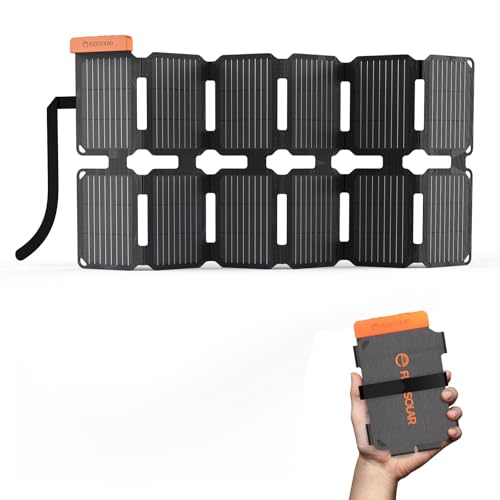
- 36W panel with USB-A, USB-C, and DC outputs
- Folds small and weighs just 1.7 lbs
- MPPT support and IP67-rated components
Best For: Backpackers wanting a compact all-rounder with more output options
Best High-Output Trail Charger
BigBlue 30W Fast Charging Solar Charger

- 30W panel with fast USB-A, PD 18W USB-C, and DC output
- Compact at 1.85 lbs for backpacking carry
- IP68 water resistance with durable lamination
Best For: Trail users who want faster charging and small power-station support
60W PD Power Pick
LUMOPAL 60W Foldable Solar Panel Charger
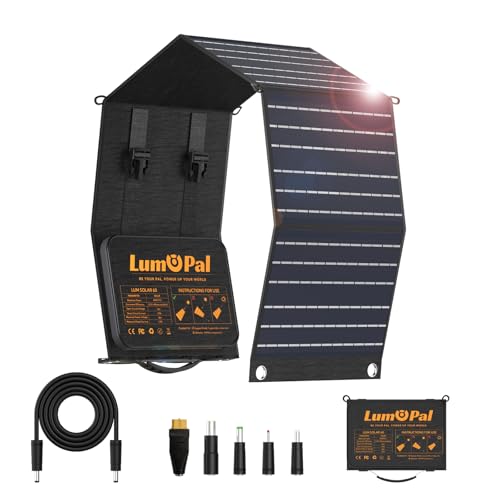
- 60W USB-C PD, USB-A QC3.0, and DC output
- 23.5% monocrystalline efficiency
- Folds compact but weighs 3.42 lb
Best For: Backpackers needing flexible charging for multiple small devices
Ultralight Fast-Charge Panel
GEYOTO 45W Solar Panel Charger

- 1.65 lb with iPad-sized folded profile
- 25W PD USB-C and three-device output
- IP68 waterproof construction
Best For: Ultralight backpackers charging phones, tablets, and power banks
Compact Trail Charger
BigBlue 28W High-Efficiency Solar Panel Charger

- 1.5 lb and folds to a compact size
- 25.4% efficiency with low-light support
- Dual USB-C plus USB-A charging
Best For: Trail users who need a simple charger for small USB devices
Trail-Ready 30W Charger
SOLUPUP 30W Portable Foldable Solar Charger

- 30W monocrystalline panel with 23%+ efficiency
- USB-A and USB-C ports can charge two devices
- 2.4 lb foldable design with carabiners and stand
Best For: Backpackers who want a higher-watt portable panel for phones and small devices
Ultralight Dual-Port Pick
FlexSolar 25W Portable Solar Panel Charger

- 1.2 lb foldable panel with backpack-friendly size
- USB-A and USB-C ports charge two devices at once
- MPPT tech and IP67-rated durability for trail use
Best For: Hikers and backpackers who want a lightweight, compact dual-port panel
Pocket-Size Waterproof Option
BigBlue Ultra-Light 25W Solar Panel Charger

- Only 0.84 lb and folds to pocket-size dimensions
- USB-A and USB-C ports support two-device charging
- Up to 25.4% efficiency with IP68 water and dust resistance
Best For: Ultralight backpackers who want the smallest, lightest solar charger
Ultra-Light Fast-Charging Pick – FlexSolar 40W Foldable Solar Panel Charger
If you want portable solar panels for backpacking with enough output to handle more than just a phone, this FlexSolar 40W panel is a strong all-around option. It combines USB-C, USB-A, and DC outputs with a compact folding design, so it’s better suited to campers and hikers who want flexible charging on the trail without carrying a heavy setup.
Best For: Backpackers who want a lightweight panel with faster USB charging and DC support for small stations.
Pros:
- 40W output with QC3.0 USB-A, PD2.0 USB-C, and a 19V DC port
- Very light at 1.76 lbs with folded size small enough for a backpack
- 24% conversion efficiency helps in limited sunlight
- IP67 dustproof/waterproof construction with ETFE coating
Cons:
- It is a direct-charging panel and does not store power
- Peak efficiency works best when used with careful sun positioning
- Junction box is not fully waterproof
This is a practical choice if you want more charging flexibility than a basic phone-only panel. Its blend of portability, stronger wattage, and weather resistance makes it especially appealing for longer backpacking trips and emergency kits.
Best Tiny Budget Charger – BigBlue 14W Solar Charger
For ultralight portable solar panels for backpacking, this BigBlue 14W model keeps things simple and compact. It’s designed for direct charging from a single USB-A port, making it a straightforward pick for hikers who mainly need to top up a phone or small USB device in good sunlight.
Best For: Solo hikers and minimalist backpackers who want the smallest possible solar charger for basic phone charging.
Pros:
- Very compact folding size and only 0.75 lbs
- Up to 25.4% conversion efficiency
- IPX4 waterproof rating for occasional rain or fog
- Includes USB-A to USB-C cable and carabiners
Cons:
- Single USB-A port only, with no fast charging
- No internal battery for storing electricity
- Output can drop in weak sunlight or poor angles
This is a good fit if your priority is size and simplicity over charging speed. It works best as a backup trail charger for disciplined users who can keep it aimed at the sun.
Most Balanced Portable Panel – FlexSolar 36W Ultra-Portable Solar Charger
If you’re comparing portable solar panels for backpacking and want a balanced mix of output, durability, and packability, this FlexSolar 36W model stands out. It folds small, includes USB-A, USB-C, and DC outputs, and uses MPPT technology to improve energy harvest even in partial shade.
Best For: Backpackers who want a compact panel with more versatility than a phone-only charger.
Pros:
- 36W output with USB-A, USB-C, and DC ports
- Folds to a small size and weighs just 1.7 lbs
- MPPT technology helps maximize output in partial shade
- IP67-rated components and triple-layer protective construction
Cons:
- Still a direct solar charger with no energy storage
- Best performance depends on sun angle and conditions
- DC output is limited to small devices
This panel is a smart middle ground for people who want more charging options without moving up to a larger, heavier system. Its portability and tougher build make it a strong companion for long trail use and emergency preparedness.
Best High-Output Trail Charger – BigBlue 30W Fast Charging Solar Charger
For backpackers who want portable solar panels for backpacking with a stronger feature set, this BigBlue 30W charger offers fast USB charging plus DC support for small power stations. It’s still compact enough to carry easily, but it aims at users who need a more capable trail power source than a basic phone-only panel.
Best For: Hikers and campers who want fast USB charging and the option to power small stations.
Pros:
- PD 18W USB-C plus fast-charging USB-A output
- DC output compatible with small power stations
- Folds to a compact size and weighs 1.85 lbs
- IP68 water resistance and upgraded lamination for durability
Cons:
- Does not store electricity
- Output varies with temperature, angle, and cloud cover
- The junction box is not waterproof
This is a good pick if you want more charging capability and faster device top-offs on the trail. It fits well for multi-device users who value versatility and durability in a reasonably portable package.
60W PD Power Pick – LUMOPAL 60W Foldable Solar Panel Charger
If you want portable solar panels for backpacking that can handle more than just a phone, this LUMOPAL 60W foldable panel is built around flexible charging options and a high-efficiency monocrystalline design. It offers USB-C PD up to 60W, USB-A QC3.0, and 18-20V DC output, so it can work with a wide range of small devices and power setups while staying compact enough for a pack.
Best For: Backpackers who want a higher-output portable panel for phones, tablets, cameras, laptops, or small power stations.
Pros:
- Up to 60W output with USB-C PD, USB-A QC3.0, and DC ports.
- 23.5% conversion efficiency from monocrystalline silicon.
- Folds down to a compact 6.7 x 9.5 in size and weighs 3.42 lb.
- IP65 waterproof panel construction with waterproof nylon fabric and zip.
Cons:
- Junction ports are not waterproof.
- No USB-C cable is included in the box.
- Heavier than the most minimal ultralight panels.
Overall, this is a practical choice if you need a backpacking solar panel with more charging flexibility than a basic phone-only model. Its combination of higher output, safety features, and weather-resistant build makes it a strong all-around camp companion.
Ultralight Fast-Charge Panel – GEYOTO 45W Solar Panel Charger
For portable solar panels for backpacking, the GEYOTO 45W panel stands out as a light, packable option with direct charging for USB-C devices. It delivers up to 25.4% conversion efficiency, includes 25W PD USB-C fast charging, and can charge up to three devices at once through two USB-C ports and one USB-A port.
Best For: Backpackers who want an iPad-sized, lightweight solar charger for phones, tablets, and power banks.
Pros:
- Only 1.65 lb and folds to an iPad-sized 8.44 x 12.52 x 1.26 in.
- 25.4% conversion efficiency with monocrystalline cells.
- 25W PD USB-C fast charging plus 3-device output.
- IP68 waterproof and dust resistance for outdoor use.
Cons:
- Best performance depends on direct sunlight and good panel angle.
- Charging ports should be kept dry.
- Not intended for larger power stations or laptop-level demands.
This is a strong pick if weight matters most on the trail and you mainly need reliable charging for USB devices. The included carabiners, pouch, and extension cable also make it easier to carry and deploy on backpacking trips.
Compact Trail Charger – BigBlue 28W High-Efficiency Solar Panel Charger
The BigBlue 28W is a compact option for portable solar panels for backpacking when you want a simple direct-charging setup for small electronics. It uses a shadow-free front surface, N-type solar cells, and a high-efficiency design, while offering dual USB-C and one USB-A port for simultaneous device charging in sunlight.
Best For: Backpackers who want a lightweight solar charger for phones, GPS units, flashlights, and power banks.
Pros:
- Lightweight at 1.5 lb and folds to 11 x 6 x 1.4 in.
- 25.4% conversion efficiency with improved low-light performance.
- Dual USB-C plus USB-A ports for multiple small devices.
- IP44 water resistance and smart safety charging.
Cons:
- Does not store power internally.
- Not suitable for laptops or large power stations.
- Needs direct sunlight for stable output.
BigBlue makes sense if you want a straightforward trail charger that packs small and is easy to set up. It is best viewed as a dependable sunlight-to-USB solution rather than a higher-capacity energy source.
Trail-Ready 30W Charger – SOLUPUP 30W Portable Foldable Solar Charger
If you want portable solar panels for backpacking that can handle a little more output without getting too bulky, the SOLUPUP 30W foldable charger is a practical pick. It uses monocrystalline cells with 23%+ efficiency, includes USB-A and USB-C ports, and folds small enough to stash in a pack or clip outside with the included carabiners.
Best For: Backpackers who want a higher-watt portable panel for charging phones and small devices on the trail.
Pros:
- 30W output with 23%+ conversion efficiency for stronger sun-to-power performance.
- USB-A and USB-C dual outputs can charge two small devices at once under good sunlight.
- Weighs 2.4 lb and folds to a compact size for backpack storage.
- IPX5 waterproof and dustproof design adds useful outdoor durability.
Cons:
- Actual output depends on sunlight, angle, season, temperature, and cloud cover.
- Heavier than the 25W ultralight options in this roundup.
This is the most power-focused option here, but it still stays backpack-friendly and adds thoughtful extras like a smart chip, auto-reconnect, and an adjustable stand. If you prioritize charging headroom over minimum weight, it makes a strong case.
Ultralight Dual-Port Pick – FlexSolar 25W Portable Solar Panel Charger
For portable solar panels for backpacking, the FlexSolar 25W stands out for keeping weight low while still offering useful charging features. It folds to a very small footprint, weighs just 1.2 lb, and includes both USB-A and USB-C outputs, plus carabiners and an elastic strap for easy attachment to a pack or tent.
Best For: Hikers and backpackers who want a lightweight, compact panel with dual-port charging.
Pros:
- Very light at 1.2 lb and folds down to a compact 7.7 x 5.1 size.
- USB-A and USB-C ports support simultaneous charging of two devices.
- MPPT technology helps maximize energy harvest, even in partial shade.
- IP67-rated parts are built for dust, heavy rain, and rough outdoor use.
Cons:
- 25W output is best for small electronics, not larger gear.
- Lower output voltage is limited to 5V devices and power banks.
Its main advantage is the balance of size, weight, and usability. If you want something easy to carry every mile of the hike and still dependable for phone or power bank top-offs, this is a smart middle-ground choice.
Pocket-Size Waterproof Option – BigBlue Ultra-Light 25W Solar Panel Charger
If your priority is keeping portable solar panels for backpacking as small and light as possible, the BigBlue 25W is the most packable option here. It folds to an iPad-like size, weighs just 0.84 lb, and still includes USB-A and USB-C ports plus carabiners for hanging from a backpack or tent.
Best For: Ultralight backpackers who want the smallest, easiest-to-carry solar charger in this group.
Pros:
- Extremely light at 0.84 lb and folds into a pocket-size form factor.
- USB-A and USB-C outputs can charge two devices simultaneously.
- N-type solar cells are rated up to 25.4% conversion efficiency.
- IP68 water and dust resistance adds strong outdoor protection.
Cons:
- 25W output is still aimed at phones, power banks, and other small electronics.
- Like other panels, performance depends on direct sunlight and clear placement.
This model is the best fit when every ounce matters. It sacrifices a little panel size for portability, but the durable build, dual ports, and strong efficiency make it a very appealing ultralight backpacking charger.
How We Picked These Portable Solar Panels for Backpacking
We focused on the factors that matter most on the trail: low packed weight, foldable design, real-world charging usefulness, weather resistance, and port versatility. For Portable Solar Panels for Backpacking, a panel that is slightly less powerful but much lighter may be the better choice if it fits your pack and your daily mileage.
We also considered how well each option pairs with modern devices and power banks, since most hikers get the best results by charging a battery bank during the day and then using that stored power at night.
Quick Comparison: What to Expect
In general, 14W to 25W panels are best for minimalist backpackers, day hikers, and travelers who want emergency charging without extra bulk. 28W to 36W models offer a stronger middle ground for most backpacking trips. Higher-output options around 40W to 60W are better when you want faster recharge potential and do not mind carrying a larger panel.
Key Buying Factors for Portable Solar Panels for Backpacking
Weight and Packed Size
This is usually the first filter. If a panel feels too bulky in your pack, you will leave it behind. Look for folded dimensions that fit your pack layout and a weight that makes sense alongside your food, water, and shelter.
Real-World Output
Panel wattage is only part of the story. Cloud cover, tree shade, panel angle, and device limits all affect performance. Higher wattage helps, but efficient positioning matters just as much.
Ports and Charging Compatibility
USB-C is increasingly useful for phones, power banks, and newer electronics. USB-A remains common, and DC output can help with certain battery setups. Choose a port mix that matches the gear you actually carry.
Durability and Weather Resistance
For Portable Solar Panels for Backpacking, a tough outer shell, reinforced stitching, and water resistance can make a real difference. Sudden rain and rough trail handling are part of normal use, not exceptions.
Who Should Buy Which Portable Solar Panels for Backpacking?
If you want the lightest possible setup, choose a compact 14W to 25W panel and treat it as backup power for emergencies or short trips. If you want the best all-around backpacking option, a 28W to 36W panel is usually the sweet spot for balance, portability, and charging speed. If you are carrying a larger battery bank, traveling with multiple devices, or spending longer periods off-grid, step up to a 40W to 60W model for more charging headroom.
For most hikers, the best choice is not the biggest panel available. It is the one that you will actually pack, deploy, and use consistently when the sun is out.